Avishai Cohen 15.11.25 Ryke-Synagoge EN
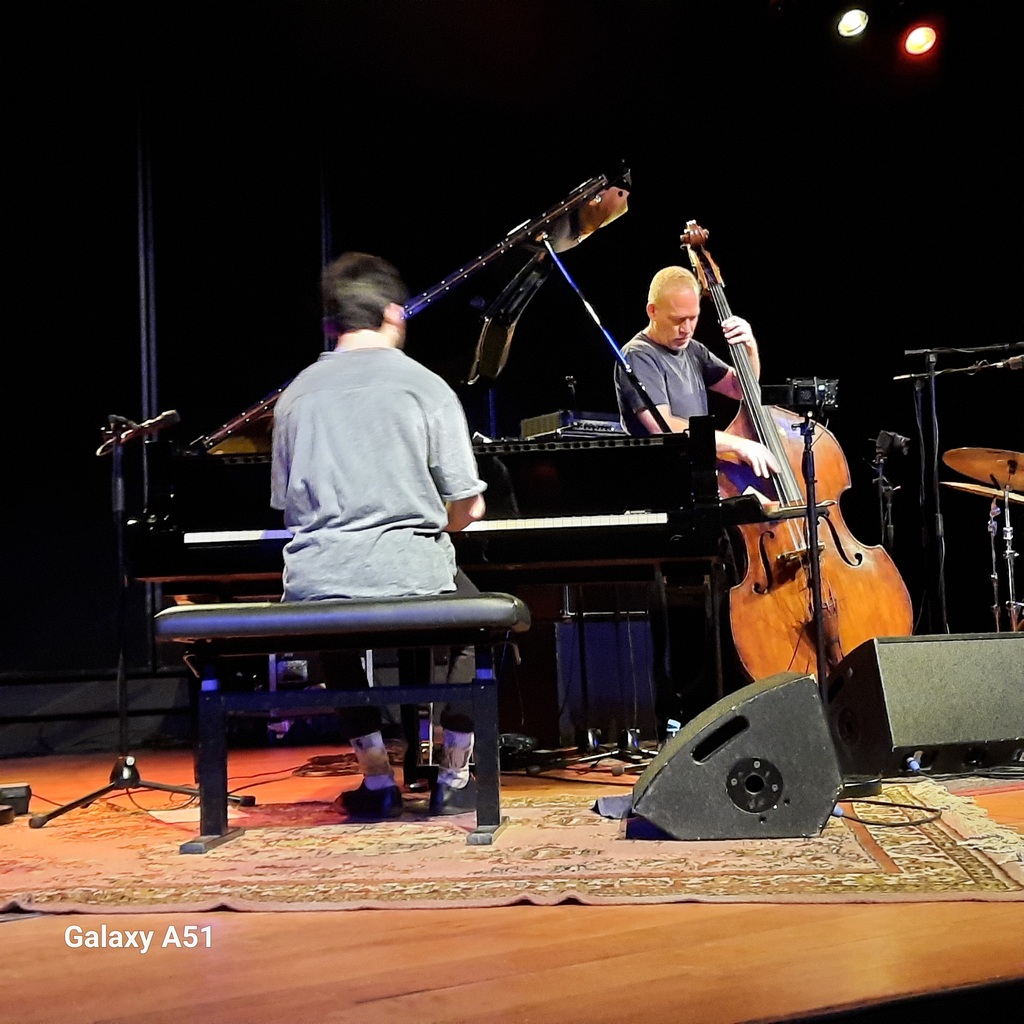
Avishai Cohen 11/15/25 Synagogue, Rykestraße
Avishai Cohen - The Hebrew Book Band Part II – 8:30 p.m.
38th Jewish Culture Days Berlin - Synagogue, Rykestraße 53, 10405 Berlin
The organizers of the Jewish Culture Days have come up with something special when it comes to jazz. They have included a jazz bassist (composer, arranger, vocalist) and his quintet in the program, who is one of the world's leading bassists in contemporary jazz in terms of technical virtuosity and emotional expressiveness. We are talking about:
Avishai Cohen
He definitely belongs in the top group, or in other words, in the “Champions League.” In Europe, Renaud Garcia-Fons from France (“Oriental Bass”) and Dieter Ilg from Germany (“Parzifal, Bach, Beethoven”) are also in this league. On the other side of the Atlantic, Thomas Morgan and Larry Grenadier are among them. The veteran Dave Holland is something like the primus inter pares in this ensemble of virtuoso bassists.
This sporting – not entirely accurate – comparison is intended to emphasize the technical skills of a virtuoso. But music, jazz, is not a sport; as a special art form, it follows its own rules and structures. That is why the musical aspects are not only equally important, but can be considered paramount.
What will there be to hear and experience?
At the last two concerts Avishai Cohen gave in Berlin, he presented his trio, which featured Itay Simhovich on piano and drummer Roni Kaspi. He is currently strengthening his rhythm section with the brass of the trombone and the wood of the saxophone. A quintet will certainly further enhance the sound, thematic and solo elements, and passages. Since Avishai Cohen also has numerous albums and concerts with larger combos to his credit, we can and should expect the best.
The current album “Little Big Beat Studio (Live)” also provides some clues, featuring excellent tracks and recorded with the following line-up, which will also be playing at the concert. Exception: Eviatar Slivnik will play the drums for Roni Kaspi.
Avishai Cohen, bass (vocals)
Itay Simhovich, piano
Eviatar Slivnik, drums
Yuval Drabkin, saxophone
Yonathan Voltzok, trombone
The motto of the project “The Hebrew Book Band Part II” sounds even more exciting and arouses curiosity.
Clear recommendation: go see it!
The following quotes from past concert reviews form the basis for characterizing Avishai Cohen's music with its essential elements from various perspectives. Even though these concert reviews refer “only” to his trio, they clearly demonstrate the bassist's style and musicality and can serve as a “yardstick” for expectations.
Sample quotes
"Bassist Avishai Cohen shows his virtuosity. Well supported by the restrained drums, he plays high registers, fast runs, and integrates his figures into the musical theme. This is also the case with the bowed double bass, which takes on the timbre of a wind instrument. Facial expressions, gestures, body language: even his posture at the bass mocks any classical training. Standing not behind, but next to the bass, dancing rather. Fists are pumped in the air with enthusiasm. Avishai plays strongly percussively, with clear lines, striking figures, crisp timbres, bowed melodic arcs sounding like wind instruments. A kinship with the old master Charles Mingus is unmistakable."
Further quotes from the concert review 03/22/25
Avishai Cohen Trio - GEORG-NEUMANN-SAAL UDK BERLIN – 03/21 & 03/22/25
"The Avishai Cohen Trio
Immediately after climbing onto the stage, they get started. The introduction by the piano with staccato-like but light chords leads into a simple motif. Bass & drums join in, striking and plucking discreetly. Piano and bass come together for a common theme, with Roni Kaspi discreetly beating the drums in the background. The bass continues to develop the title. Avishai Cohen is highly present from the very first seconds, the first pressing and plucking of the strings. With his facial expressions and gestures, he is incredibly focused, presenting his figures and runs expressively, living his jazz in both senses of the word. Towards the end of the title, he prefers percussive strokes, with the others accompanying him discreetly."
"The second piece begins with a restrained theme that has balladic qualities. Roni Kapis' subtle drums remain subdued, touched with brushes. The bass reveals the melodic lines, and the piano immediately takes over. Pianist Itay Simhovich, playing in for the announced Guy Moskovich, further develops the motifs, playing minimalistically. Avishai Cohen takes over the melody, contributing powerful figures such as runs. Then the bass and piano come together for the title theme. The slightly balladic piece has its own classical, chamber music accents.“
”The following profound ballad shows the entertaining sequence of the titles. The pianist and bassist throw the thematic balls back and forth. The mood is slightly minor, which is literally underlined by the bowed bass. The piano retreats, but accompanies. The same can be said of the drums, which are played with brushes. Avishai Cohen takes center stage. His playing is pure passion. His face, indeed his whole body, reflects the music, mirroring his figures, motifs, and runs. The bassist demonstrates his virtuoso skills, sometimes savoring high registers, sometimes preferring low registers, and playing everything in between on the fretboard. Then he withdraws his improvisations and the piece fades out. A similar mood—with slightly melancholic touches—is also conveyed by the next track, which is also characterized as a melodious ballad."
“The bowed bass plays the melody, while the piano and drums round it off with subtle, oriental intonation. The melodies and rhythms exude a musical hint of the Middle East. Avishai Cohen reinforces this impression with his bow. His masterful bowing is reminiscent of the still relatively young tradition of ”Oriental bass" as initiated by his colleague Renaud Garcia-Fons. In other words, it sounds great with oriental melodies in a contemporary jazz guise. The trio closes in, takes over the thematic figures, and becomes more expressive and dramatic. A short free improvisation by the pianist, a further increase in tension by the striking drummer, and then the “exotic” excursion ends in a powerful, energetic finale."
“Avishai Cohen returns to the stage, alone. He has only his bass, bow, and voice with him. He uses all three ingredients to intone the jazz standard ”Motherless Child," known from rock music. He plays the rhythmic-harmonic foundations continuously with his bow. He sings the corresponding lyrics with his voice. This is the concentrated power, elegant sovereignty, and individual expression of bass violinist Avishai Cohen, who reveals himself to the Berlin audience here. It doesn't get any better than this!"
38. Jüdische Kulturtage Berlin