38. Jüdische Kulturtage Berlin 13 – 23.11.25 - Rückblick
Vorfreude:
Bereits in Vorbereitung ist das fünfte Koschere Street Food Festival
am Sonntag, den 21. Juni 2026 in der Neuen Synagoge Oranienburger Straße.
Ebenso wie die 39. Jüdischen Kulturtage 2026.
Impressionen von den 38. Jüdischen Kulturtagen Berlin 2025:
Die Jüdischen Kulturtage sind eine Veranstaltung der Jüdischen Gemeinde zu Berlin.
Falls Sie noch Fragen oder Interview-Wünsche haben bzw. Fotomaterial benötigen,
rufen Sie uns bitte an, Tel 030-916 82 307 oder 0174-428 47 91, oder schicken Sie eine E-Mail: presse@jkt.berlin.
Wir bitten um Veröffentlichung in Ihrem Medium.
Vielen Dank für Ihre Aufmerksamkeit, es grüßen herzlich,
Anne Laxy und Ines Schilgen
Laxy PR
Anne Laxy
Ludwigkirchstr. 11 a
D - 10719 Berlin
Tel +49 (0)30 916 82 307
Fax +49 (0)30 916 82 308
laxy@laxypr.de
www.laxypr.de
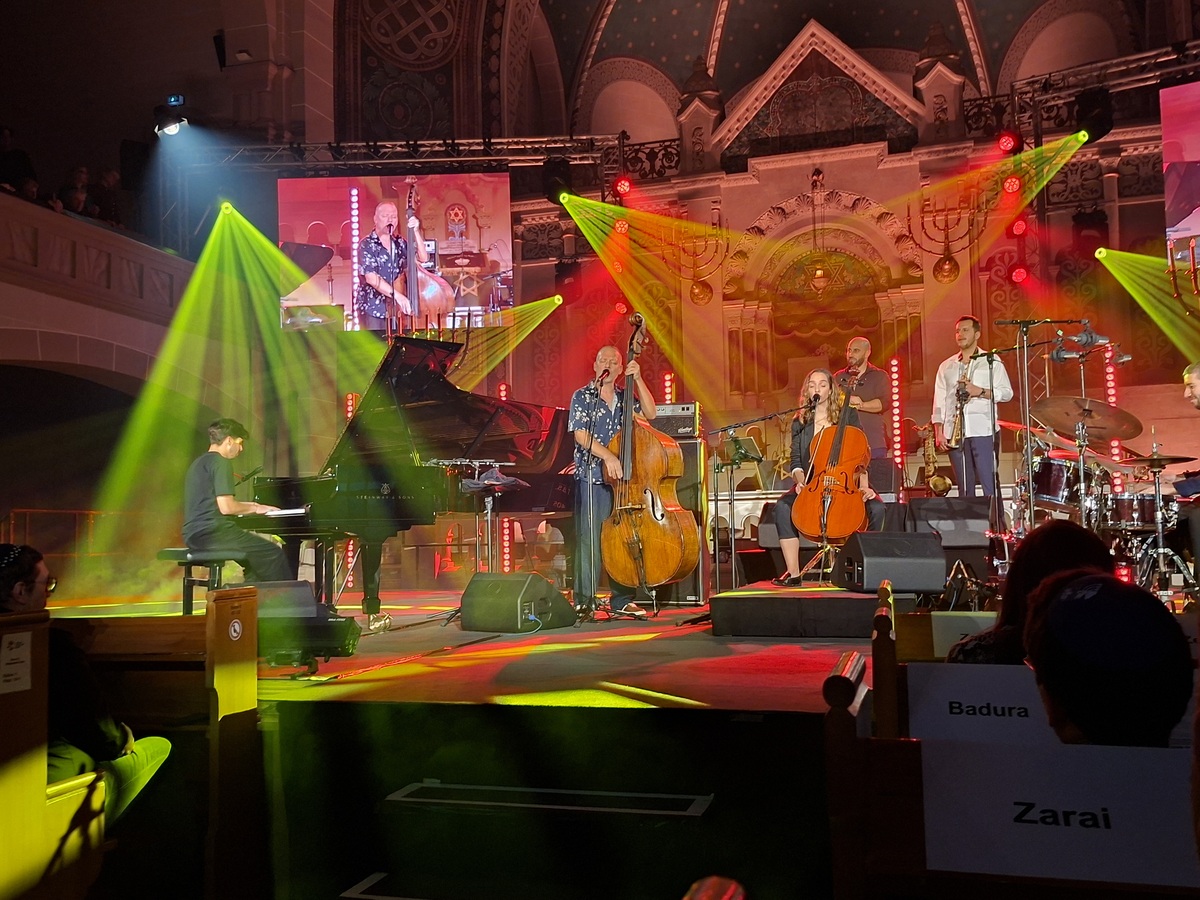
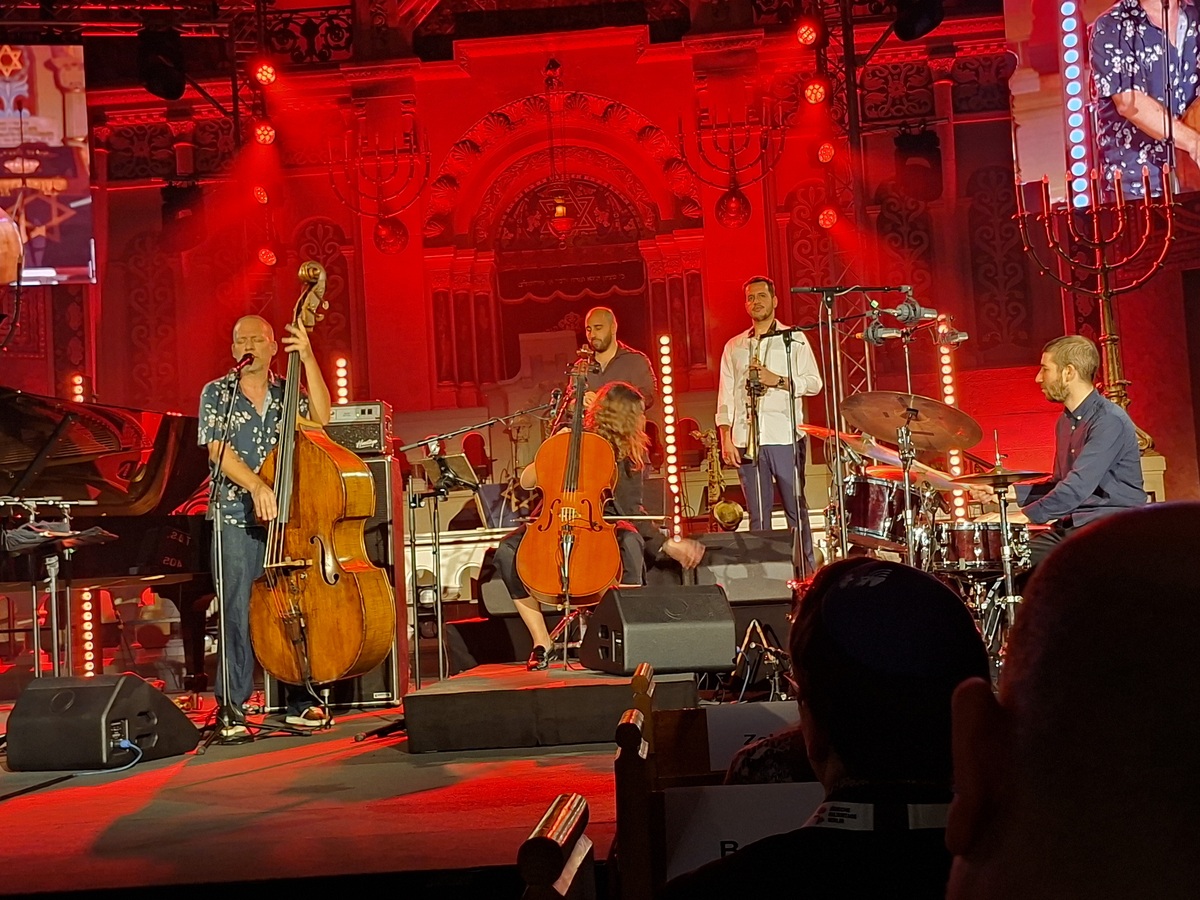
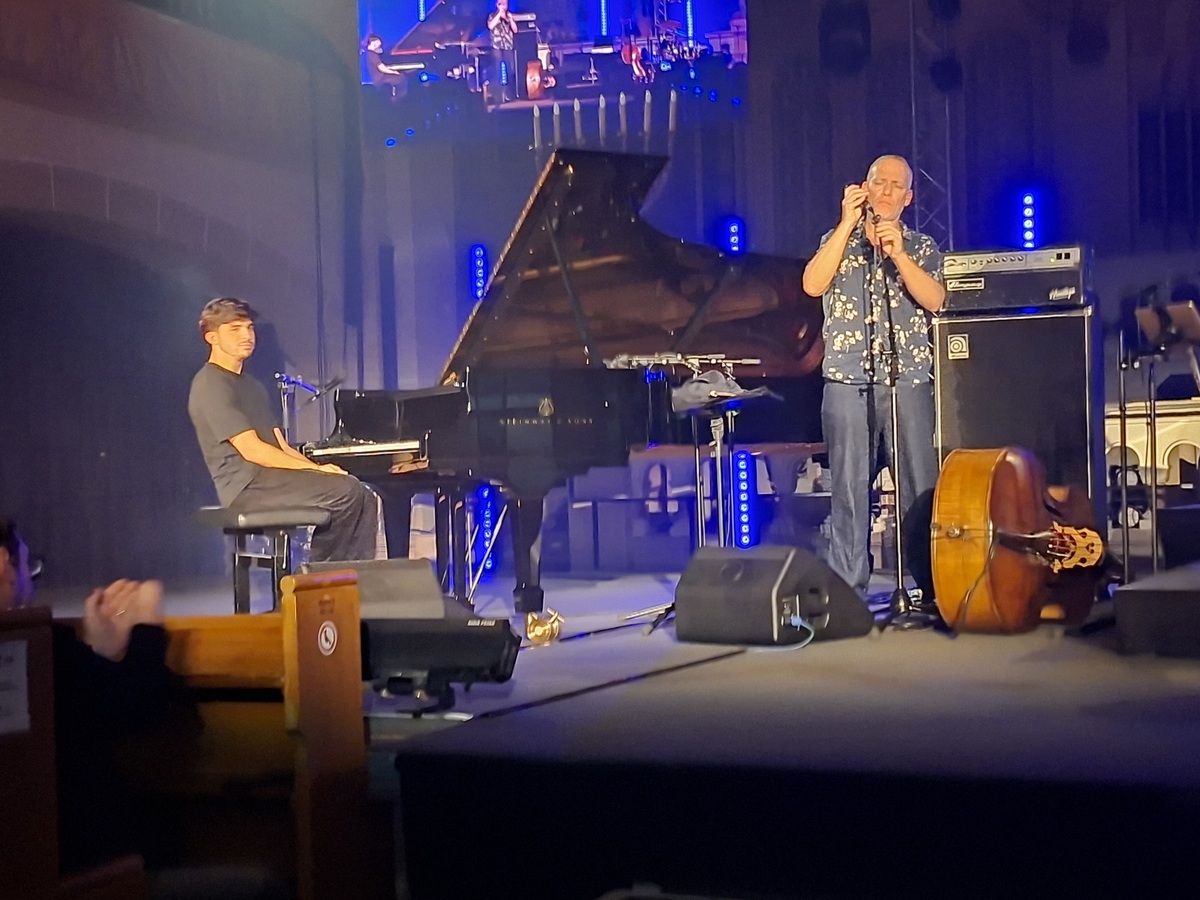
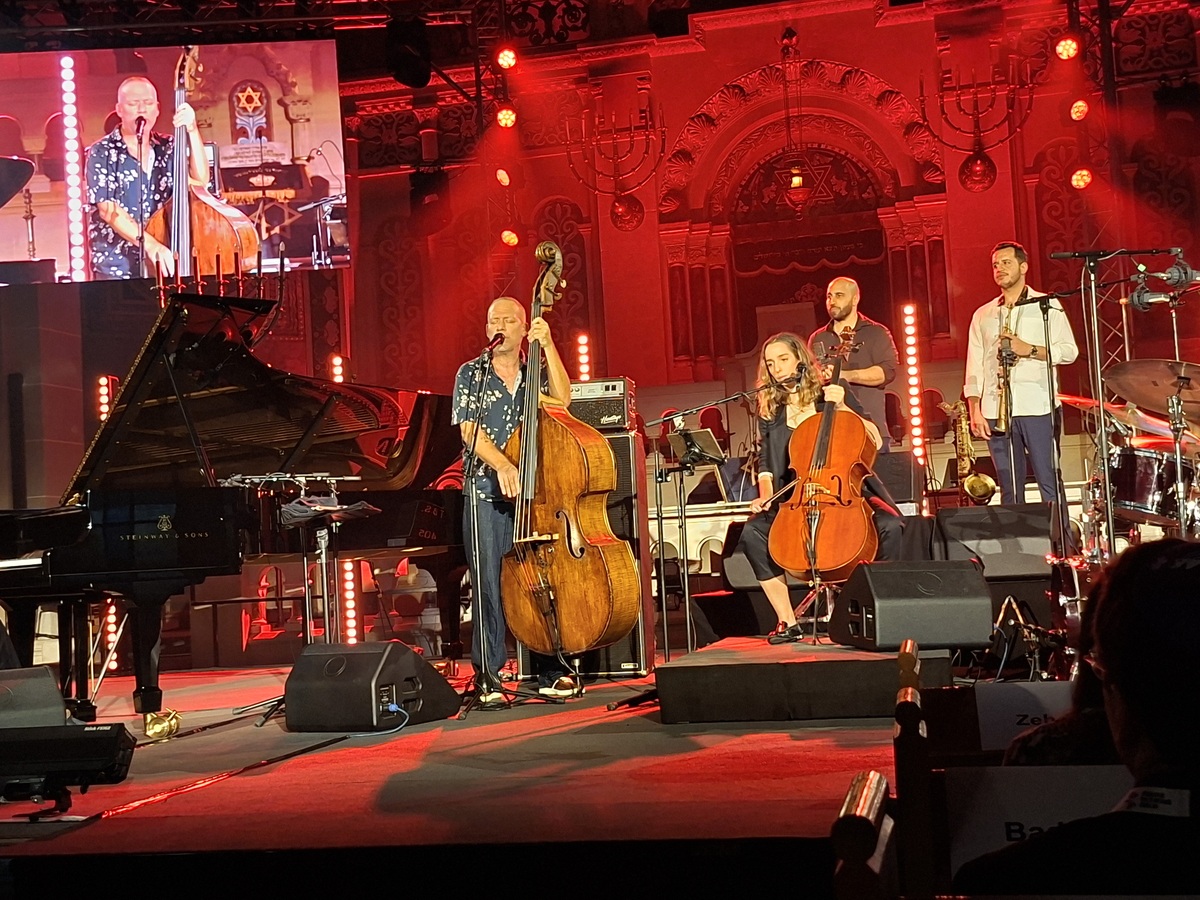
Avishai Cohen 11/25/15 Rykestraße Synagogue
Avishai Cohen - The Hebrew Book Band Part II
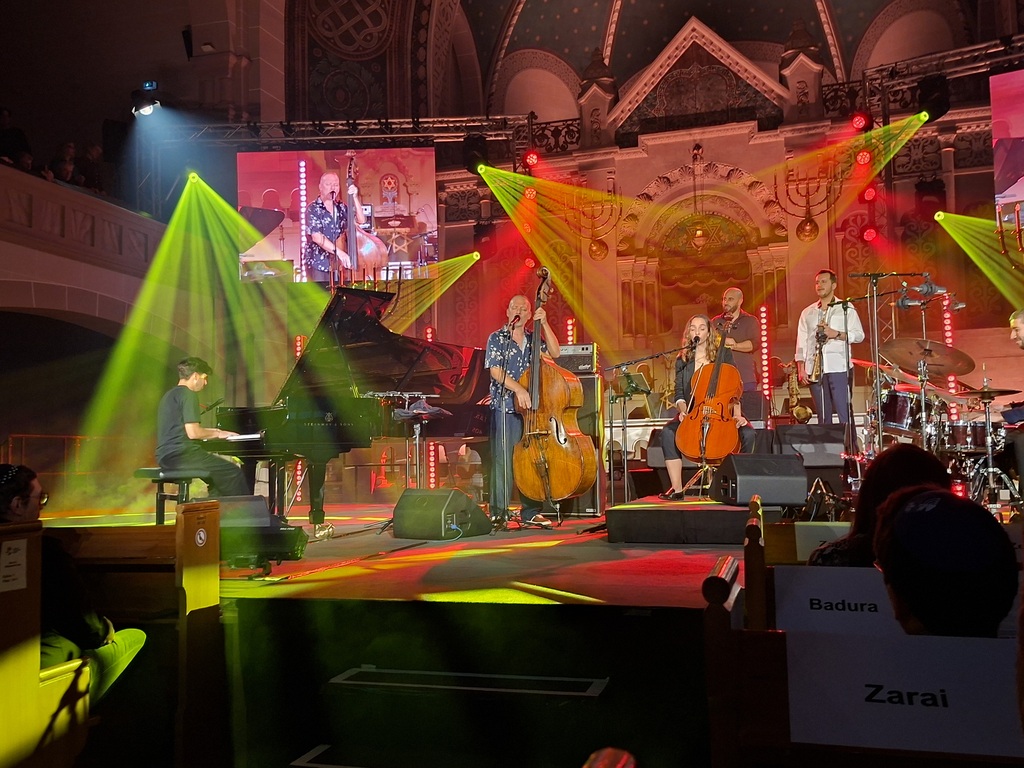
38th Jewish Culture Days Berlin - Rykestraße Synagogue
Avishai Cohen, bass, vocals
Itay Simhovich, piano
Eviatar Slivnik, drums
Yuval Drabkin, saxophone
Yonathan Voltzok, trombone
The atmosphere
The synagogue on Rykestraße is impressive in terms of its size, architecture, and history. The latter is not a topic of discussion today. Having the virtuoso bassist perform here is certainly a good idea. An even better idea is to have him perform his project “The Hebrew Book” with his band in this ambiance. This allows Avishai Cohen to present the music, the Hebrew songs in his interpretation, as the specific jazz of his “The Hebrew Book Band” in a synagogue—in the context of the Hebrew language. The synagogue is “sold out,” correspondingly full, and the anticipation and excitement for what is to come is very high. The strict but necessary security measures at the entrance, which everyone accepted with composure, also contributed to this. Then it begins.
Piano jazz trio
Avishai Cohen takes the “stage” with pianist Eviatar Slivnik and drummer Eviatar Slivnik. A rather classical piano jazz trio warms up the audience and themselves, demonstrating their class and showcasing a specific, contemporary jazz style in trio form. A moderate theme consisting of just a few notes, played in unison by the bass and piano, has an almost classical feel. Then the tempo and expression increase, while the chamber music intonation remains. The opening also includes longer solo passages, in which Itay Simhovich shines with chords and runs. Needless to say, Avishai then shows off all the figures and motifs in his bass, just waiting to elegantly escape the instrument and thrill the audience, which he manages effortlessly right from the start.
Quartet & Quintet
After this introductory phase—initiated by a bass solo—the musicians begin to present Avishai's project musically, led by his theme. The theme is presented jointly by the piano and bass, has a strong expression, and displays ballad-like characteristics. Now, in addition to the thematic reinforcement, Yuval Drabkin's tenor saxophone can also be heard as a soloist, reinforcing the previous sound of the trio to a quartet.
Eviatar Slivnik's excellent piano takes over, complementing the theme and enriching it with his increasingly expressive strokes, without losing itself in dramatic atonal sequences. The theme is repeated often – now by the entire band – and thus takes on minimalist characteristics, captivating the listener with its thematic, slightly melancholic insistence.
In the following piece, Yonathan Voltzok's expressive trombone joins in, taking over the thematic development, which then leads into a longer, energetic solo that expands the band into a full-bodied quintet.
Hebrew (Song) Book
The following themes, now announced by Avishai, naturally have Hebrew titles, which – for non-Hebrew speakers – are unfortunately incomprehensible and therefore cannot be listed here. There are some well-known pieces, but also many titles – as Avishai later explains – that are little known or completely unknown in Israel. Consequently, these are songs he has researched and “unearthed,” his “Hebrew Book,” which he is now presenting for the second time with his “Hebrew Book Band.”
Singer and vocalist
Avishai Cohen begins the next song with vocals; it sounds solemn, deliberate, and seems to convey meaningful, serious content. It does not sound like drinking or dancing songs or the like. Nor is it reminiscent of common klezmer music.
Part of the audience seems to know the title and content and accompanies him with clapping. Then the whole band joins in with rhythm and brass. The staccato rhythm remains, intensifying immensely. And another characteristic typical of jazz is added: surprise. This comes in the form of the cellist/singer Hadas Kleinman, who occasionally contributes a few sequences on the cello, but mostly supports the songs vocally. This is now (almost) a polyphonic choir that performs the following titles intensively. A singing choir supported by a jazz combo.
The soloists
The middle section of many songs offers a good opportunity for the soloists – including the enthusiastic drummers – to stand out, take center stage, and enrich the Hebrew songs with jazzy improvisations. This also applies to the trombone solo by Yonathan Voltzok, who blows his sequences into the compact sound with a balladic yet powerful expression. Itay Simhovich's piano can also often be heard with excellent solo excursions.
Passion & Emotion
Devout piano strokes, a sacred touch is in the title or hovers above it. This may also be due to the atmosphere in the synagogue. Avishai's evocative singing resounds. Here—as well as later in the following tracks—the emphatic singing, the constant insistence of the lyrical and musical statements can be heard. This happens continuously with a lot of emotion, strong expression, and passion.
Songs – Jazz – Songs
This structural feature is retained in the following tracks. The beginning – like the end – is determined by the sung Hebrew songs. The passages in between belong to jazz, whose soloists improvise over the harmonies of the tracks, additionally reinforcing the rhythmic basis of the songs in a jazzy way. The “choir” intervenes frequently, then the concentrated rhythm of piano, bass, and drums, and finally the brass section, which compresses the sound and enhances the jazz character.
Audience
The audience has no choice but to be completely enthusiastic. What’s more, standing ovations and four encores speak for themselves. Until the next concert. Then with The Hebrew Book Band Part III.