Avishai Cohen 15.11.25 Synagoge Rykestraße
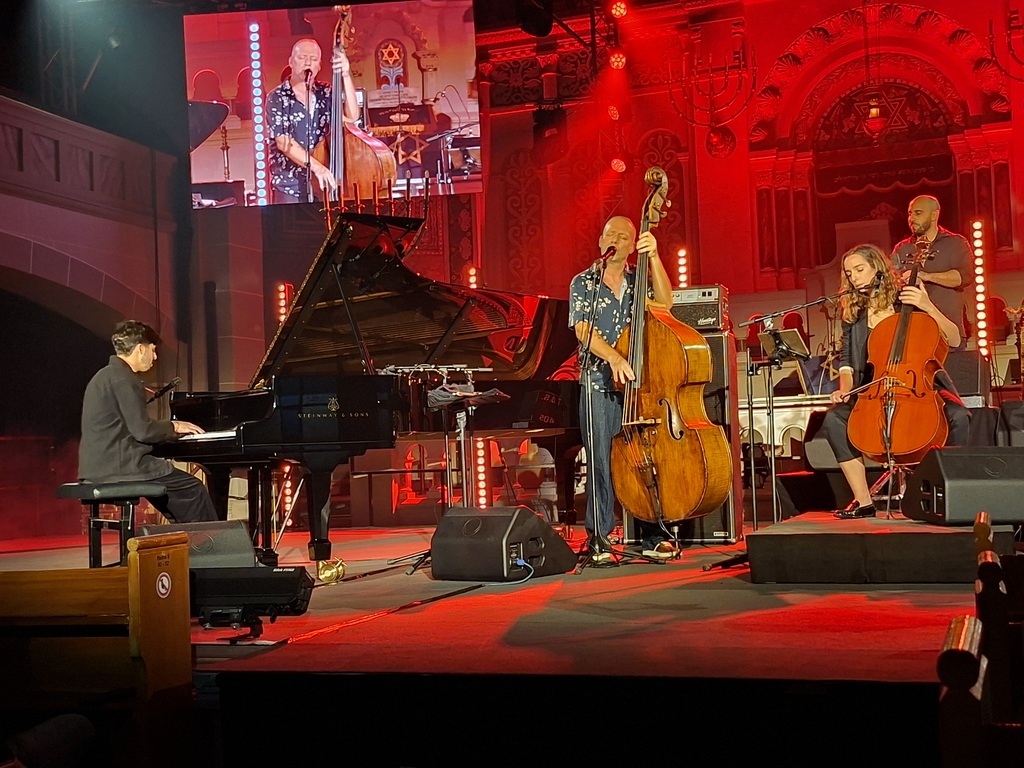
Avishai Cohen 15.11.25 Synagoge Rykestraße
Avishai Cohen - The Hebrew Book Band Part II
38. Jüdische Kulturtage Berlin - Synagoge Rykestraße
Avishai Cohen, bass, vocals
Itay Simhovich, piano
Eviatar Slivnik, drums
Yuval Drabkin, saxophone
Yonathan Voltzok, trombone
Hadas Kleinman - vocals, cello
Das Ambiente
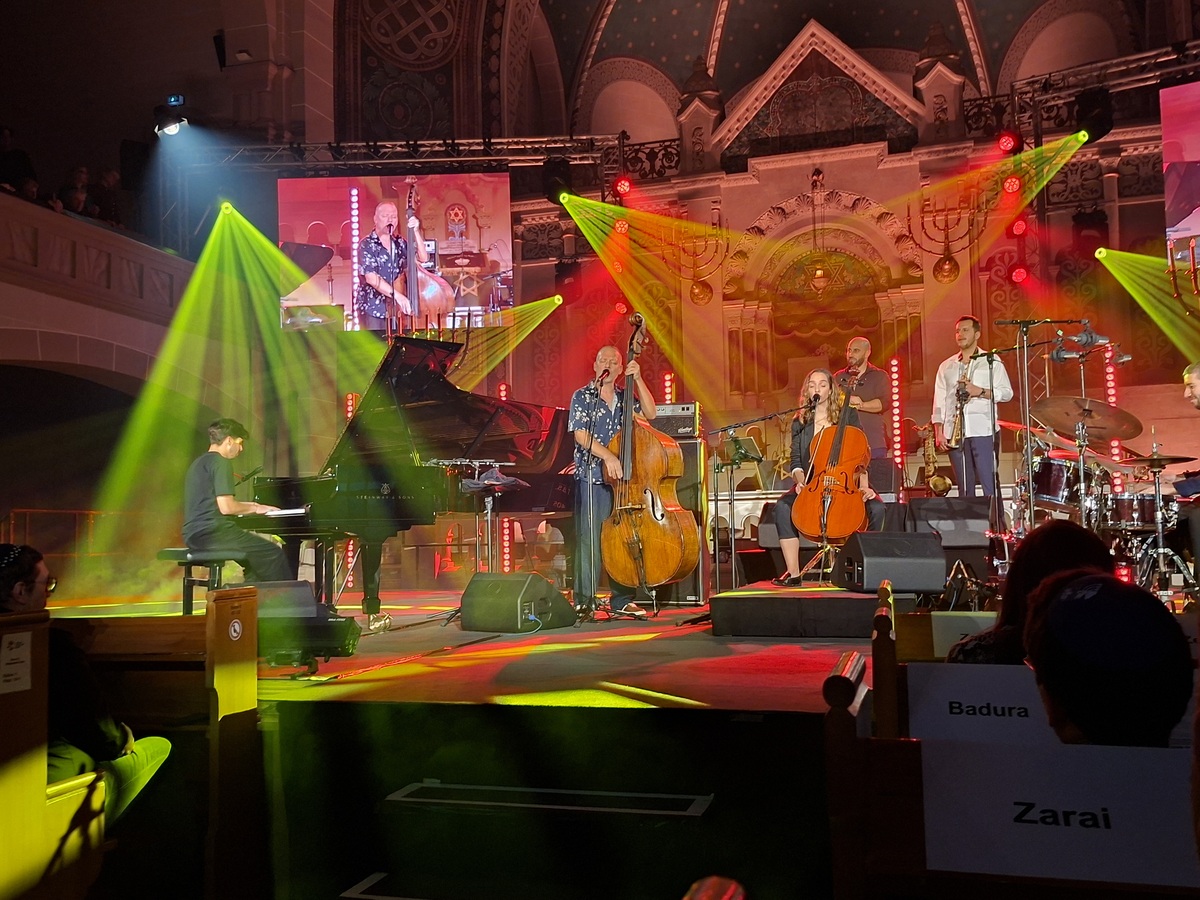
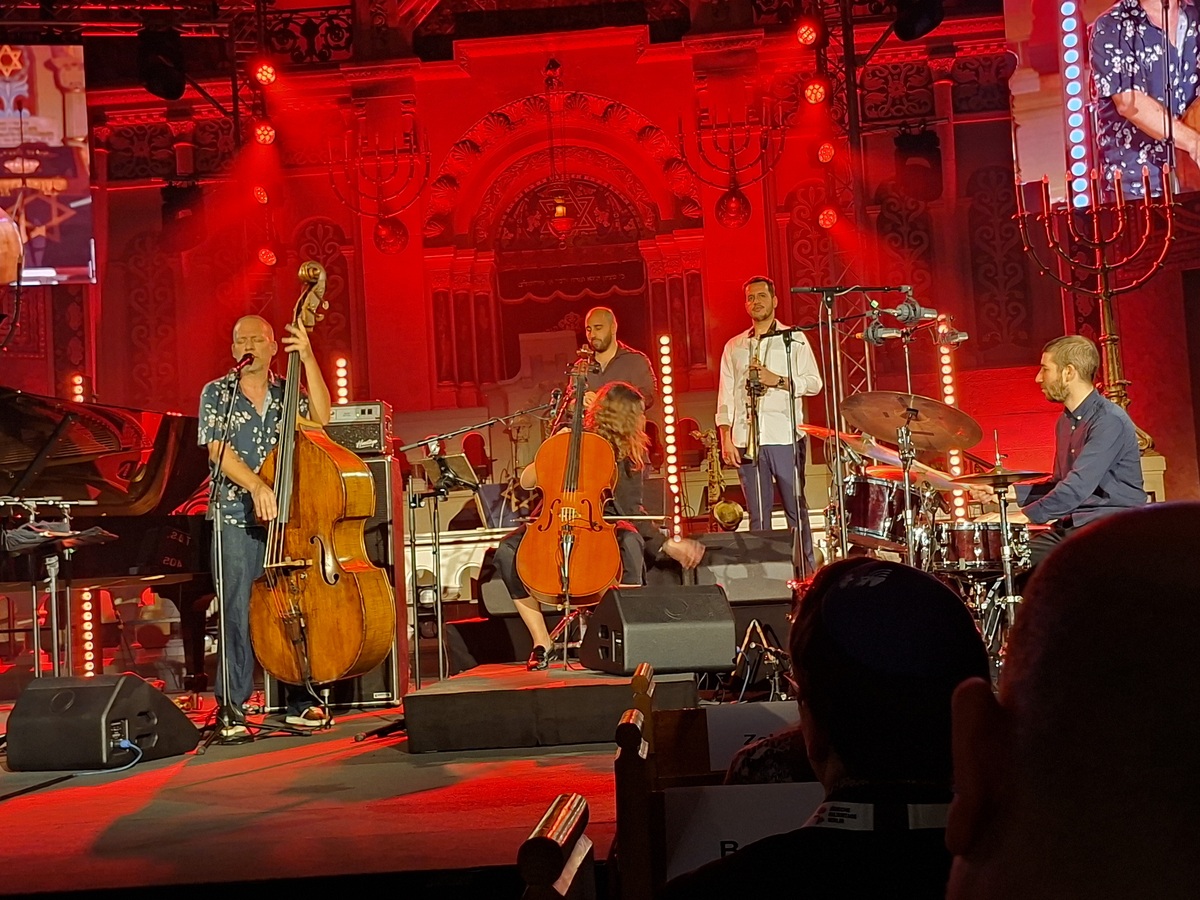
Die Synagoge in der Rykestraße beeindruckt durch Größe, Architektur und Geschichte. Letzteres ist heute kein Thema. Hier den virtuosen Bassisten konzertieren zu lassen ist sicher ein gute Idee. Eine noch bessere ist es, in diesem Ambiente sein Projekt „The Hebrew Book“ mit Band auftreten zu lassen. So kann Avishai Cohen in einer Synagoge - im Kontext von hebräischer Sprache -die Musik, die hebräischen Lieder in seiner Interpretation, als spezifischen Jazz seiner „The Hebrew Book Band“ zu präsentiert. Die Synagoge ist „ausverkauft“, entsprechend voll, die Erwartung, die Spannung, auf das, was da kommen mag, ist sehr groß. Dazu haben auch die strengen wie notwendigen Sicherheitsmaßnahmen beim Einlass beigetragen, denen alle mit Gelassenheit begegneten. Dann geht´s los.
Piano-Jazz-Trio
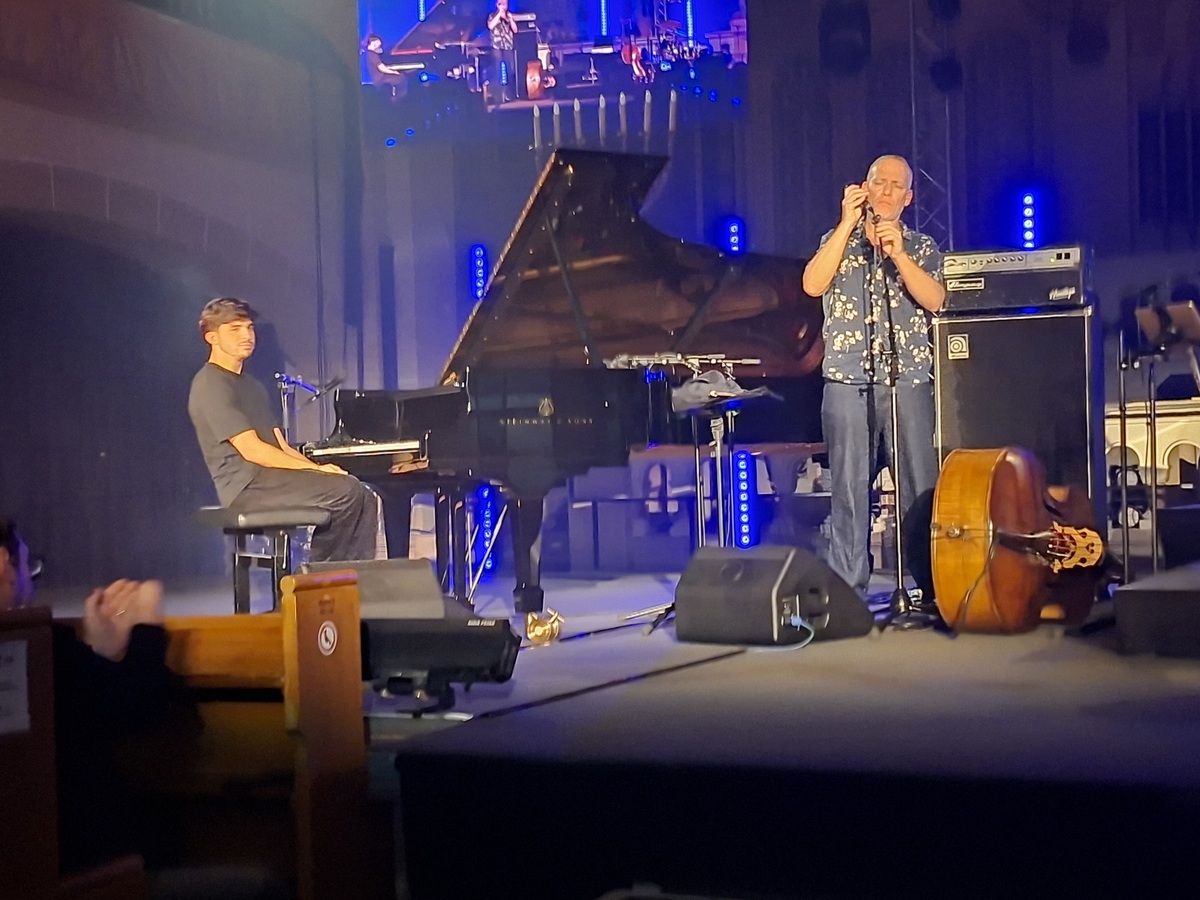
Schon betritt Avishai Cohnen mit Pianist Eviatar Slivnik und Drummer Eviatar Slivnik die „Bühne“. Ein eher klassisches Piano-Jazz-Trio spielt sich und das Publikum warm, demonstriert seine Klasse, zeigt einen spezifischen wie zeitgenössischen Jazz im Trio. Ein moderates aus wenigen Tönen bestehendes Thema, das Bass wie Piano unisono vorlegen, wirkt geradezu klassisch. Dann erhöhen sich Tempo und Ausdruck, es bleibt bei der kammermusikalischen Intonation. Zum Auftakt gehören auch längere solistische Passagen, in den Itay Simhovich mit Akkorden wie Läufen glänzen kann. Selbstredend zeigt dann Avishai, was alles in seinen Bass an Figuren wie Motiven steckt, nur die darauf warten, elegant dem Instrument zu entfliehen, das Publikum zu begeistern, was auf Anhieb auch mühelos gelingt.
Quartett & Quintett
Nach dieser Einstimmungsphase – von einem Bass-Solo initiiert – fangen die Musiker unter der Themenführung von Avishai an, sein Projekt musikalisch vorzustellen. Das Thema wird von Piano wie Bass gemeinsam vorgestellt, hat einen tragenden Ausdruck, zeigt dabei balladenhafte Züge. Jetzt ist – neben der thematische Verstärkung - auch das Tenorsaxofon von Yuval Drabkin solistisch zu hören, das den bisherigen Sound des Trios zum Quartett verstärkt.
Das ausgezeichnetes Piano von Eviatar Slivnik übernimmt, ergänzt das Thema, bereichert es durch seine Anschläge, die stetig expressiver werden, ohne sich in dramatischen Tonfolgen atonal zu verlieren. Das Thema wird oft – und nun von der gesamten Band – wiederholt, erhält demzufolge minimalistische Wesensmerkmale, besticht durch thematisches, leicht melancholisches Insistieren. Im folgenden Stück gesellt sich die ausdrucksstarke Posaune von Yonathan Voltzok dazu, übernimmt die thematische Ausgestaltung, die dann in ein längeres wie energisches Solo mündet, das die Band zum vollmundigen Quintett erweitert.
The Hebrew (Song) Book
Die folgenden Themen, die jetzt von Avishai angesagt werden, haben natürlich hebräische Titel, die – für Nicht-Hebräisch-Sprechende – leider nicht zu verstehen sind und demzufolge hier nicht aufgeführt werden können. Es sind bekannte Stücke dabei, aber auch viele Titel – wie Avishai später ausführt - , die in Israel wenig oder gar nicht bekannt sind. Demzufolge sind es seine recherchierten, die von ihm „ausgegrabenen“ Lieder, eben sein „Hebrew Book“, die er mit seiner „Hebrew Book Band“ nun zum zweiten Mal präsentiert.
Sänger und Vokalist
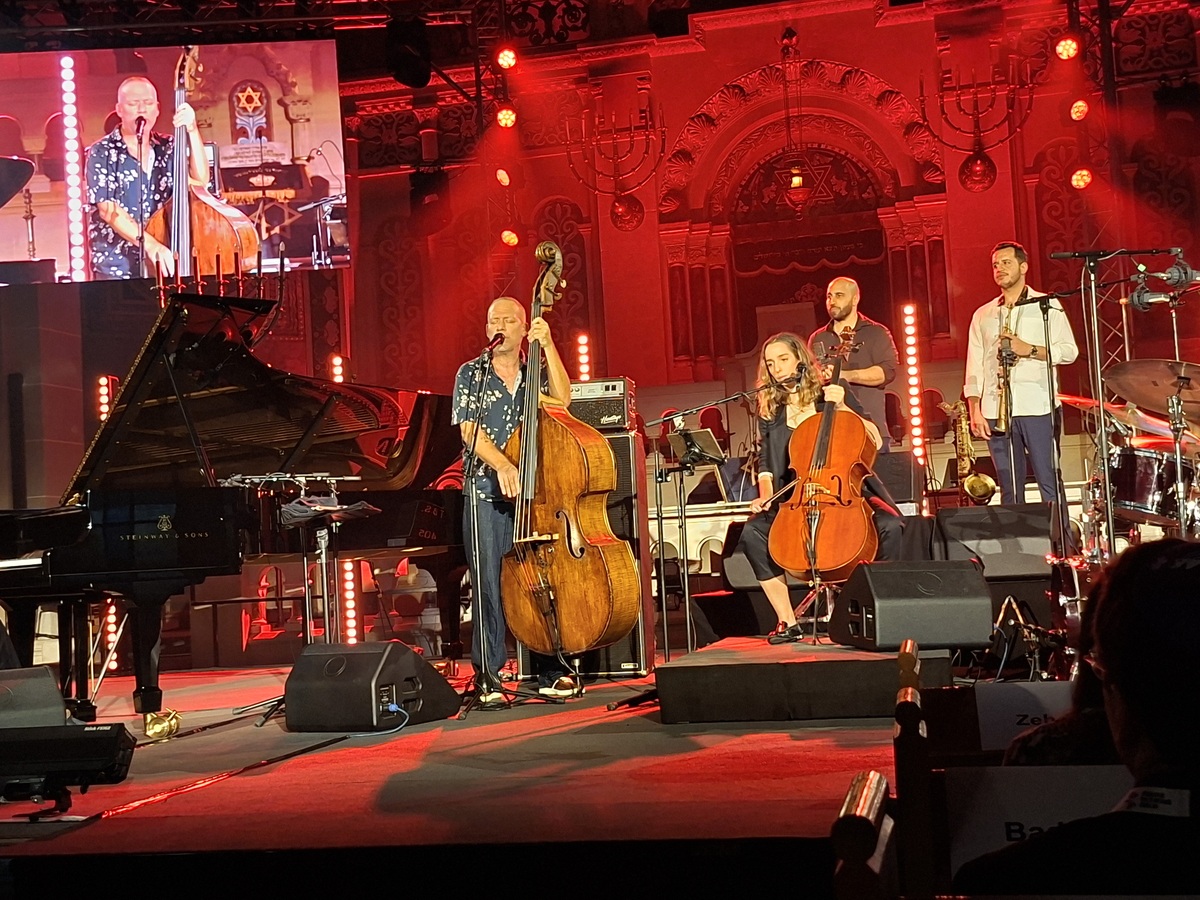
Avishai Cohen beginnt das nächste Lied mit Gesang, es klingt tragend, bedächtig, es tönt nach bedeutsamen, ernsten Inhalten. Es kling also nicht wie Trink- oder Tanzlieder oder dergleichen. Auch erinnert es nicht an gängigen Klezmer. Ein Teil des Publikums schient den Titel samt Inhalt zu kennen und begleitet ihn durch Klatschen. Dann fällt die ganze Band mit Rhythmus sowie Bläsern ein. Der stakkatohafte Rhythmus bleibt bestehen, verstärkt sich ungemein. Und auch ein – für den Jazz so typisches Merkmal – kommt noch hinzu: die Überraschung. Die findet in der Person der Cellistin/Sängerin Hadas Kleinman statt, die gelegentlich mit dem Cello einige Sequenzen beisteuert, aber meist die Lieder gesanglich unterstützt. Das ist jetzt (fast) ein mehrstimmiger Chor, der den und die folgenden Titel intensiv vorträgt. Ein singender Chor mit Support einer Jazz Combo.
Die Solisten
Der Mittelteil vieler Songs bietet gute Gelegenheit für die Solisten – auch für die engagiert trommelnden Drums – sich hervorzutun, in den Fokus zu spielen, die hebräischen Lieder durch jazzige Improvisationen anzureichern. Das trifft auch für das Posaunensolo von Yonathan Voltzok zu, der zwar balladesk, jedoch mit kraftvollem Ausdruck seine Sequenzen in den kompakten Sound stimmgewaltig bläst. Auch das Piano von Itay Simhovich ist öfters mit exzellenten solistischen Exkursionen zu hören.
Passion & Emotion
Andächtige Pianoanschläge, ein sakraler Hauch steckt im Titel oder schwebt über ihm. Das mag auch an der Stimmung in der Synagoge liegen. Der beschwörende Gesang von Avishai ertönt. Hier – wie auch später in den folgenden Titeln - ist das eindringliche Singen, das ständige Insistieren der inhaltlichen wie musikalischen Aussagen zu vernehmen. Das geschieht kontinuierlich mit vielen Emotionen, starkem Ausdruck und eindringlicher Passion.
Songs – Jazz – Songs
Dieses Strukturmerkmal wird in den folgenden Titeln beibehalten. Den Anfang – wie das Ende – bestimmen die gesungenen hebräischen Lieder. Die Passagen dazwischen gehören dem Jazz, deren Solisten über den Harmonien der Titel improvisieren, zusätzlich die rhythmische Basis der Songs jazzig verstärken. Der „Chor“ interveniert häufig, dann der geballte Rhythmus aus Piano, Bass & Schlagzeug, zu guter Letzt noch die Bläser, die den Sound verdichten, den Jazzcharakter erhöhen.
Publikum
Das hat keine andere Chance als vollkommen begeistert zu sein. Mehr noch: Stehende Ovationen und das Erkämpfen von vier Zugaben sprechen für sich. Bis zum nächsten Konzert. Dann mit der The Hebrew Book Band Part III.
Avishai Cohen 11/25/15 Rykestraße Synagogue
Avishai Cohen - The Hebrew Book Band Part II
38th Jewish Culture Days Berlin - Rykestraße Synagogue
Avishai Cohen, bass, vocals
Itay Simhovich, piano
Eviatar Slivnik, drums
Yuval Drabkin, saxophone
Yonathan Voltzok, trombone
The atmosphere
The synagogue on Rykestraße is impressive in terms of its size, architecture, and history. The latter is not a topic of discussion today. Having the virtuoso bassist perform here is certainly a good idea. An even better idea is to have him perform his project “The Hebrew Book” with his band in this ambiance. This allows Avishai Cohen to present the music, the Hebrew songs in his interpretation, as the specific jazz of his “The Hebrew Book Band” in a synagogue—in the context of the Hebrew language. The synagogue is “sold out,” correspondingly full, and the anticipation and excitement for what is to come is very high. The strict but necessary security measures at the entrance, which everyone accepted with composure, also contributed to this. Then it begins.
Piano jazz trio
Avishai Cohen takes the “stage” with pianist Eviatar Slivnik and drummer Eviatar Slivnik. A rather classical piano jazz trio warms up the audience and themselves, demonstrating their class and showcasing a specific, contemporary jazz style in trio form. A moderate theme consisting of just a few notes, played in unison by the bass and piano, has an almost classical feel. Then the tempo and expression increase, while the chamber music intonation remains. The opening also includes longer solo passages, in which Itay Simhovich shines with chords and runs. Needless to say, Avishai then shows off all the figures and motifs in his bass, just waiting to elegantly escape the instrument and thrill the audience, which he manages effortlessly right from the start.
Quartet & Quintet
After this introductory phase—initiated by a bass solo—the musicians begin to present Avishai's project musically, led by his theme. The theme is presented jointly by the piano and bass, has a strong expression, and displays ballad-like characteristics. Now, in addition to the thematic reinforcement, Yuval Drabkin's tenor saxophone can also be heard as a soloist, reinforcing the previous sound of the trio to a quartet.
Eviatar Slivnik's excellent piano takes over, complementing the theme and enriching it with his increasingly expressive strokes, without losing itself in dramatic atonal sequences. The theme is repeated often – now by the entire band – and thus takes on minimalist characteristics, captivating the listener with its thematic, slightly melancholic insistence.
In the following piece, Yonathan Voltzok's expressive trombone joins in, taking over the thematic development, which then leads into a longer, energetic solo that expands the band into a full-bodied quintet.
Hebrew (Song) Book
The following themes, now announced by Avishai, naturally have Hebrew titles, which – for non-Hebrew speakers – are unfortunately incomprehensible and therefore cannot be listed here. There are some well-known pieces, but also many titles – as Avishai later explains – that are little known or completely unknown in Israel. Consequently, these are songs he has researched and “unearthed,” his “Hebrew Book,” which he is now presenting for the second time with his “Hebrew Book Band.”
Singer and vocalist
Avishai Cohen begins the next song with vocals; it sounds solemn, deliberate, and seems to convey meaningful, serious content. It does not sound like drinking or dancing songs or the like. Nor is it reminiscent of common klezmer music.
Part of the audience seems to know the title and content and accompanies him with clapping. Then the whole band joins in with rhythm and brass. The staccato rhythm remains, intensifying immensely. And another characteristic typical of jazz is added: surprise. This comes in the form of the cellist/singer Hadas Kleinman, who occasionally contributes a few sequences on the cello, but mostly supports the songs vocally. This is now (almost) a polyphonic choir that performs the following titles intensively. A singing choir supported by a jazz combo.
The soloists
The middle section of many songs offers a good opportunity for the soloists – including the enthusiastic drummers – to stand out, take center stage, and enrich the Hebrew songs with jazzy improvisations. This also applies to the trombone solo by Yonathan Voltzok, who blows his sequences into the compact sound with a balladic yet powerful expression. Itay Simhovich's piano can also often be heard with excellent solo excursions.
Passion & Emotion
Devout piano strokes, a sacred touch is in the title or hovers above it. This may also be due to the atmosphere in the synagogue. Avishai's evocative singing resounds. Here—as well as later in the following tracks—the emphatic singing, the constant insistence of the lyrical and musical statements can be heard. This happens continuously with a lot of emotion, strong expression, and passion.
Songs – Jazz – Songs
This structural feature is retained in the following tracks. The beginning – like the end – is determined by the sung Hebrew songs. The passages in between belong to jazz, whose soloists improvise over the harmonies of the tracks, additionally reinforcing the rhythmic basis of the songs in a jazzy way. The “choir” intervenes frequently, then the concentrated rhythm of piano, bass, and drums, and finally the brass section, which compresses the sound and enhances the jazz character.
Audience
The audience has no choice but to be completely enthusiastic. What’s more, standing ovations and four encores speak for themselves. Until the next concert. Then with The Hebrew Book Band Part III.