Chris Potter Trio 20.05.26 ZigZag
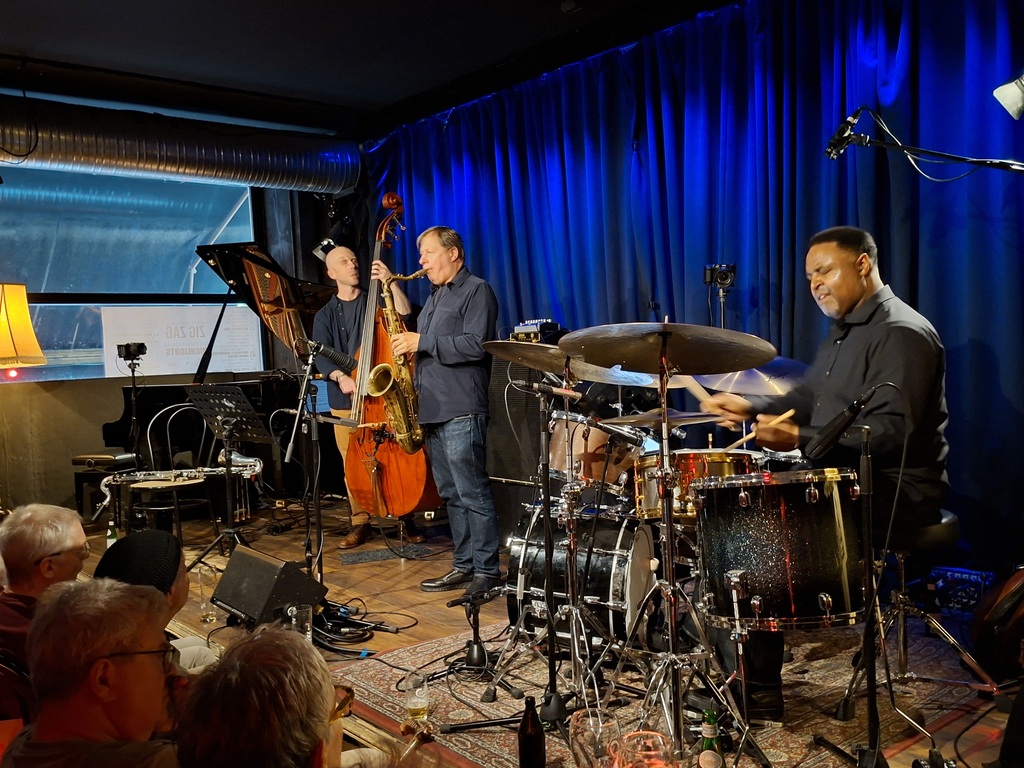
Chris Potter Trio 20.05.26 ZigZag
Bericht des 1. Konzertes um 18:30
Chris Potter - sax (USA)
Matt Brewer - bass (USA)
Kendrick Scott - drums (USA)
Ausverkauft heißt: da passt niemand mehr rein. Nun, wer zu spät kommt, den bestraft das Leben. Wer zu spät zum frühen Konzert um 18:30 kommt, den bestrafen die Umstände, indem der reservierte Platz weg ist und stattdessen der „Katzentisch“, der nur ein Hocker ist, dankbar anzunehmen ist. Selber schuld, wobei zu sagen ist, dass der Berliner Verkehr (gleich welches Transport-Medium) ein chaotisches System ist. Anyway!
Der fast verpasste Auftakter
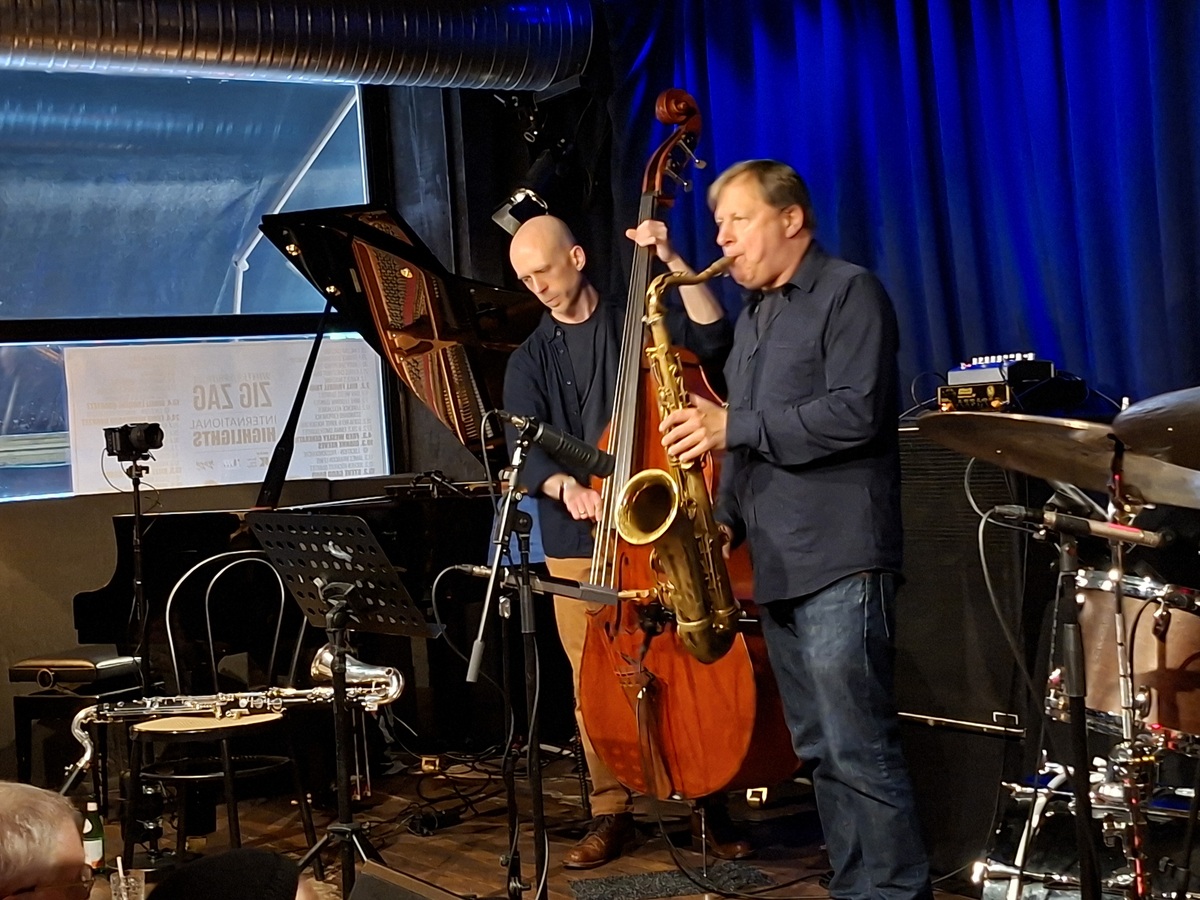
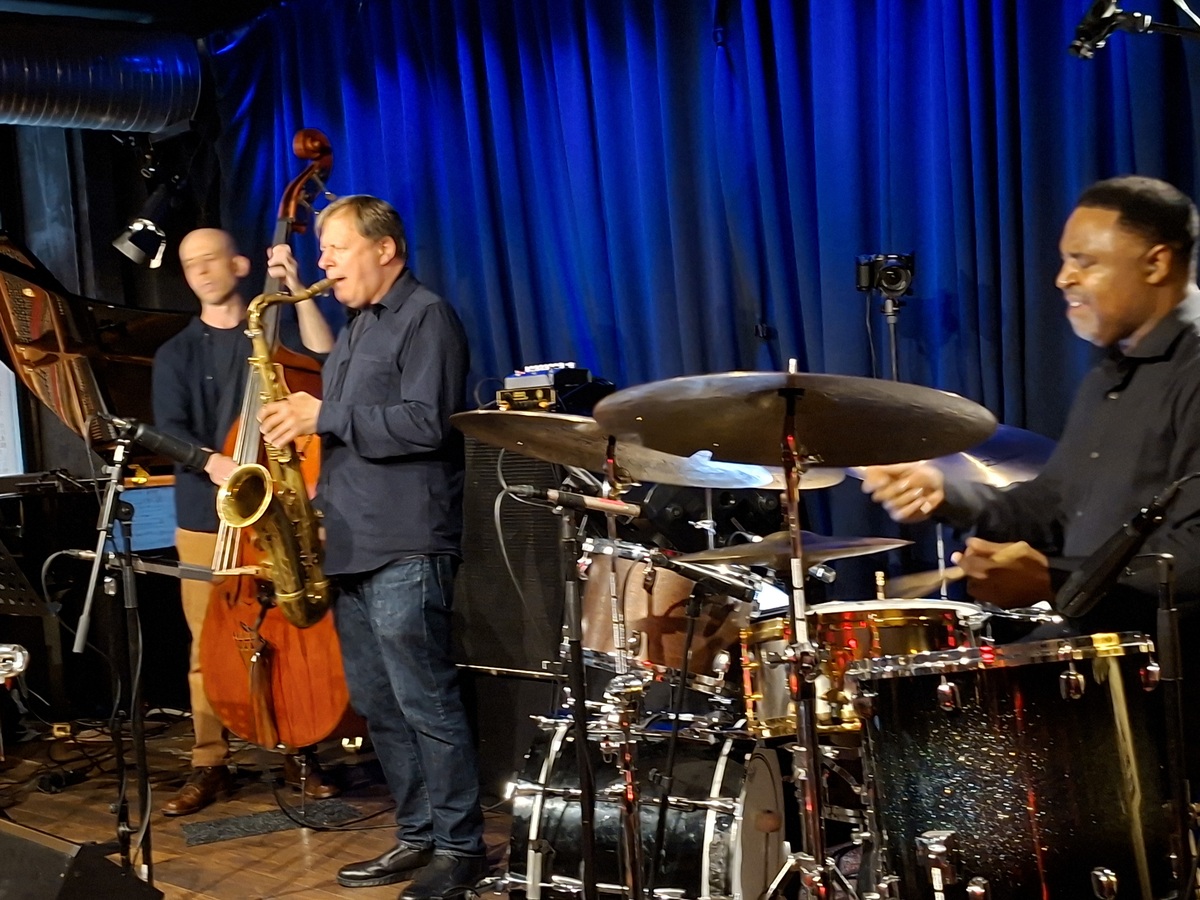
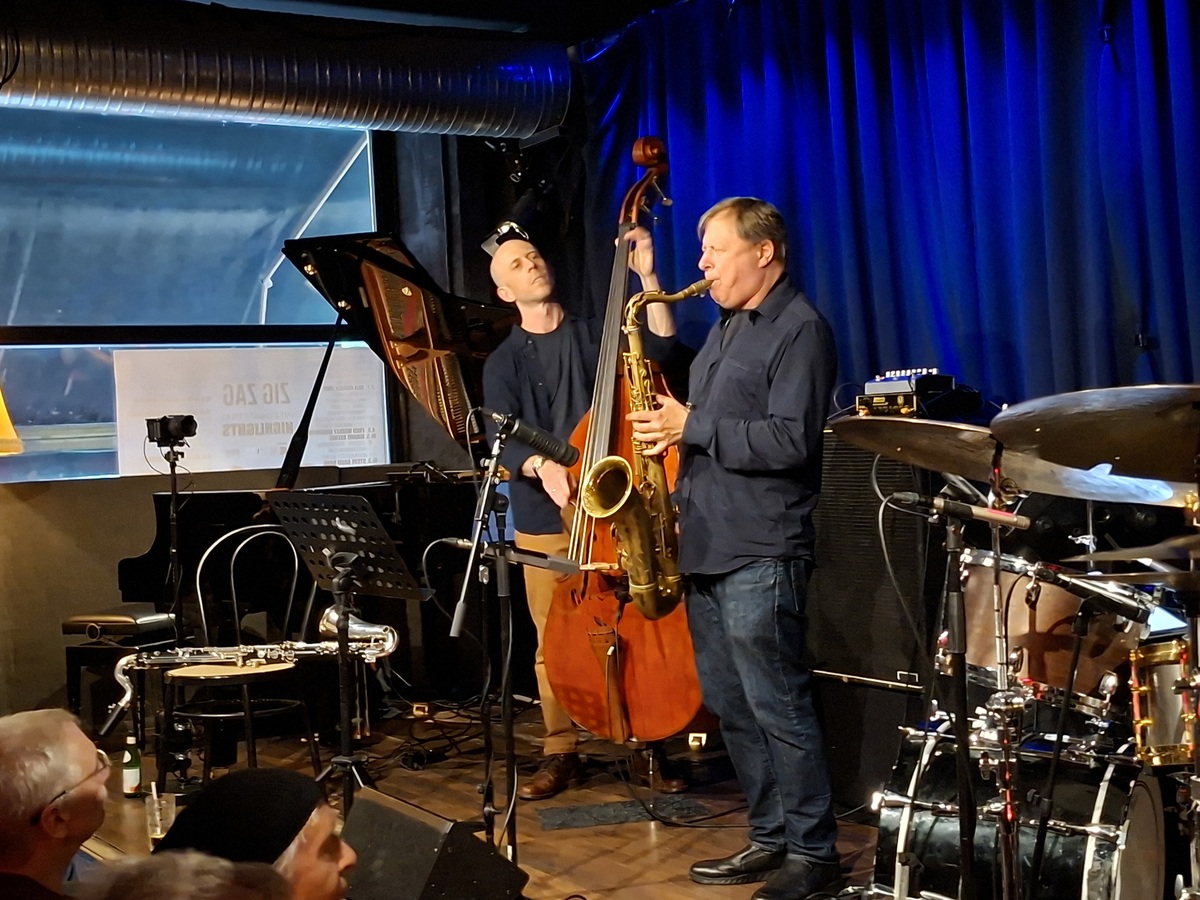
Ein wildes Spektakel durchdröhnt den Club. Die agilen Drums von Kendrick Scott (dem sitze ich mit 1/2 Meter Abstand im Nacken) schlagen akzentuierte Rhythmen, die Linien des Basses von Matt Brewer bewegen sich zwischen Walking-Bass-Figuren und freigestalteten Motiven. Darüber schmettert Chris Potter seine unbändigen Sequenzen, vollgepackt mit Salven und Eruptionen à la Free. Hier und da gibt es ein paar melodische Fetzen, aber nur Splitter. Der ganze Sound tönt nicht nur frei atonal, der ist es auch. Auch das nun folgende Solo des Basses von Matt Brewer artikuliert sich mehr frei aufspielend als melodische Figuren betonend. Nun, die improvisierten Linen des Bass passen exakt zum Sound des Trios. Chris Potter legt noch ein paar schräge Tonfolgen seines Tenors in den Song, „setzt“ den Schlusspunkt.
Der nächste Titel – Herausstellen der Bass-Klarinette
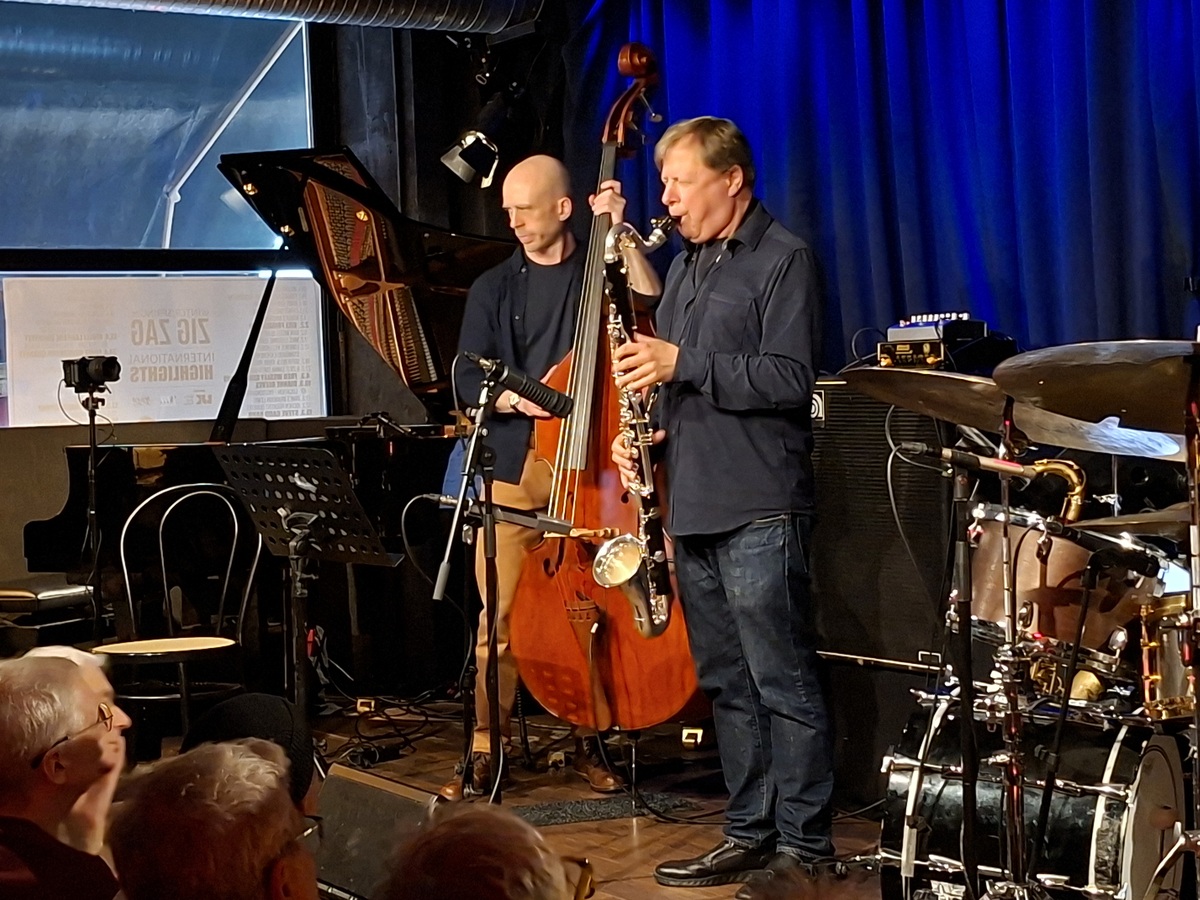
Ein rhythmischer Wechsel wird begleitet durch den Wechsel des Instrumentes. Chris Potter hat seine Bass-Klarinette ergriffen, bläst ein wenig in Richtung balladenhafter Titel, aber auch hier überwiegen die ekstatischen Ausbrüche aus dem Korsett des harmonischen Rahmens. Drummer Kendrick Scott ist mit seinem sehr differenzierten Spiel zu hören, wobei er mir den klaren Linien und Figuren des Basses eng abgestimmt agiert, zu Beginn ein Duo. Der Bass ist nun stärker solistisch zu vernehmen, während die Drums eher unterstützend schlagen. Der Bass zupft sich zunehmen mit seinen improvisierten Figuren in den Vordergrund, kommt dann zum Ende. Das ist das Signal für den Drummer die Schlagkraft zu erhöhen. Chris Potter hat wieder sein Sax zu Hand, übernimmt es, ein Thema anzublasen, es solistisch weiter als freijazzende „Sau“ durch den Club zu jagen. Die Kurze Wiederholung der riffartigen Phrase leitet über zum Solo von Kendrick Scott.
The Next Tune – Featuring the Drums
Das Solo könnte als das Ende des vorigen Titels gelten, aber genauso gut als Auftakt zum nächsten Stück. Nehmen wir es als Intermezzo. Kendrick Scott scheint es ähnlich zu sehen, den er startet dezent. Seine Anschläge haben einen starken Perkussionscharakter: klappen, knarren, rasseln. Dann wechselt er in den Modus des jazz-klassischen Schlagzeug-Spielens. Viele Noten, prasselnde Anschläge, auch ein melodisches Trommeln ist von Kendrick Scott zu hören. Dann übernimmt das Trio das weitere Geschehen. Zunächst ein verhaltenes, fast zurückhaltendes Thema, das vom Tenorsax angestimmt wird. Dies Phase dauert nicht lange, denn schon dröhnt erneut ein fetziger Sound durch den Club. Ansage und Vorstellung des Trios durch Chis Potter. Leider benutzt er für seine Ansage kein Mikrofon. Demzufolge sind die 3 Titel einfach zu leise, nicht zu verstehen. Der folgende Song wird nicht angekündigt.
Chris Potter - The Piano Man
So ist es. Der Tenorsaxofonist hat das Grand Piano in „Besitz“ genommen, schlägt diskrete Akkorde und Einzelnoten. Das könnte der Auftakt zu einer Ballade sein, zumindest eine Komposition mit balladesker Klangfärbung. Ein Piano-Jazz-Trio scheint das einzulösen wollen. Aber auch diese Phase währt nicht lange. Schon ist das Sax wieder dabei. Saxofon und Bass spielen ein Thema unisono an, dann macht das Sax solistisch weiter, zelebriert einige ruhige Sequenzen. Dazu rührt Kendrick Scott seine Drums mit den Besen, Matt Brewer zupft den Bass mit melodischen Figuren, die in ein Solo münden. Unterstützt wird der Bassist von den dezenten Phrasen des Sax und den subtilen Anschlägen der Drums. Jetzt ist aus dem Song doch noch eine echte Ballade geworden. Wie schon zuvor. Die jetzt einsetzenden Sequenzen des Saxofons sind das Ende oder der Auftakt eines Titels. Wie auch immer.
Nochmals volles Rohr – das Tenorsaxofon
Chis Potter packt eine ordentliche Ladung quirliger Expressivität ins Thema, den Titel, in den Trio-Sound. Seine Intonationen sind jetzt moderater, werden stärker melodisch-harmonisch ausgedrückt. Aber dann: ein wildes Spektakel freier Artikulation schraubt den letzten Song konsequent hoch, beendet das 1. Konzert unter tobendem Applaus. Die er-klatschte Zugabe kommt wieder erdiger, versöhnlicher daher. Chris Potters Bass-Klarinette beschwört balladenhafte Tonfolgen von großer Schönheit.
Die Ankündigung des Konzertes lautete so:
Um es kurz zu machen. Tenor-Saxofonist Chris Potter hat alle internationalen Reputationen, die ein hervorragendes Konzert-Erlebnis versprechen lassen. Als New Yorker Musiker hat er alle Optionen, sich stets eine ausgezeichnete Band zusammenzustellen. In diesem Sinn darf von seinem Trio mit Matt Brewer am Bass und Kendrick Scott an den Drums das Beste erwartet werden. „Eines der Highlights 2026!“ so das ZigZag.
Fazit: Genauso war´s.
English version
Report on the first concert at 6:30 p.m.
The Opening Act We Almost Missed
A wild spectacle roars through the club. The agile drums of Kendrick Scott (whose back I’m practically breathing down from half a meter away) beat out accentuated rhythms, while Matt Brewer’s bass lines move between walking bass figures and free-form motifs. Over this, Chris Potter blasts out his unbounded sequences, packed with salvos and eruptions à la Free. Here and there are a few melodic scraps, but only splinters. The whole sound doesn’t just sound freely atonal—it is. Matt Brewer’s bass solo that follows also articulates itself more through free improvisation than by emphasizing melodic figures. Well, the bass’s improvised lines fit the trio’s sound perfectly. Chris Potter puts a few more offbeat sequences from his tenor sax into the song, “putting the finishing touch” on it.
The next track – highlighting the bass clarinet
A rhythmic switch is accompanied by a change of instrument. Chris Potter has picked up his bass clarinet, playing a bit in the vein of a ballad-like track, but here too, the ecstatic outbursts breaking free from the corset of the harmonic framework predominate. Drummer Kendrick Scott can be heard with his highly nuanced playing, closely coordinating with the clear lines and figures of the bass—a duo at the start. The bass is now more clearly heard as a solo instrument, while the drums play a more supporting role. The bass increasingly plucks its way to the forefront with its improvised figures, then comes to an end. This is the signal for the drummer to increase the intensity. Chris Potter has his sax in hand again, taking over to play a theme, chasing it solo through the club like a free-jazzing “wild boar.” The brief repetition of the riff-like phrase leads into
Kendrick Scott’s solo.
The Next Tune – Featuring the Drums
The solo could be seen as the end of the previous track, but just as easily as the prelude to the next piece. Let’s consider it an interlude. Kendrick Scott seems to see it that way too, as he begins rather discreetly. His strokes have a strong percussive quality: clapping, creaking, rattling. Then he shifts into the mode of jazz-classical drumming. Many notes, crackling strokes, and even melodic drumming can be heard from Kendrick Scott. Then the trio takes over. First, a restrained, almost subdued theme is introduced by the tenor sax. This phase doesn’t last long, as a groovy sound soon booms through the club once again.
Announcement and introduction of the trio by Chris Potter. Unfortunately, he doesn’t use a microphone for his announcement. As a result, the first three tracks are simply too quiet to make out. The next song isn’t announced.
Chris Potter - The Piano Man
That’s right. The tenor saxophonist has “taken possession” of the grand piano, playing discreet chords and single notes. This could be the prelude to a ballad, or at least a composition with a ballad-like tone. A piano-jazz trio seems intent on bringing this to life. But this phase doesn’t last long either. The sax is already back in the mix. The saxophone and bass introduce a theme in unison, then the sax continues as a soloist, celebrating a few quiet passages. Alongside this, Kendrick Scott plays his drums with brushes, while Matt Brewer plucks the bass with melodic figures that lead into a solo. The bassist is supported by the sax’s understated phrases and the drums’ subtle strokes. Now the song has turned into a genuine ballad after all.
Just like before. The saxophone sequences that now begin are either the end or the opening of a track. Either way.
Full blast again—the tenor saxophone
Chris Potter packs a hefty dose of lively expressiveness into the theme, the title, and the trio’s sound. His intonations are now more moderate, expressed with greater melodic and harmonic clarity. But then: a wild spectacle of free articulation consistently builds up the final song, bringing the first concert to a close amid thunderous applause.
The encore, brought on by the applause, comes across as more earthy and conciliatory. Chris Potter’s bass clarinet conjures up ballad-like sequences of great beauty.
The concert announcement read as follows:
To make a long story short. Tenor saxophonist Chris Potter has all the international credentials that promise an outstanding concert experience. As a New York musician, he has every opportunity to put together an excellent band at any time. In this sense, the best can be expected from his trio with Matt Brewer on bass and Kendrick Scott on drums. “One of the highlights of 2026!” according to ZigZag.
Conclusion: That’s exactly how it was.