Ed Partyka Orchestra b-flat 12.09.25
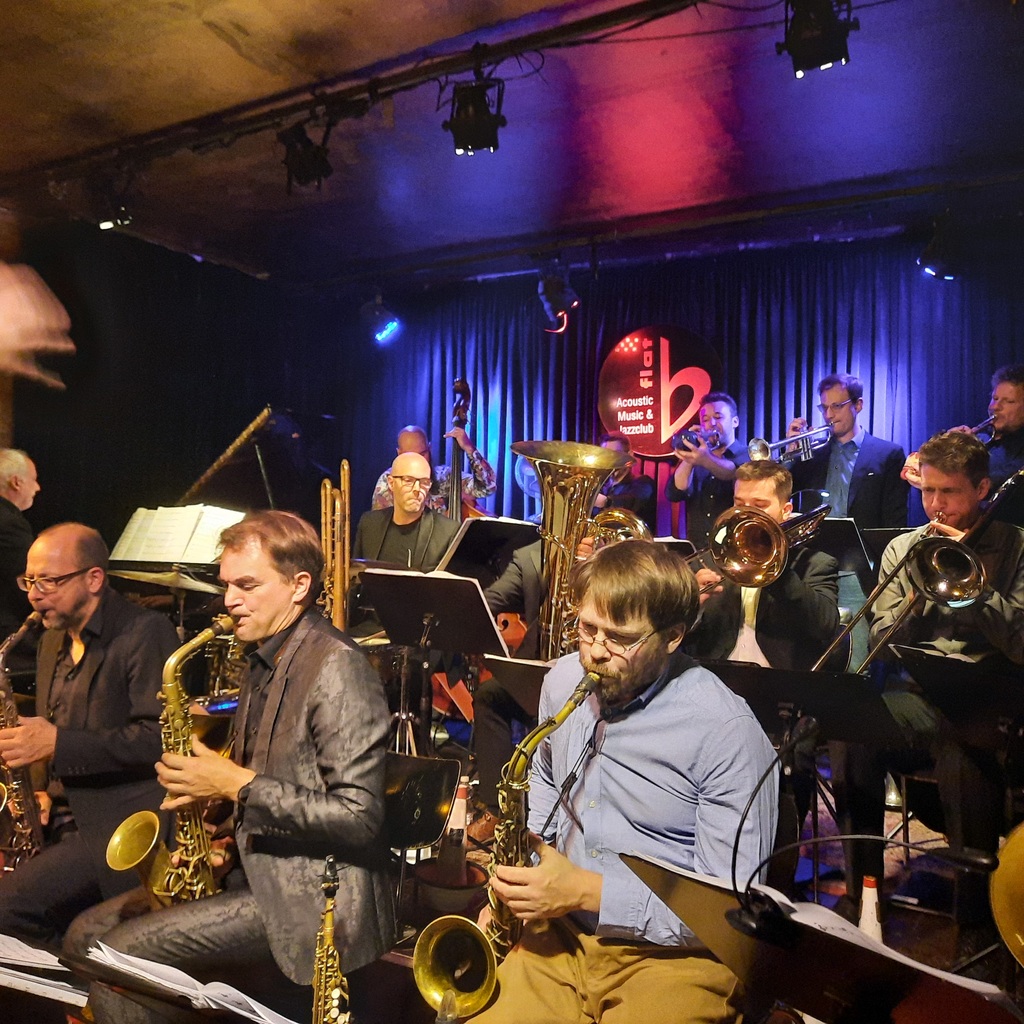
Ed Partyka Orchestra b-flat 12.09.25
Ed Partyka Orchestra
Saxophones:
Oliver Leicht, Florian Trübsbach, Malte Schiller, Yannick Glettenberg,
Florian Leuschner
Trumpets: Dominic Pessl, Benny Brown, Jan Kaiser, Christian Mehler, Martin Auer
French Horn: Linus Bernoulli
Trombones: Simon Harer, Maurus Twerenbold, Robert Hedemann, Jan Schreiner
Rhythm: Piano - Hendrik Soll, Bass - Reza Askari, Drums - Reini Schmölzer
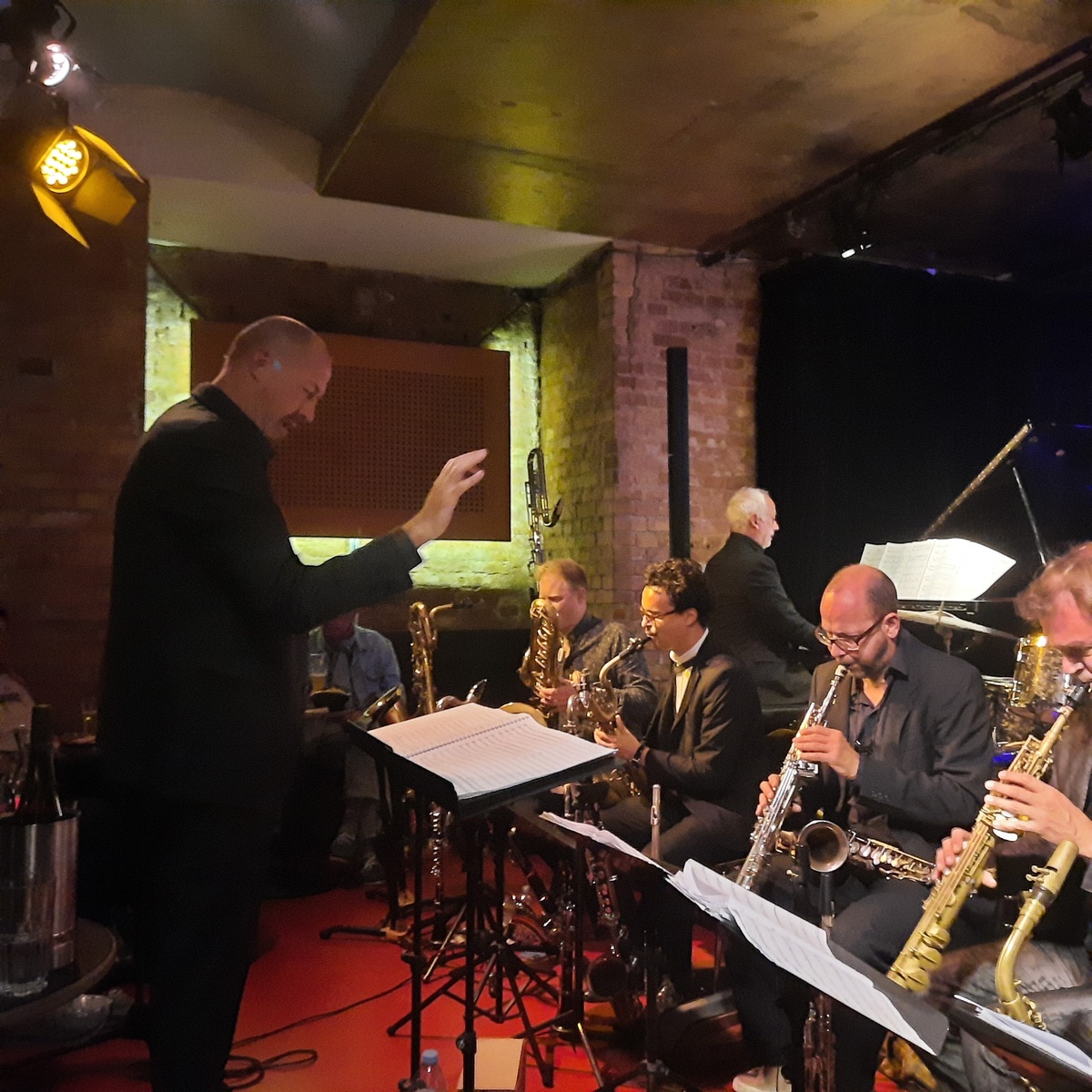
Composer/Arranger/Conductor: Ed Partyka
„Do As I Say (Not As I Do)”
Die Band – von Applaus begleitet - erobert gleichzeitig die Bühne von 2 Seiten, von hinten durch den Künstlereingang, von vorne durchs Publikum.
Ohne Ansage geht´s direkt zur Sache. Drums, Bass & Piano legen rhythmisch vor, die Bläser gesellen sich dazu, noch bedächtig. Das Blech dominiert leicht, dann sind alle dabei. Der erste Einsatz einer solistische Posaune, die thematisch anstimmt. Verschachtelte Bläsersätze stoßen hinzu, es wird leiser, verhaltener, die Saxofone säuseln leise ihre Riffs, dann überfällt die geballte Power der Bläser den Titel. Es tönt jetzt nach einem akustischen „Das Imperium schlägt zurück.“
Die Posaunen haben weiterhin die Stimmführung, dann Ruhe, fast Stille. Das Sopran von Florian Trübsbach bindet seine solistischen Schleifen ins Thema, von der Combo diskret unterstützt. Das währt nicht lange, denn Ed Partyka dirigiert seine Bläser zum Einsetzen. Da ist nun ein sehr kompakter Sound zu hören. Die „Brotherhood of Brass“ zieht sich zurück, überlässt dem Sopran noch ein paar Takte, bevor die Posaune solistisch weitermacht. Das ist der scharf schneidende – durch Trompeten/Flügelhörner verursachte - Auftakt, der als Gegenpol die tieflagigen Posaunen plus Tuba zu integrieren hat. Das ist der satte Sound eines Power Orchesters, das von Ed Partyka. Und das war seine Komposition - „Do As I Say (Not As I Do)”.
Ed Partyka begrüßt das Publikum, fragt, ob Deutsch oder Englisch als Ansprache gewünscht sei, macht dann – wie oft - auf Englisch weiter und bewirbt seine neue CD, die nur hier und nicht im Netz zu erwerben sei. Dazu später mehr.
„Ryhm a Ning“
Eine Komposition von Thelonious Monk, die Drummer Reini Schmölzer bearbeitete. Demzufolge startet der Titel auch mir den Anschlägen der Drums, viel Snare Drum ist zu hören, mit dem Besen – nicht gerührt -, sondern geschlagen. Dann kommt stärkere Bewegung in den Titel, mehr Wirbel erfüllen den Raum, die Intensität des Trommelns steigert sich, noch immer sind die Besen im Einsatz. Dann der gnadenlose Ein- und Überfall - der im Wortsinn - gewaltigen Bläser. Es klingt 2-taktig nach New Orleans, die das Bariton-Sax von Florian Leuschner zu einem lässigen Solo animieren. Der Rhythmus wechselt in einen Swing, moderat vom Tempo wie auch von der Intonation. Dann fällt erneut die ganze Band stimmgewaltig ein, ein Aufbäumen an Energie verschafft sich Gehör, um sogleich wieder dem Bariton-Saxofon hinsichtlich seines Solos - durch relatives „Verstummen“ - zu helfen.
Der solistische Staffelstab geht an die Trompete über, die mittels Dämpfer auch einen gemäßigten Ton anstimmt, dem Genre New Orleans wieder die „Oberhand“ zukommen lässt. Die Jungs vom Rhythmus - die übrigens einen mehr als guten Job machen - beschleunigen das Tempo, packen etwas von der Unruhe und Hektik von Metropolen in den Titel - da steckt jetzt viel (Be)Bop im Sound des Orchesters. Das ist auch in den hohen, spitzen wie stechenden Sequenzen der Trompete zu hören. Die Musik kulminiert mit wahnwitzigen Figuren - in bester Tradition von Monk - in ein gewaltiges Finale aus Blech & Holz, and was die „Große“ Big Band noch alles zu bieten hat - Ryhm a Ning.
Alles auf Los
Jetzt ist Gelegenheit auf die Unterhaltungs-Qualitäten von Ed Partyka hinzuweisen. Der hat Loszettel an der Kasse ausgeben, die in einem Quasi-Hut die Zettel mit Nummern enthalten. Stets andere Personen aus dem Publikum dürfen ziehen. Die Gewinner-Lose erhalten dann die aktuelle CD. So geht das – sehr zur Freude des Publikums bei jeder Ansage. Das kommt gut an, ist witzig, aber hoffentlich bleiben noch genügend CDs zum Erwerben übrig.
„G.G.´s Last Dance”- Ansage
Der Titel verrät´s, ein Werk von Ed Partyka. Sie haben nur diese eine Ballade dabei, erläutert Ed smart. Dieser Titel sei: „softer, slower, nicer“ als die vorigen Stücke. Seine Ansage versprühen viel Entertainment, was positiv zu verstehen ist. Einige Erläuterungen zu G.G.´s Last Dance, das jedoch eine zu lange Geschichte sei, um sie hier zu erzählen. Lassen wir die Musik sprechen, genauer die Posaune(n).
„G.G.´s Last Dance”- Musik
Die Saxofonisten legen vor, greifen zu den Klarinetten: 3 Klarinetten plus 2 Bass-Klarinetten, es klingt nach Kammermusik. Das Blech fällt mit gestopften Hörnern ein, was neben der Intonation durch die Dämpfer verursacht ist. Ein weicher, eleganter Sound charakterisiert den Titel zurecht als Ballade mit kammermusikalischen Zungenschlag. Einen Tick Wagner-Soft mag auch rauszuhören sein. Jetzt aber die solistische Posaune von Simon Harrer, die mit balladesken Tonfolgen sich die Aufmerksamkeit erspielt. Plötzlich aufbrausendes Intermezzo durch die Bläser, die kurzzeitig die Ballade vergessen machen, dann sind wieder die runden, dabei kraftvollen Sequenzen der Solo-Posaune zu vernehmen. Tieflagig wird das ergänzt durch Kontrabass-Klarinette, Tuba & Bass-Posaune.
Jetzt blast Simon Harrer zum „Sturm auf die Bastille“, wenn nicht zum „Jüngsten Gericht“. Die ganze Band zieht mutwillig nach, ein wildes Spektakel macht sich breit. Auch der Rhythmus ist voll bei der Sache, sie schlagen und zupfen nahezu ekstatisch, um Holz wie Blech den ABSOLUT erforderlichen Support zu zollen, was mit souveräner Leidenschaft auch gelingt. Ein fetziger Big Band Sound erobert den Club, der das Publikum fesselnd in seinen Bann zieht. Mit irritierender Sanftheit nähert sich nun das Stück dem Ende, aber zuvor ertönen nochmals die tieflagigen Blechbläser, um dann gemeinsam das Thema zart auszublasen – „Brass Off“.
Wie Ed Partyka dann kurz darauf ergänzt, sei es eine traurige Story, die G.G. erlebt, da er letztlich „died“.
Es ist eine Komposition von Charlie Parker, die gleich nach der Ansage gespielt werden wird. Zuvor sind noch Erläuterungen notwendig, die Ed unterhaltsam rüberbringt. Auf Deutsch würde der Titel - korrekt übersetzt – so lauten: “Klatscht-Auf-Wiedersehen“. Toller Titel! Noch Fragen?
„KLACTOVEEDSEDSTENE“
Der Song kommt gut Latin daher. Unterstützt wird der latinisierte Rhythmus durch die Holzbläser, die jetzt Flöten und Klarinetten blasen sowie den mit Dämpfern ausgestattetem Blech. Der Song könnte gut von Dizzy Gillespie sein, vermutlich hat Bird sich animieren lassen. Latin ja, aber das ist eher karibisches und kubanisches Flair, was der Rhythmus generiert, der sich wiederum von den Klangfarben eines Posaunen-Solo bereichern lässt. Die dann einfallenden Bläsersätze sind stets von messerscharfer Präzision, über die sich weiterhin das Solo der Posaune tieflagig erhebt.
Dann schiebt der sich ändernde Sound den Latin Tough beiseite und ein lustvolles Swingen in einer aktuellen Bob-Variante spielt sich in den Fokus. Das ertönende Klarinetten-Solo bildet einen spannenden Gegensatz zum Bob-Rhythmus, der gegen Ende erneut Latin Beats kreiert. „Klatschen zum Wiedersehen“ - Dizzy grüßt augenzwinkernd und dem Publikum gefällt´s sehr.
Damit sind alle in die wohlerhörte und wohlverdiente Pause entlassen.
Ed Partyka Orchestra b-flat 12.09.25 - English version
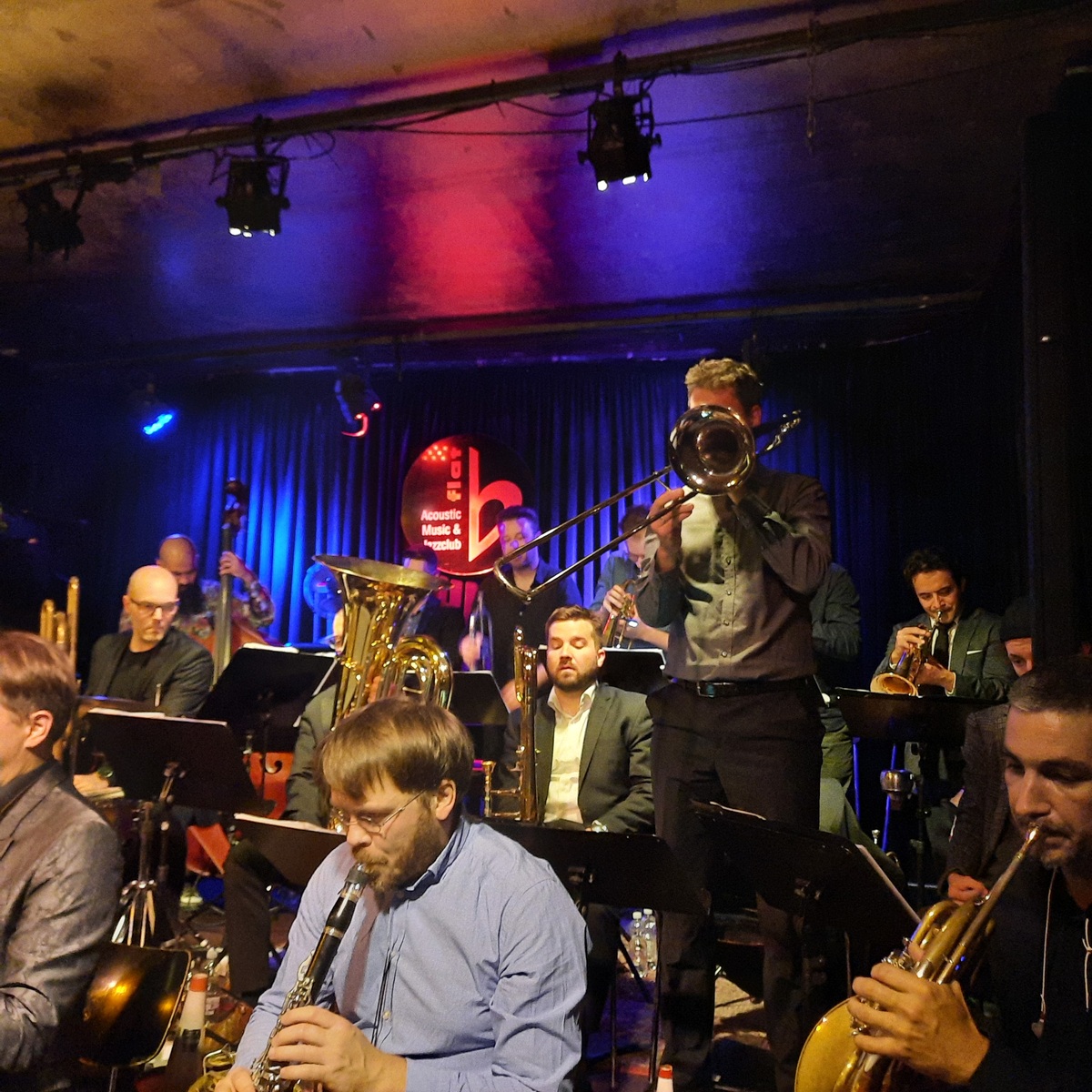
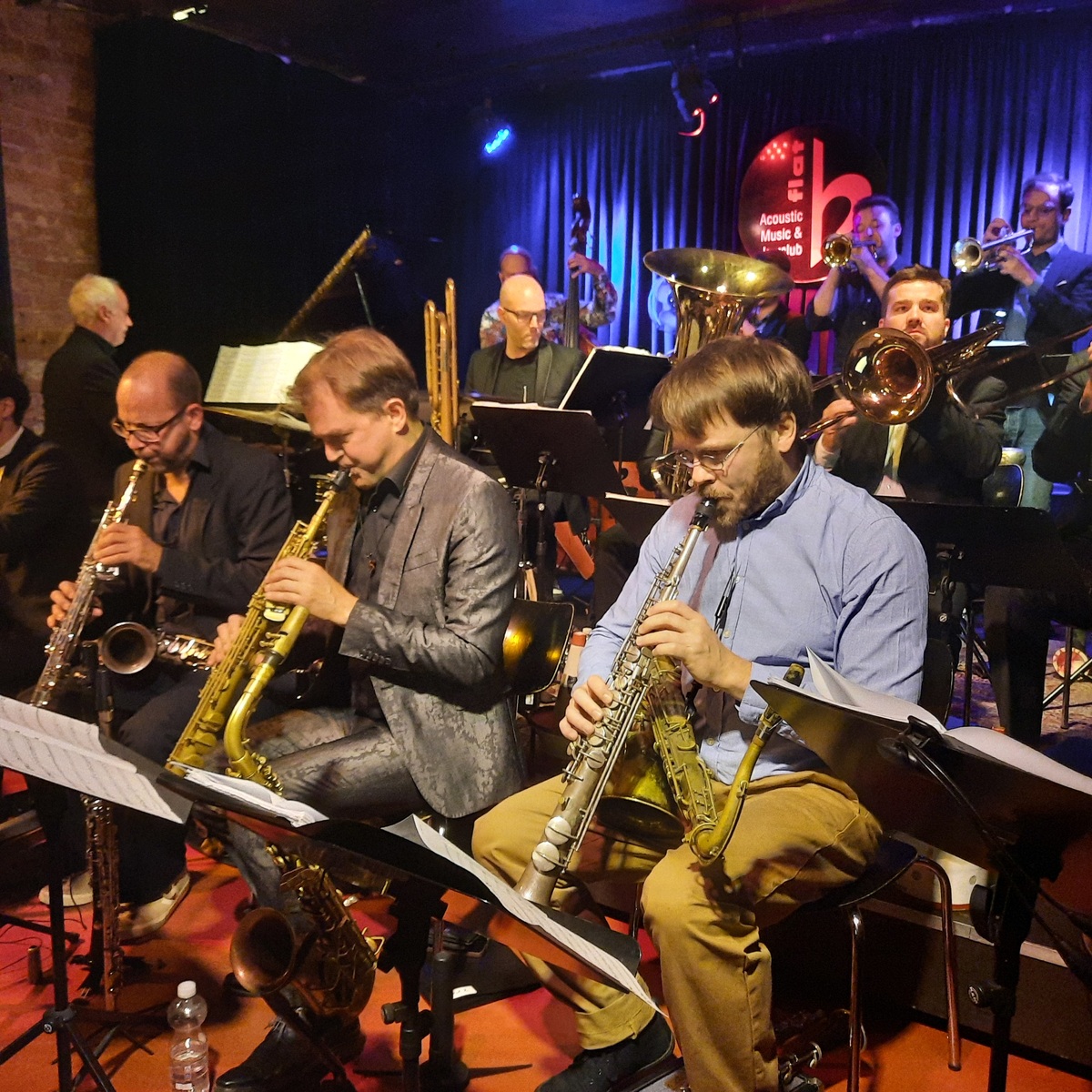
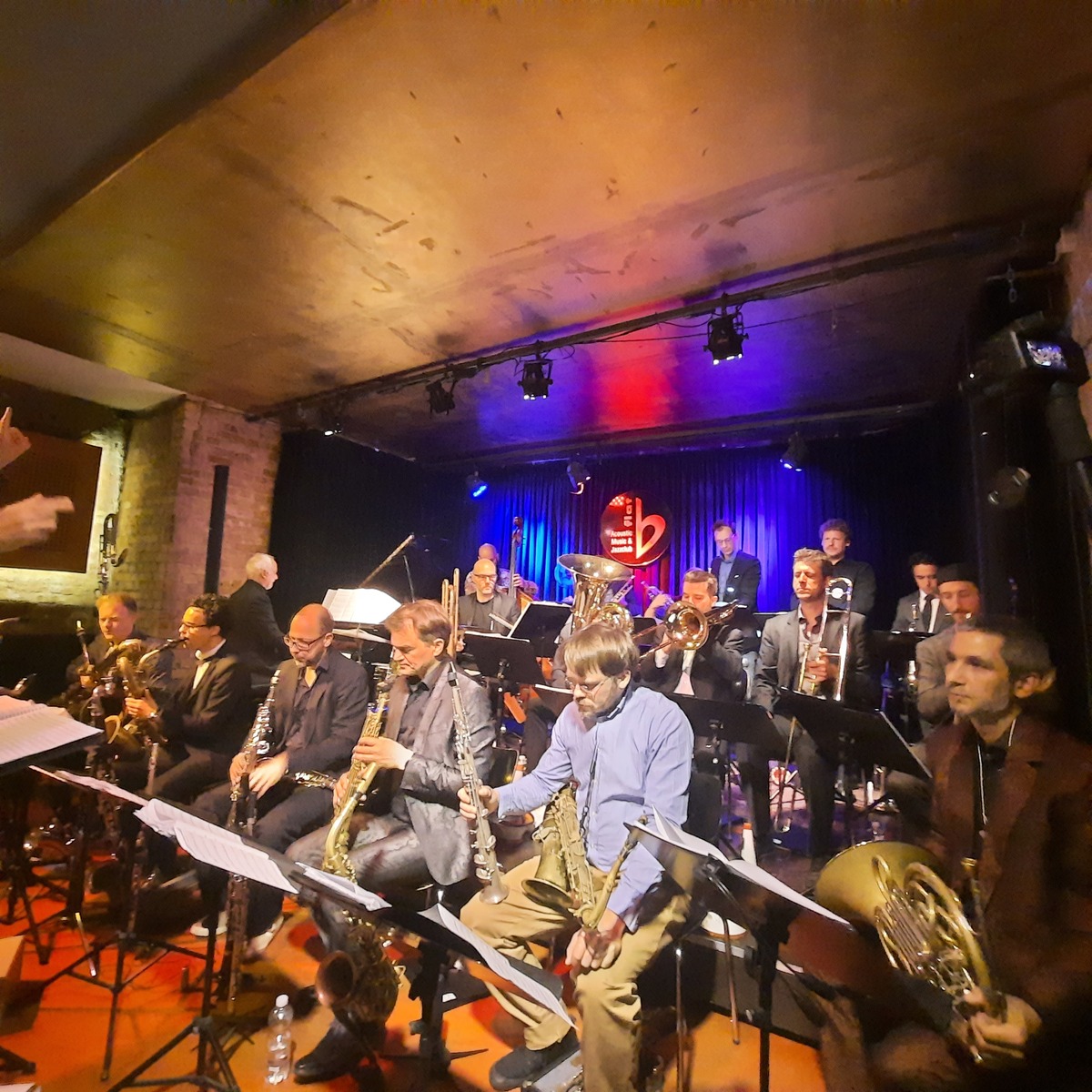
It remains a challenge for b-flat to accommodate an 18-piece big band. The club manages this by stealing the front row from the audience and making it available to the band. They have already set up all their instruments, and there are so many of them that the drums – which usually catch the eye – seem lost and have to be laboriously discovered. The sound is just like the instruments. It promises to be very exciting.
Today – 09/13/25 – there is still an opportunity to experience the powerful big band spectacle of Ed Partyka and his men live: Go there!
Ed Partyka Orchestra
Saxophones:
Oliver Leicht, Florian Trübsbach, Malte Schiller, Yannick Glettenberg,
Florian Leuschner
Trumpets: Dominic Pessl, Benny Brown, Jan Kaiser, Christian Mehler, Martin Auer
French Horn: Linus Bernoulli
Trombones: Simon Harer, Maurus Twerenbold, Robert Hedemann, Jan Schreiner
Rhythm: Piano - Hendrik Soll, Bass - Reza Askari, Drums - Reini Schmölzer
Composer/Arranger/Conductor: Ed Partyka
Accompanied by applause, the band takes the stage from two sides simultaneously, entering from the back through the artists' entrance and from the front through the audience.
Without any introduction, they get straight down to business. Drums, bass, and piano set the rhythm, and the brass section joins in, still cautiously. The brass dominates slightly, then everyone joins in. The first solo trombone enters, setting the theme. Interlocking brass sections join in, the music becomes quieter, more restrained, the saxophones softly whisper their riffs, then the concentrated power of the brass section takes over the piece. It now sounds like an acoustic “The Empire Strikes Back.” The trombones continue to lead the melody, then there is calm, almost silence. Florian Trübsbach's soprano weaves its solo loops into the theme, discreetly supported by the combo. This does not last long, as Ed Partyka conducts his brass section to come in. A very compact sound can now be heard. The “Brotherhood of Brass” withdraws, leaving the soprano for a few more bars before the trombone continues as a soloist. This is the sharp, cutting upbeat – caused by trumpets/flugelhorns – which has to integrate the low-pitched trombones and tuba as a counterpoint. This is the rich sound of a power orchestra, that of Ed Partyka. And that was his composition – “Do As I Say (Not As I Do)”.
Ed Partyka welcomes the audience, asks whether they would prefer him to speak in German or English, then continues in English, as he often does, and promotes his new CD, which is only available here and not online. More on that later.
“Ryhm a Ning”
A composition by Thelonious Monk, arranged by drummer Reini Schmölzer. Accordingly, the track begins with drum beats, with a lot of snare drum to be heard, played with brushes—not stroked, but struck. Then the track picks up speed, more rolls fill the room, the intensity of the drumming increases, and the brushes are still in use. Then the relentless entrance and attack – in the literal sense – of the powerful brass section. It sounds like a 2-beat New Orleans rhythm, which inspires Florian Leuschner's baritone saxophone to play a laid-back solo. The rhythm changes to a swing, moderate in both tempo and intonation. Then the whole band comes in again with powerful voices, a surge of energy makes itself heard, only to immediately help the baritone saxophone with its solo by “falling silent” relatively.
The solo baton is passed to the trumpet, which, with the help of a mute, also strikes a moderate tone, giving the New Orleans genre the upper hand again. The rhythm section—who, by the way, are doing a more than good job—accelerate the tempo, injecting some of the restlessness and hectic pace of big cities into the track—there's now a lot of (be)bop in the orchestra's sound. This can also be heard in the high, sharp, piercing sequences of the trumpet. The music culminates with crazy figures—in the best tradition of Monk—in a powerful finale of brass and woodwind, and everything else the “big” big band has to offer—Ryhm a Ning.
All on Los
Now is the opportunity to point out Ed Partyka's entertainment qualities. He has handed out lottery tickets at the box office, which contain numbered slips of paper in a quasi-hat. Different people from the audience are allowed to draw. The winning tickets then receive the current CD. That's how it works – much to the delight of the audience with every announcement. It goes down well, it's funny, but hopefully there will still be enough CDs left to buy.
“G.G.'s Last Dance” announcement
The title gives it away: a work by Ed Partyka. They only have this one ballad with them, Ed explains smartly. This track is “softer, slower, nicer” than the previous pieces. His announcement exudes a lot of entertainment, which is to be understood positively. A few explanations about G.G.'s Last Dance, but that's too long a story to tell here. Let's let the music speak, or more precisely, the trombone(s).
“G.G.'s Last Dance” – Music
The saxophonists lead the way, picking up their clarinets: 3 clarinets plus 2 bass clarinets, it sounds like chamber music. The brass section joins in with muted horns, which is caused by the mutes as well as the intonation. A soft, elegant sound rightly characterizes the title as a ballad with a chamber music feel. A hint of Wagner's softness can also be heard. But now Simon Harrer's solo trombone captures the attention with balladic melodies. Suddenly, there is an explosive interlude by the wind instruments, which briefly make us forget the ballad, then the round, yet powerful sequences of the solo trombone can be heard again. This is complemented in the lower register by the contrabass clarinet, tuba, and bass trombone.
Now Simon Harrer blows the “storming of the Bastille,” if not the “Last Judgment.” The whole band follows suit, and a wild spectacle unfolds. The rhythm section is also fully engaged, beating and plucking almost ecstatically to provide the ABSOLUTELY necessary support for the woodwinds and brass, which they succeed in doing with confident passion. A groovy big band sound takes over the club, captivating the audience. With unsettling gentleness, the piece now approaches its end, but first the low brass instruments sound once more, then together they delicately blow out the theme – “Brass Off.”
As Ed Partyka adds shortly afterwards, it is a sad story that G.G. experiences, as he ultimately “died.”
It is a composition by Charlie Parker, which will be played immediately after the announcement. Before that, some explanations are necessary, which Ed conveys in an entertaining way. In German, the title would be correctly translated as “Klatscht-Auf-Wiedersehen” (Clap Goodbye). Great title! Any questions?
“KLACTOVEEDSEDSTENE”
The song has a nice Latin feel to it. The Latinized rhythm is supported by the woodwinds, which now play flutes and clarinets, as well as the brass equipped with mutes. The song could well be by Dizzy Gillespie; Bird was probably inspired by him. Latin, yes, but it's more of a Caribbean and Cuban flair that the rhythm generates, which in turn is enriched by the timbres of a trombone solo. The brass sections that then come in are always razor-sharp in their precision, over which the trombone solo continues to rise in the lower register.
Then the changing sound pushes the Latin toughness aside and a lustful swing in a contemporary Bob variation comes into focus. The clarinet solo forms an exciting contrast to the Bob rhythm, which creates Latin beats again towards the end. “Clap for the reunion” – Dizzy greets the audience with a wink, and they love it. With that, everyone is dismissed for a well-deserved break.