Felix Henkelhausen Jazzfest Berlin 30.10.25
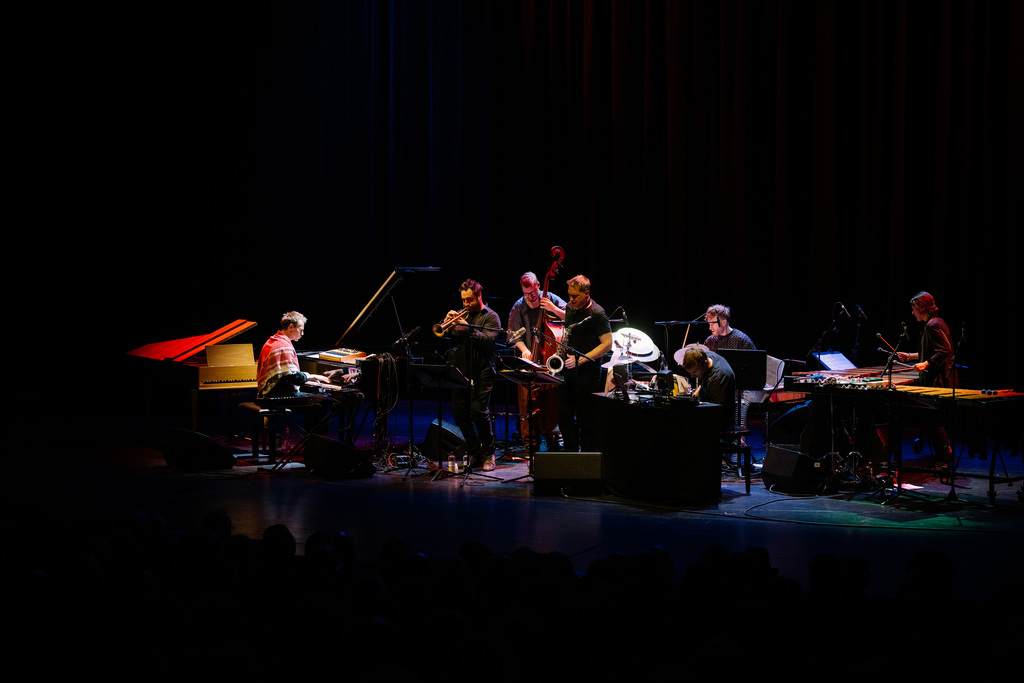
Felix Henkelhausen Jazzfest Berlin 30.10.25
Haus der Berliner Festspiele - Große Bühne 19:30
Felix Henkelhausen Septett „Deranged Particles“
Percy Pursglove – Trompete
Philipp Gropper – Tenorsaxofon
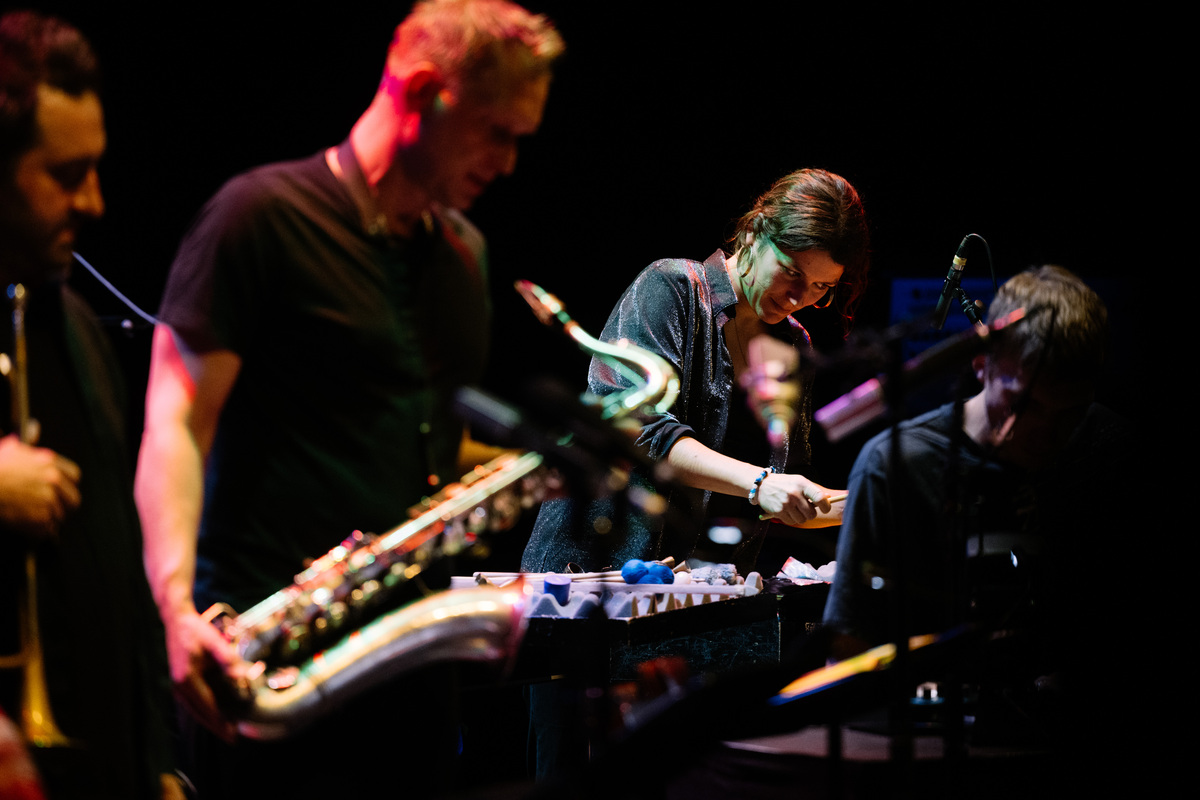
Evi Filippou – Vibrafon, Marimba
Valentin Gerhardus – Sampling, Elektronik
Elias Stemeseder – Klavier, Cembalo, Synthesizer
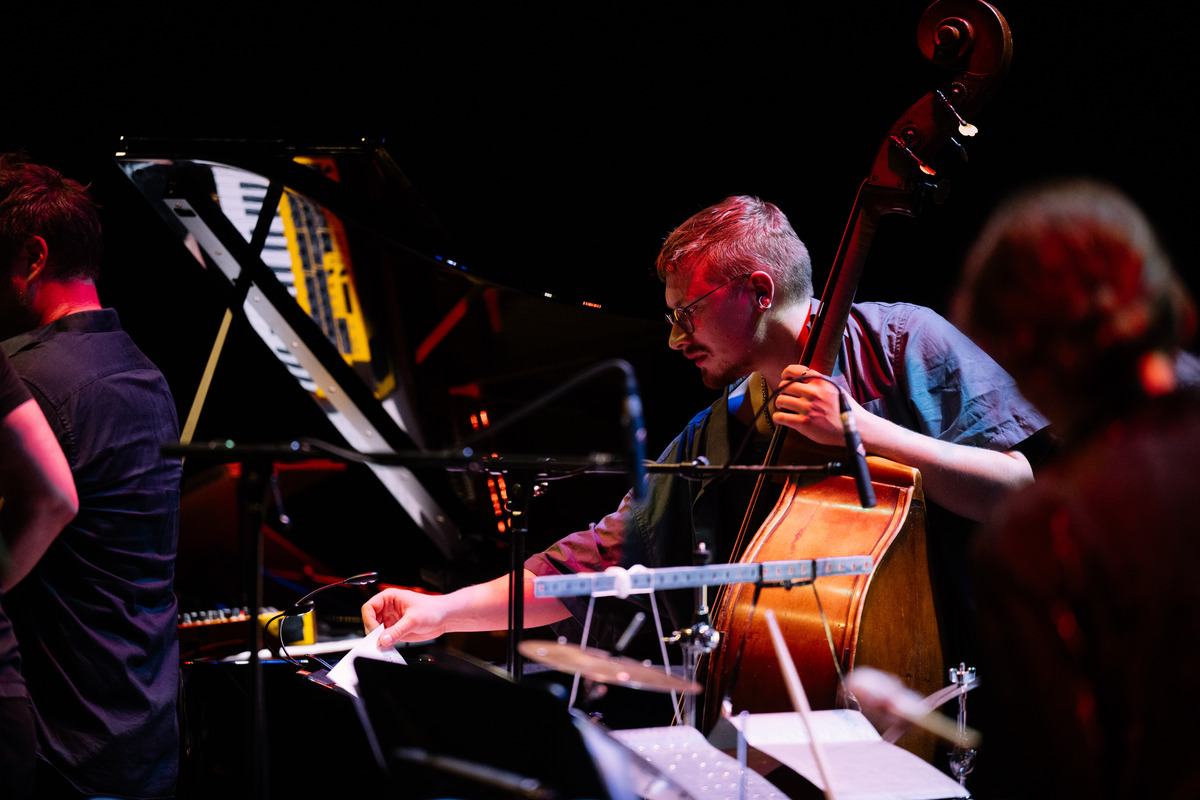
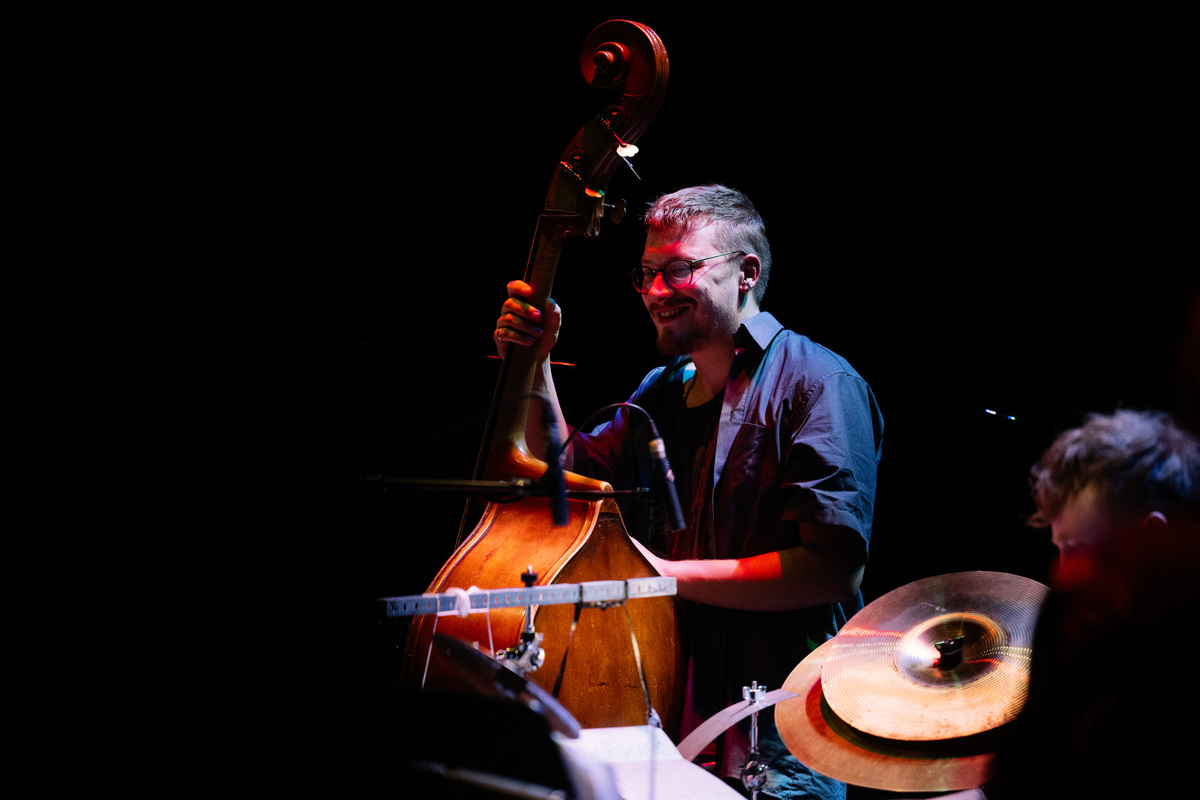
Felix Henkelhausen – Kontrabass, Komposition
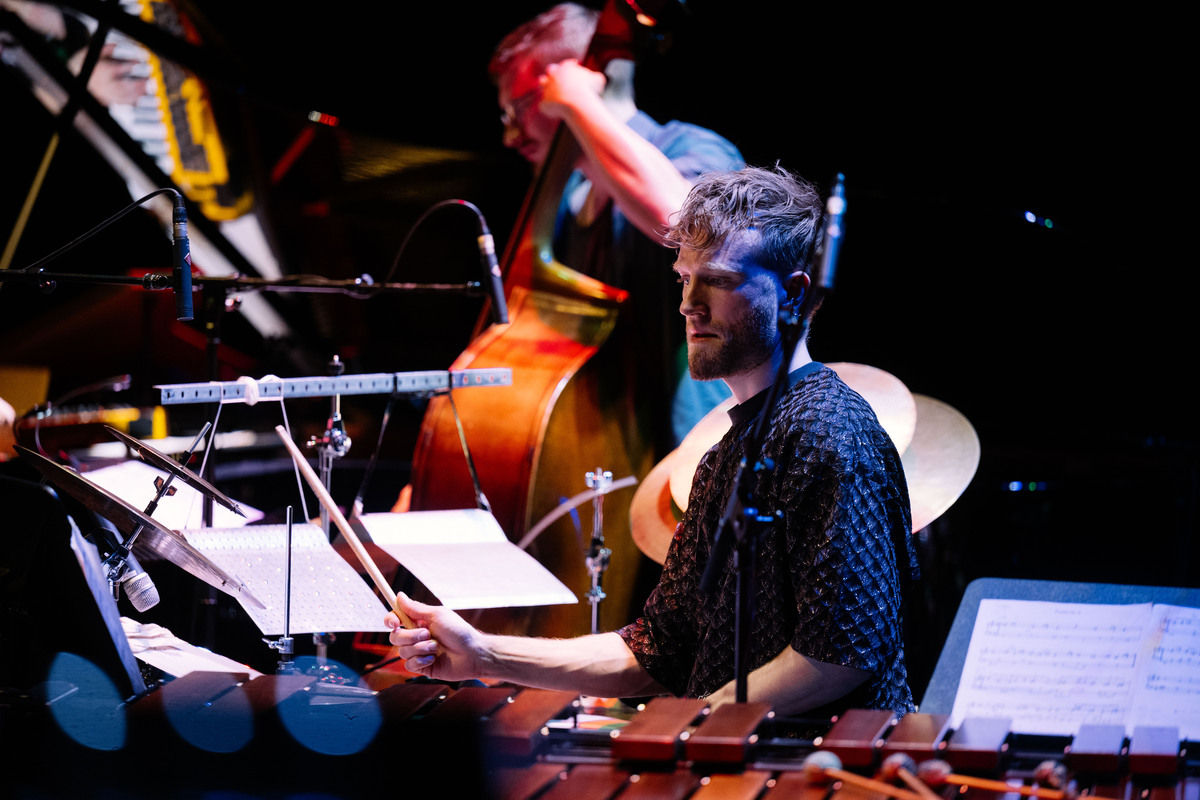
Philip Dornbusch – Schlagzeug, Perkussion
Nach dem - etwas verloren wirkenden - Trio von Angelika Niescier, das zuvor das Jazzfest eröffnete, füllt nun ein größeres Ensemble mit ungewöhnlicher Besetzung die Bühne. Neben den Bläsern und der Rhythmus-Sektion sind es Vibrafon & Marimba, die ins Auge stechen. Ins Gehör springen sogleich die unkonventionell komponierten Themen, die Bassist Felix Henkelhausen seinen Mitgestaltern auf den Leib geschrieben hat.
Komposition und Improvisation
Die Band startet eher verhalten, bringt noch keinen kompakten, wuchtigen Sound auf die Bühne, sondern lässt einzelne Klangfarben behutsam hervortreten, die von den anderen sehr diskret unterstützt werden. Ein strukturelles Merkmal des Septetts wird dabei deutlich hörbar: die Verschränkung von Komposition und Improvisation, die kaum oder nicht zu unterscheiden ist. Das ist gewollt.
Komplexität & Strukturierung
Demzufolge prägen gemeinsames wie individuelles Improvisieren den Sound, der durch eine raffinierte Verschachtelung der komponierten und improvisierten Komponenten eine hohe Komplexität sowie einen hohen Grad an Strukturierung erreicht. Die Verteilung der einzelnen instrumentellen Klangfarben, die Felix Henkelhausen arrangiert hat, ist ein Kaleidoskop von Geben und Nehmen, sich zurückziehen, sich zurückhalten, dann sich wieder annähern, auch mal attackieren. Das ist abwechslungsreich, erfordert jedoch eine höhere Konzentration beim Hören.
Der Rhythmus
Der Besonders interessant ist das Spiel von Drummer Philip Dornbusch. Was da getrommelt wird, erinnert in keiner Weise an einen der klassischen Jazzstile: Was also schlägt der Drummer? Die Beantwortung der Frage ist nur im Negativen zu beantworten, was es nicht ist: kein Swingen in einer tradierten oder aktuellen Variante, kein Funk gleich welcher Ausprägung, es ist auch kein durchgehendes, akzentuiertes Schlagen aus dem Jazz-Rock. Auch Latin-Rhythmen sind nicht auszumachen. Nun, wenn ein Begriff dem näherkommen will, so ist das kein Terminus aus dem musikalischen Reich des Rhythmus, sondern er speist sich aus dem musikalischen Genre der Neuen Musik. Das Trommeln ist durchkomponiert, auch abwechslungsreich in seinen Nuancen, aber es fehlt eine Überführung der agilen Anschläge in einen Rhythmus, der sich als „zeitliche Gliederung eines melodischen Flusses“ definiert. Das ist nicht gegeben, der Rhythmus wird eliminiert. Das schmerzt klassische Jazz-Ohren, findet anderseits Gefallen, weil neu und ungewöhnlich.
Als Kompensation ist dann in einzelnen Passagen das Vibrafon (auch mal Marimba) von Evi Filippou zu hören, die die rhythmische Komponente aufrecht erhält und sogar mit einigen solistischen Improvisationen zu hören ist, die vom Publikum dankbar quittiert werden. Das Bedürfnis, Soli klar ausmachen zu können, ist wohl vorhanden, wird auch vermisst.
Der Bass
Komponist Felix Henkelhausen hat sich selbst auf die Liste der Instrumentalisten gesetzt, die erkennbare Solo spielen dürfen. Das ist legitim und auch gut so. Denn einerseits wird in seine Läufen der Rhythmus wieder hergestellt, quasi rehabilitiert, anderseits gibt es in seine Figuren und Motiven viel zu entdecken. Sein souveränes Spielen des Kontrabasses ist von allen Passagen seiner Werkes am stärksten – mit der Ausnahme des Vibrafons - einem zeitgenössischen Jazz verhaftet. Da ist deutlich mehr Jazz als Neue Musik.
Blech, Piano & Elektronik
Diese Komponenten bleiben relativ unauffällig, sie sind strak in die Komposition verhaftet und in enges Arrangement eingespannt. Zwar haben auch sie mal solistische Passagen, die meist kurz sind, aber überwiegend sind die Stimmen ihrer Klangfarben dem Gruppen-Sound untergeordnet. Ihr Spiel von Piano & Elektronik ist stärker auf das Atmosphärische, auf Stimmungen und musikalische Felder ausgerichtet. Das gilt sogar für das Blech. Zwar sind Trompete und Saxofon auch in Soli durchaus zu vernehmen, aber sie habe in keiner Weise die Dominanz wie in vielen andern größeren Ensembles wie Big Bands. Die Stimm- und Themenführung liegt nicht beim Blech, sondern die ist gerecht auf alle Stimmen des Septetts verteilt.
Das Konzept von Felix Henkelhausen, das die Spannungspole von Komposition und Improvisation zu integrieren versucht, finden sich im Konzert des Jazzfestes wieder, auch wenn es – das ist keine Überraschung – anders klingt als auf dem aktuellen Album "Deranged Particles".
Felix Henkelhausen Jazzfest Berlin 30.10.25
Haus der Berliner Festspiele - Große Bühne 19:30
Felix Henkelhausen Septett „Deranged Particles“
Percy Pursglove – trumpet
Philipp Gropper – tenor saxophone
Evi Filippou – vibraphone, marimba
Valentin Gerhardus – sampling, electronics
Elias Stemeseder – piano, harpsichord, synthesizer
Felix Henkelhausen – double bass, composition
Philip Dornbusch – drums, percussion
After Angelika Niescier's trio, which opened the jazz festival and seemed somewhat lost, a larger ensemble with an unusual line-up now fills the stage. In addition to the brass section and the rhythm section, the vibraphone and marimba catch the eye. The unconventionally composed themes that bassist Felix Henkelhausen has written specifically for his fellow musicians immediately catch the ear.
Composition and improvisation
The band starts off rather cautiously, not yet bringing a compact, powerful sound to the stage, but instead allowing individual timbres to emerge gently, supported very discreetly by the others. A structural feature of the septet becomes clearly audible: the intertwining of composition and improvisation, which is difficult or impossible to distinguish. This is intentional.
Complexity & structure
As a result, both collective and individual improvisation shape the sound, which achieves a high degree of complexity and structure through a sophisticated interweaving of composed and improvised components. The distribution of the individual instrumental timbres, arranged by Felix Henkelhausen, is a kaleidoscope of give and take, retreating, holding back, then approaching again, sometimes even attacking. This is varied, but requires a higher level of concentration when listening.
The rhythm
The playing of drummer Philip Dornbusch is particularly interesting. What he drums is in no way reminiscent of any of the classic jazz styles: so what is the drummer playing? The answer to this question can only be given in the negative, what it is not: no swing in a traditional or contemporary variation, no funk of any kind, nor is it the continuous, accentuated beating of jazz-rock. There are no Latin rhythms to be found either. Well, if there is a term that comes close, it is not a term from the musical realm of rhythm, but rather one that draws on the musical genre of new music. The drumming is thoroughly composed, varied in its nuances, but there is no transition of the agile strokes into a rhythm that defines itself as a “temporal structure of a melodic flow.” This is not the case; the rhythm is eliminated. This hurts classical jazz ears, but on the other hand, it is appreciated because it is new and unusual.
As compensation, Evi Filippou's vibraphone (and sometimes marimba) can be heard in individual passages, maintaining the rhythmic component and even featuring in a few solo improvisations, which are gratefully acknowledged by the audience. The need to be able to clearly distinguish solos is certainly there, and is also missed.
The bass
Composer Felix Henkelhausen has put himself on the list of instrumentalists who are allowed to play recognizable solos. This is legitimate and a good thing. On the one hand, his runs restore the rhythm, rehabilitating it, so to speak, and on the other hand, there is much to discover in his figures and motifs. His masterful playing of the double bass is, with the exception of the vibraphone, most strongly rooted in contemporary jazz in all passages of his work. There is clearly more jazz than new music.
Brass, piano & electronics
These components remain relatively inconspicuous; they are tightly anchored in the composition and tightly arranged. Although they also have solo passages, which are mostly short, the timbres of their voices are predominantly subordinate to the group sound. Their piano and electronics playing is more focused on atmosphere, moods, and musical fields. This even applies to the brass. Although the trumpet and saxophone can also be heard in solos, they are in no way as dominant as in many other larger ensembles such as big bands. The voice and theme leadership does not lie with the brass, but is distributed equally among all the voices of the septet.
Felix Henkelhausen's concept, which attempts to integrate the tension between composition and improvisation, is reflected in the Jazzfest concert, even if – unsurprisingly – it sounds different from the current album “Deranged Particles.”