FETE Bigband & Gabriele di Franco 30.10.2026 b-flat English Version
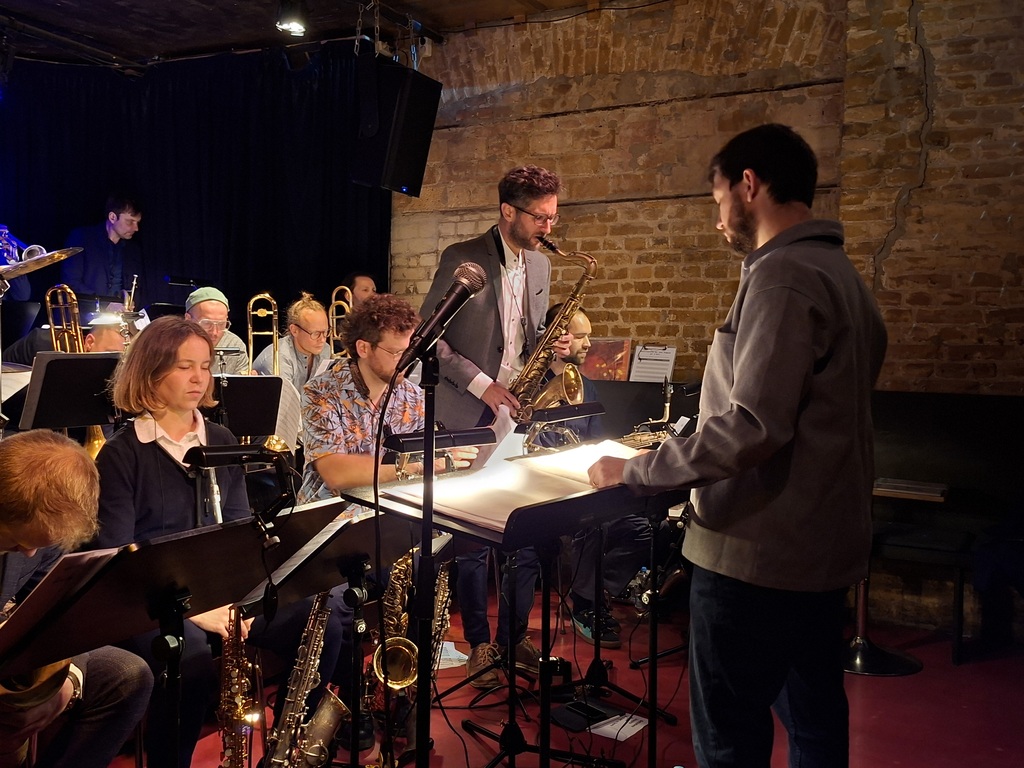
FETE Bigband & Gabriele di Franco 30.10.26 b-flat
FETE Bigband meets Gabriele di Franco | The Value Of Choices
“The Value Of Choices”
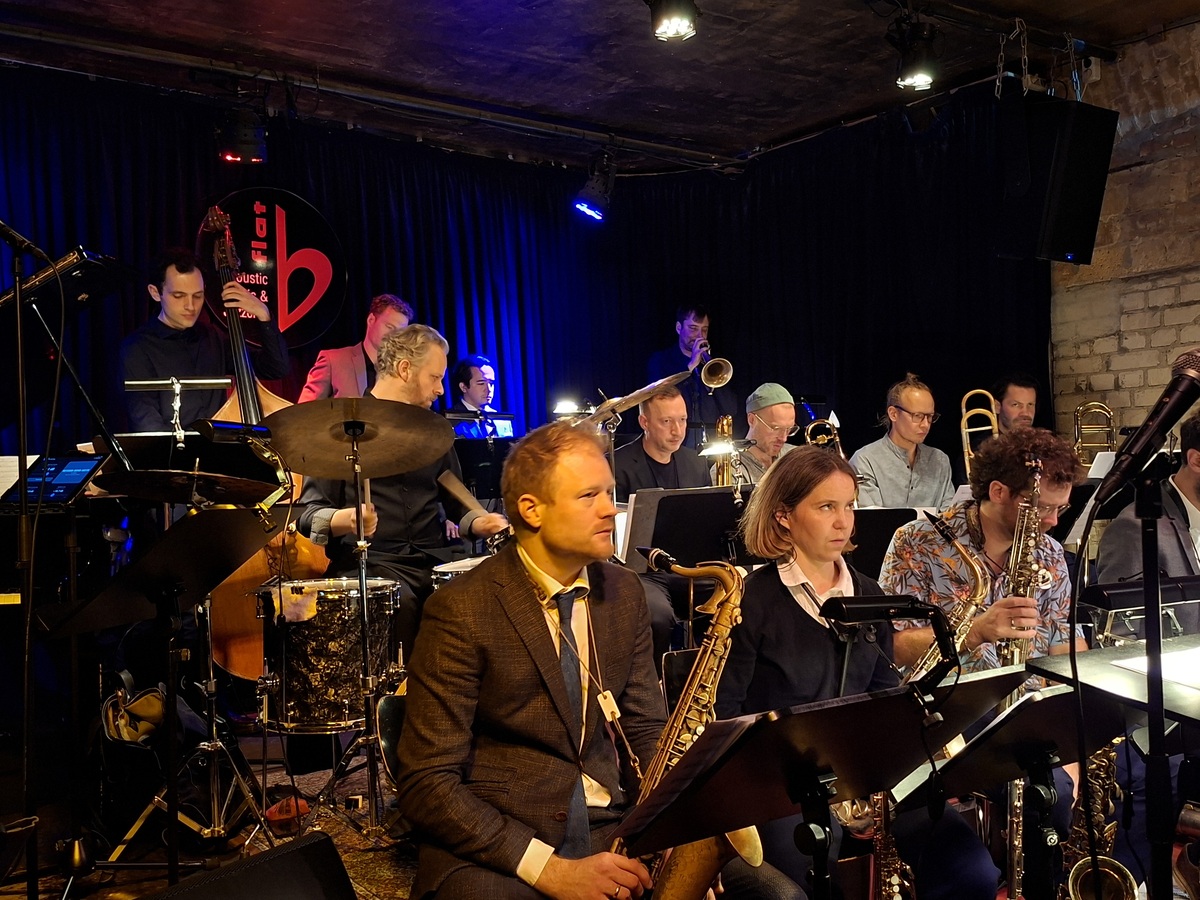
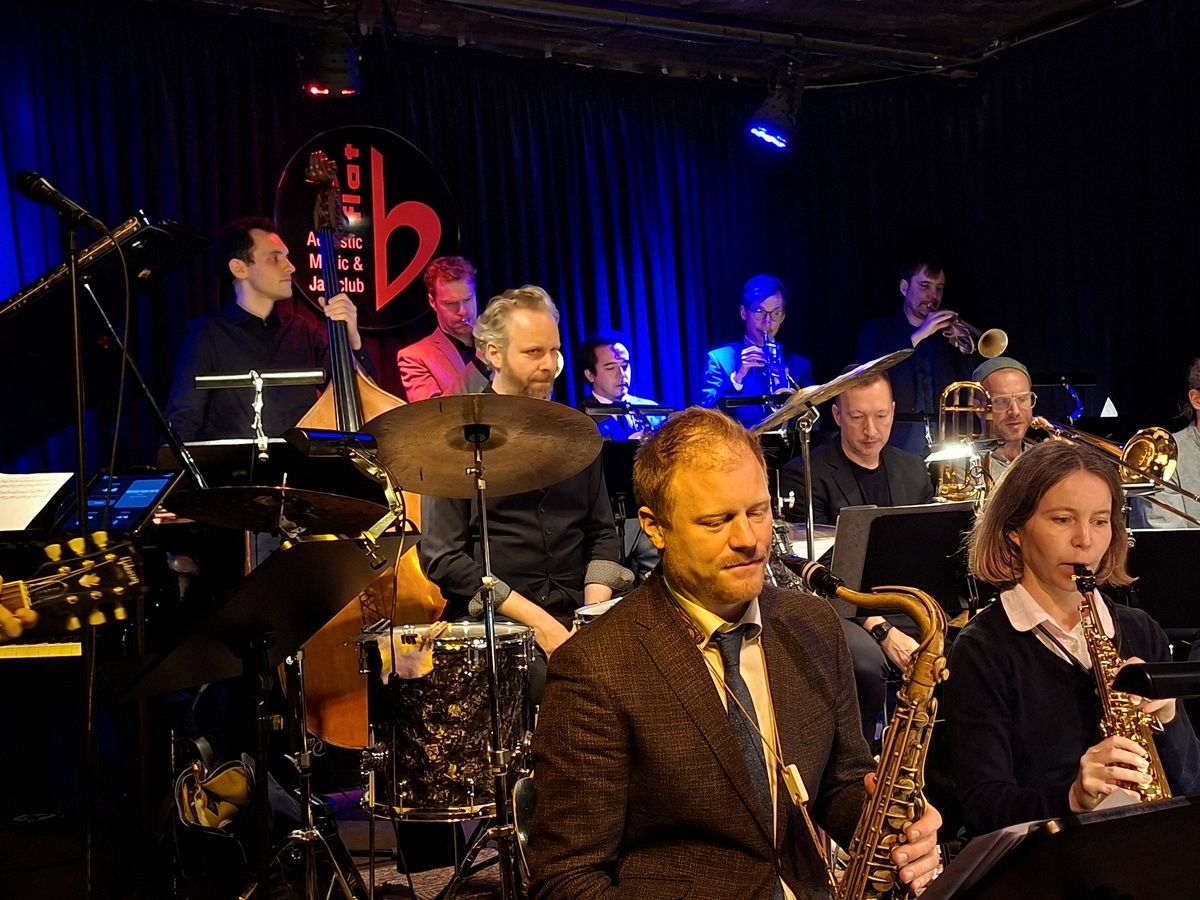
The recording was made by a big band that Gabriele di Franco assembled in Belgium, where he lives. Well, going on tour with a big band is virtually impossible—due to scheduling and financial considerations. Consequently, Gabriele di Franco was well advised to present his album with the FETE Band, led by Markus Ehrlich. The band features outstanding musicians from the Berlin scene who perform in their own bands as well as in numerous projects and thus bring a wealth of experience to the stage.
FETE Big Band—the members are:
Reeds:
Otto Hirte, Leonie Freudenberger, Markus Ehrlich, Marc Doffey, Viktor Wolf
Trumpets:
Florian Menzel, Jan Kaiser, Dima Bondarev, Johannes Böhmer
Trombones:
Andrej Ugoljew, Nils Marquardt, Jan Jäger, Friedrich Milz
Rhythm:
Johannes von Ballestrem (piano), Max Leiß (bass), Tobias Backhaus (drums)
Special Guests:
Mette Nadja: Vocals
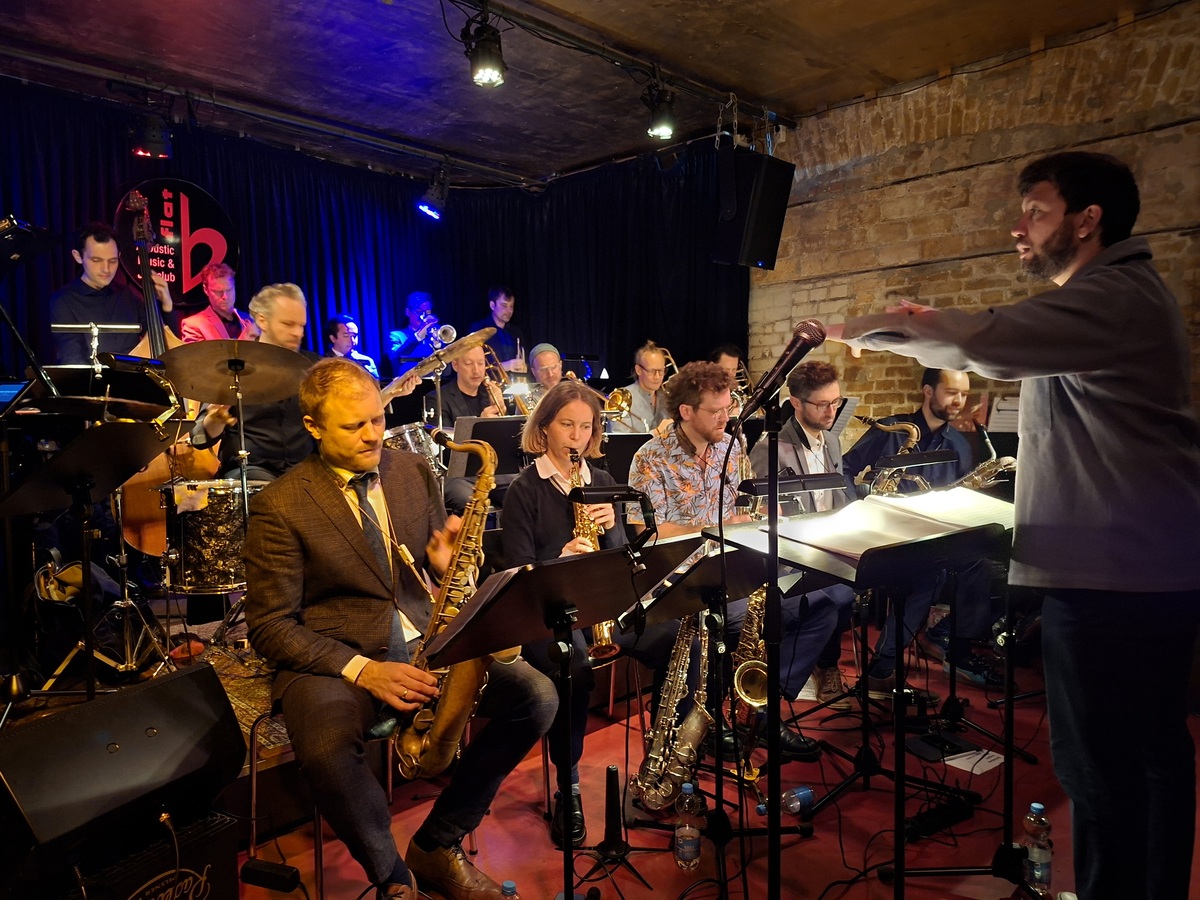
Gabriele di Franco: Conducting
Gabriele di Franco has the challenging task of bringing his music, compositions, and arrangements to life with the Berlin FETE Band exactly as he envisions them. Everyone is eager to hear how it will sound.
Here we go. But not with music—with an announcement. Gabriele di Franco warmly greets the audience, briefly introduces herself and the band, and explains the story behind the first track. It’s based on an old Sardinian choral piece, which is meant to be viewed through the eyes of “Betsabea” as seen by King David. There might still be some questions about the lyrics, but musically, the song sounds like this.
“Betsabea”
Riff-like guitar chords set the tone. Drums and bass deliver distinctive beats, driving the song forward. The horns establish the theme, intensify it, and develop a compact sound. Over this, Dima Bondarev’s first horn solo takes flight, soaring airily on the wings of his horn. An interplay between the horn’s improvisations and the brass section’s phrases drives the mood, tempo, and rhythm forward. Drummer Tobias Backhaus also continues the story with his eloquent drumming. Intermezzo. A longer piano solo takes over, discreetly supported by guitar fragments and bass figures.
Then the solo piano is recaptured by the big band, which once again raises the intensity. The brass “strikes back”: expressive, energetic, powerful. The fact that it all sounds this way is also due to Gabriele di Franco’s sophisticated arrangement.
The next song has something to do with inspiration and is therefore titled:
“Inhale (Inspira)”
The intro is once again led by the guitar, which kicks things off with subtle chords and hall. The flutes now add further hall, and later the brass joins in with a resonant horn. This has certain classical, chamber-music-like accents. The woodwinds continue to favor the flutes, while the brass intervenes with rich sequences of notes. A solo by bandleader Markus Ehrlich on the tenor saxophone creates a ballad-like atmosphere. Then an intense dialogue develops—a duet between the tenor sax and the band. And it sounds damn good! The theme grounds itself a bit, but the compact, precisely structured big band sound remains. Johannes Böhmer quickly plays a ballad-like solo on the trumpet before “Inspira” comes to a close.
“Nothing”
The notebook has another entry: “Que.” In any case, the song has something to do with sleepless nights, according to Gabriele di Franco. This time, the introduction comes from the baritone saxophone, supported by a clarinet. The theme emerges cautiously at first, but soon picks up speed, surging forward—full steam ahead, as the big band intends, and that’s exactly how it sounds. The brief interlude that follows belongs to the piano, which is replaced by the short, sharp phrases of the horns. The rhythm—especially the drums—features accented beats, presented in a rather rock-inspired style. The leadership, however, lies with the big band. In this compact sound, Dima Bondarev blows his solo on the flugelhorn. In the same vein—namely, ballad-like—Viktor Wolf plays his solo on the tenor saxophone. Then FETE takes the lead again, building dynamically to a crescendo: full blast, full power.
“A Child Is Born”
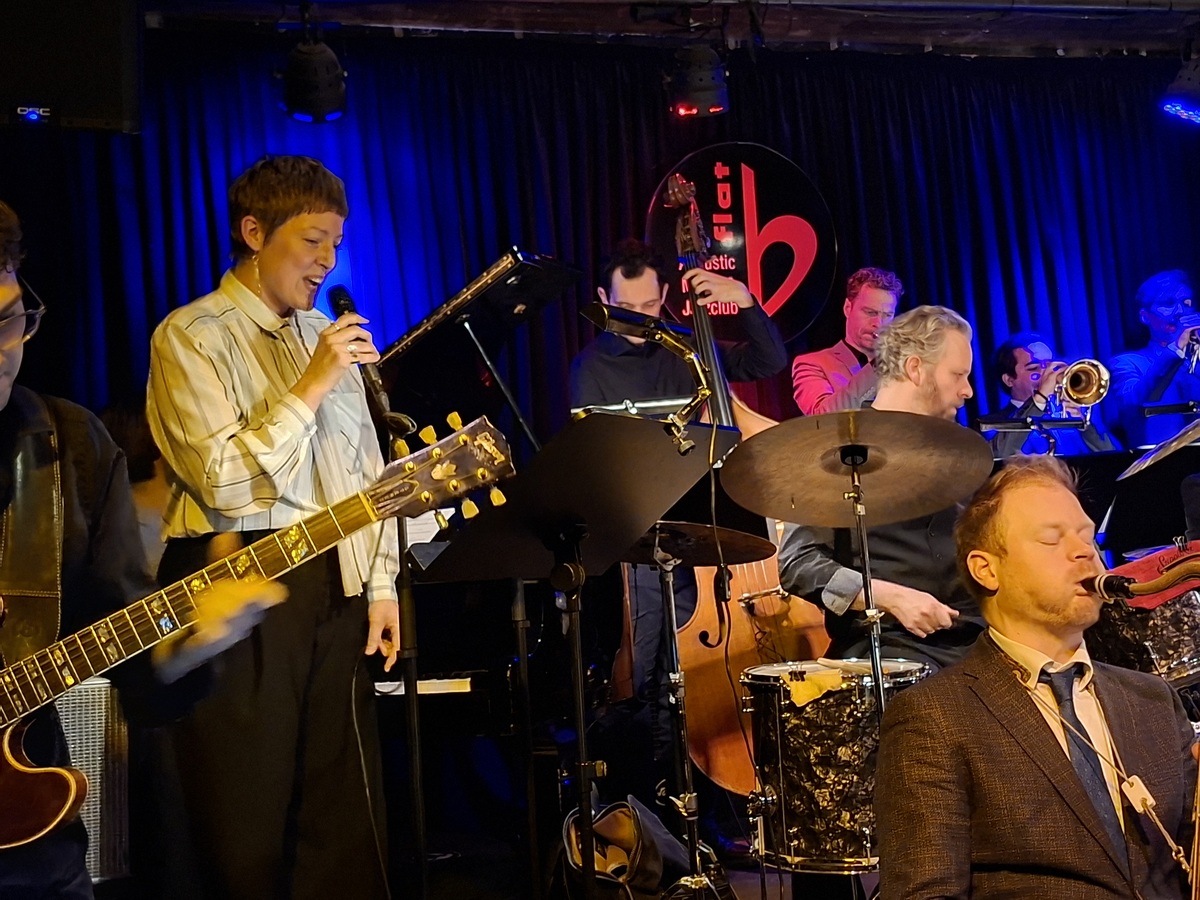
A piece by Thad Jones that lends itself well to ballads with vocal accompaniment. That’s exactly what we’re hearing here and now at b-flat. Gabriele di Franco invites his special guest onto the stage: singer/vocalist Mette Nadja.
This time, the intro comes from the drums—unusual, but fitting. Tobias Backhaus plays his drums with brushes. The flugelhorn introduces the melodic theme, with subtle support from guitar fragments and the bass lines. Then the voice takes over. Mette Nadja delivers the ballad in a manner corresponding to the composition and title “A Child Is Born”: tenderly, soulfully, passionately. A lyrical baritone saxophone solo takes over from the vocals. The rhythm continues to provide the necessary beats, with the drums heard through the bouncy strokes of the brushes. The result is a gliding, fresh swing—primarily thanks to the bass and drums. Then it’s Florian Menzel’s turn to add the timbres of his solo trumpet to the song. But the theme melody belongs to the vocals, which resound once more. Mette Nadja sings magnificently against the now-intensified big band. This is no easy feat for a ballad that should be performed not too loudly and with the greatest sensitivity. Mette Nadja pulls it off with flying colors. Then it’s already time for the break.
The second set will follow shortly. So stay tuned…