JUDY NIEMACK «SINGING MILES» 14.07.26 A-Trane
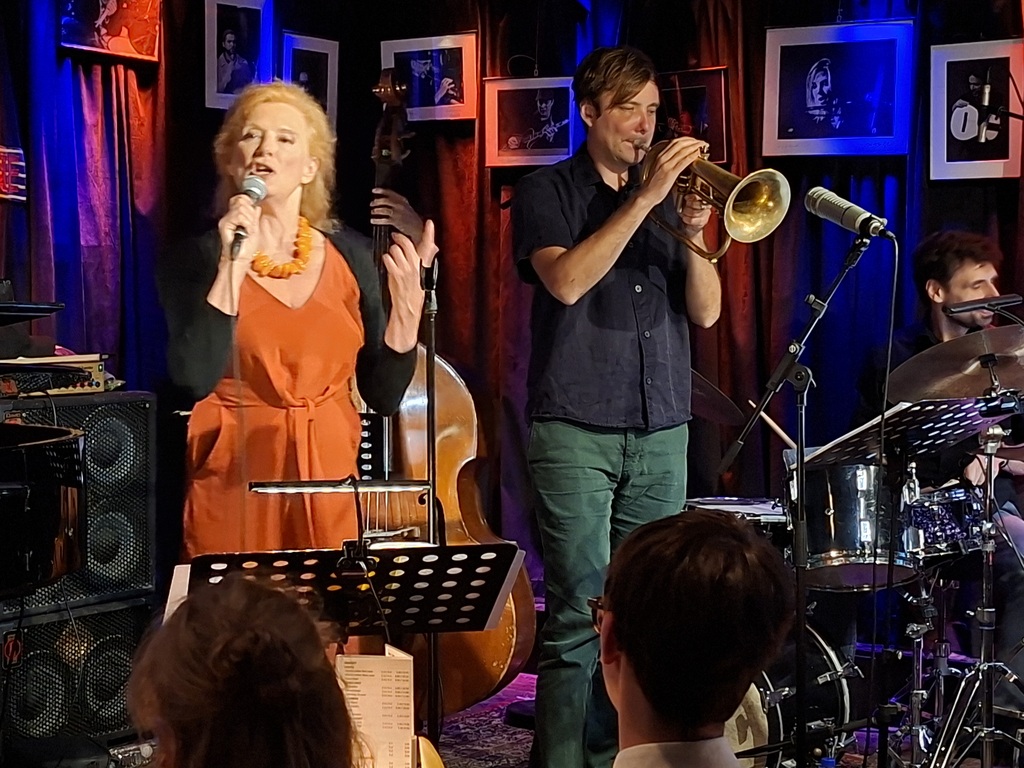
JUDY NIEMACK «SINGING MILES» 14.07.26 A-Trane
A Summer Residency: JUDY NIEMACK
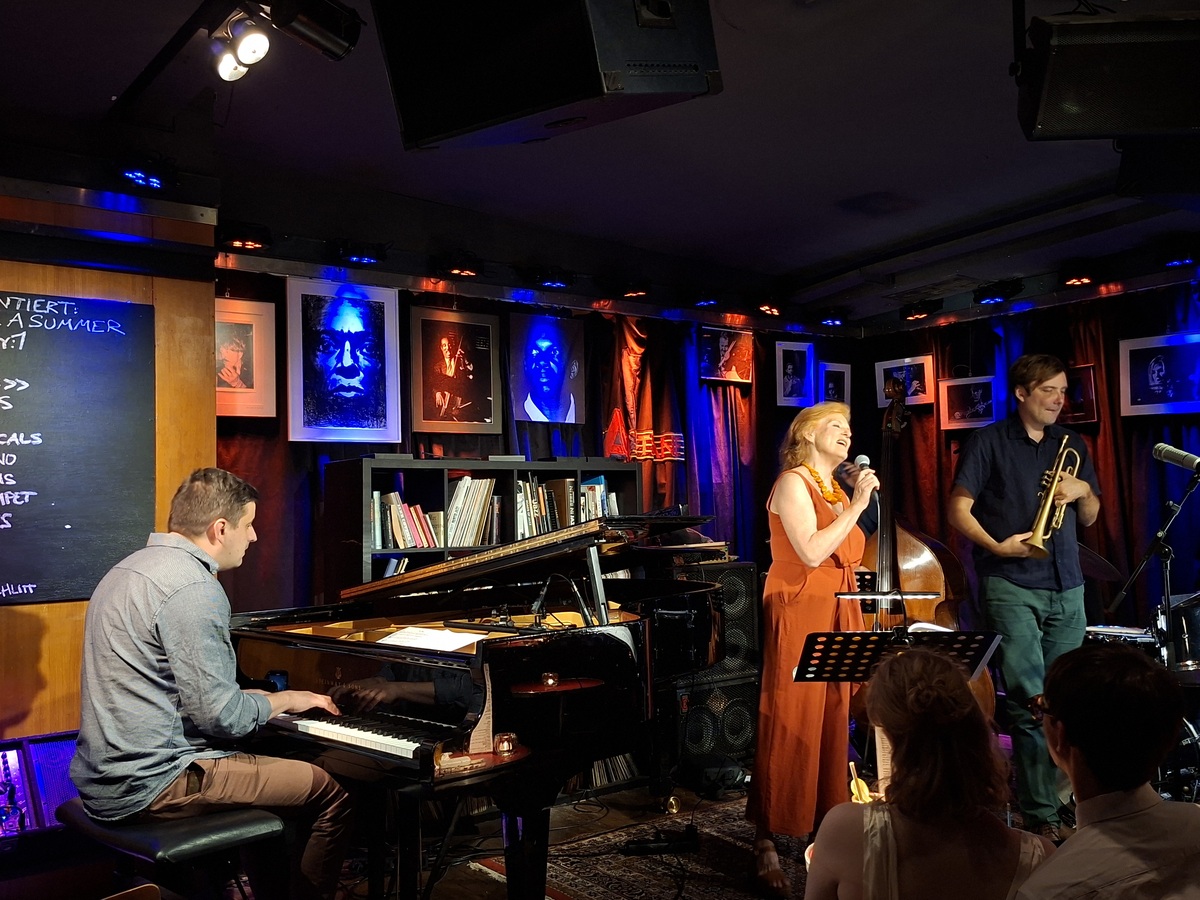
Judy Niemack – Vocal
Yuriy Seredin – Piano
Marc Michel – Drums
Doug Weiss – Bass
Dima Bondarev – Trumpet
Judy Niemack ist mit «SINGING MILES» 100 YEARS MILES noch zu erleben:
15.07 bis zum 18.07.26. Siehe dazu den folgenden Bericht. Hingehen!
«SINGING MILES»
Das Motto ist natürlich Programm, und so erläutert Judy Niemack ausführlich die einzelnen Titel in ihrem musikalischen Kontext. Es werden nicht nur Eigenkompositionen von Miles dargeboten, sondern auch Titel, die Miles bekannt gemacht hat, die zu seinem Repertoire gehörten. Los geht´s jedoch mit einer Komposition von ihm:
„Milestones“
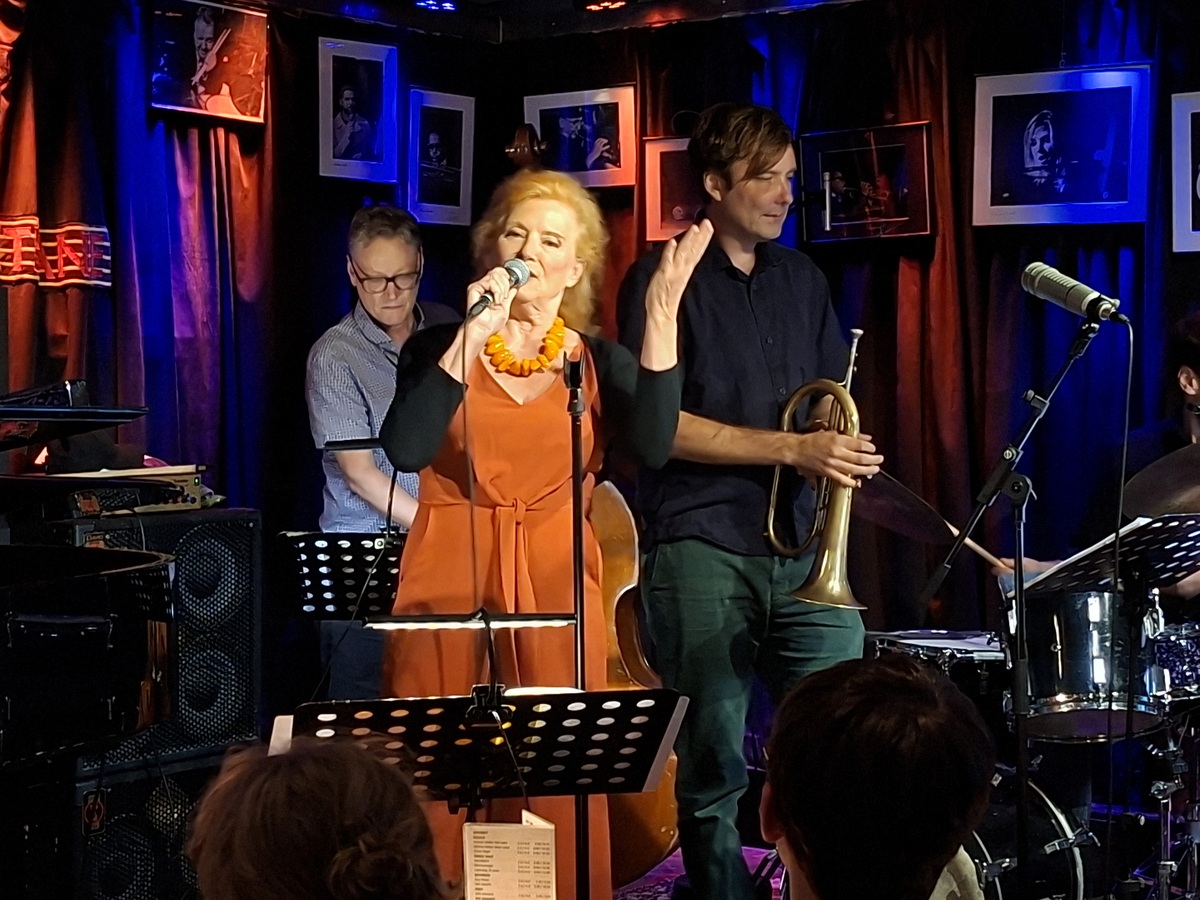
Schon die 1. Überraschung. Das markante Motiv – das scharf wie knapp angeblasene, sich 4-mal wiederholende „Bap, Bap, Bap, Bap“, was sich dann in einem „Baah“ harmonisch auflöst. Das Thema kommt nicht von der Trompete, sondern Judy singt diese Tonfolgen ganz ohne Dima Bondarev, der samt seiner Trompete noch pausiert. Die lyrischen Texte stammen von Marc Morphy. Rhythmisch swingt es in den betonten Intervallen des Originals, lässig wie raumgreifend. Ein fetziges Piano-Solo löst Judy solistisch ab, die danach in ein akzentuiertes Scatting wechselt. Drums & Bass produzieren viele schnelle Noten, halten den Rhythmus mit stilistischer Raffinesse am Laufen. „Milestones“, wie der Titel, so tönt auch hier die Musik.
„There´s a Boat“ – Geschichte, Kontext
… leaving to New York”. Judy erläutert die Geschichte des Songs aus Gershwins „Porgy and Bess“. Miles hat den sinfonischen Jazz des Originals zu einem seiner Markenzeichen gemacht, dem Titel seinen Stil aufgedrückt. Demzufolge wird Judy noch weitere Stücke aus „Porgy and Bess“ vorstellen. „My Man is Gone“ sowie „Man I Love“. Dazu später mehr.
„There´s a Boat“
Die sensible Einstimmung betreibt Dimas Trompete, das Thema übernimmt jedoch Judy. Rhythmisch ist ein leiser, verhaltener Swing zu vernehmen, in den der Gesang als Scatting aufschlägt. Das mit der ausgereiften Erfahrung von gekonnter Jazz-Phrasierung. Dima bläst jetzt das Flügelhorn mit runden, weichen Sequenzen, der Song wird zur Ballade. Dann steigern sich auch Tempo und Intensität, die Intonation als Ballade fällt etwas zurück. . Nach einem gut zur Story passenden Bass-Solo des vorzüglichen Doug Weiss, gibt es als Intermezzo erneut ein kurzes Scatting, bevor der Drummer mit einem „Pausen-Solo“ zwischen den Takten den Titel austrommelt. Bess verschwindet munter – so tönt der Song - nach New York, lässt den tragischen Porgy zurück.
„Flamenco Sketches“
Dazu gibt es detaillierte wie kontextbezogene Infos von Judy. Das sei der „Coolste“ Song des coolen Miles. In dieser Zeit entstand das Konzept der modalen Spielweise, die Miles zusammen mit Bill Evans (Piano) und Gil Evans (Arrangement) avantgardistisch kreierte. Auch, so Judy, sei Miles vom Studium der Flamenco-Stücke zusätzlich inspiriert gewesen. Zur Musik.
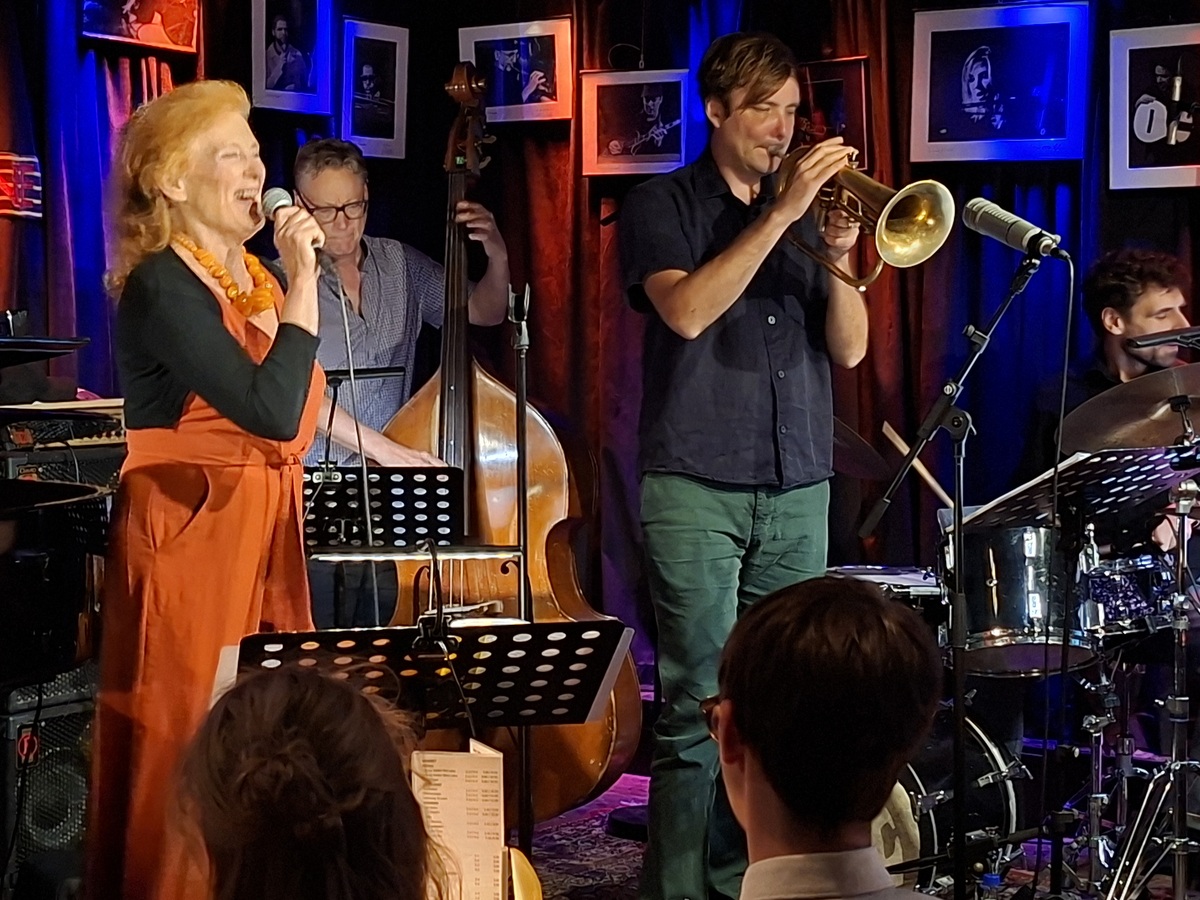
Die Stimme führt ein ins Thema Judy singt Tonfolgen, diese ohne Text improvisierend. Darunter liefern Piano, Drums & Bass die rhythmisch-harmonische Basis für das Gelingen des Flamencos, ersetzen quasi die Gitarren-Unterstützung der Originale. Als funktionale, nicht klangliche „Imitation“ der Gitarre kann die Stimme, das Singen, das Scatten von Judy verstanden werden, eine weitere coole Klangfärbung. Dergleichen ist von Dima Bondarev gestopfter Trompete zu vernehmen. Vorzüglich, wie das Horn die tiefe Emotionalität des Themas ausdrückt. Seine lamentierenden Tonfolgen sind nah an der Vorlage von Miles. Das ist nicht besser zu machen. Zum Höhepunkt rücken die beiden Hauptstimmen von Gesang und Trompete eng zusammen. Als intimes Duo werfen sie sich die Gefühlslagen zu, verstärken, ergänzen oder konterkarieren die musikalische Aussage. Damit Stimme und Trompeter ihren Wirkung voll entfalten können, untermalt der ausgezeichnete Rhythmus dezent, aber subtil wirkungsvoll.
„Time After Time“
Auch diesen Titel hat Miles über die Genre-Grenzen hinweg bekannt gemacht. Die musikalische Substanz des poppigen Songs mit seiner bestechenden Melodielinie war schon im Original des Cyndi Lauper-Songs vorhanden, aber Miles hat mit seiner Funk-Version avantgardistisch am Erfolg des Titel mitgewirkt. Viele haben ihn in ihr Repertoire aufgenommen: als Rock-, Pop- und Jazz-Version.
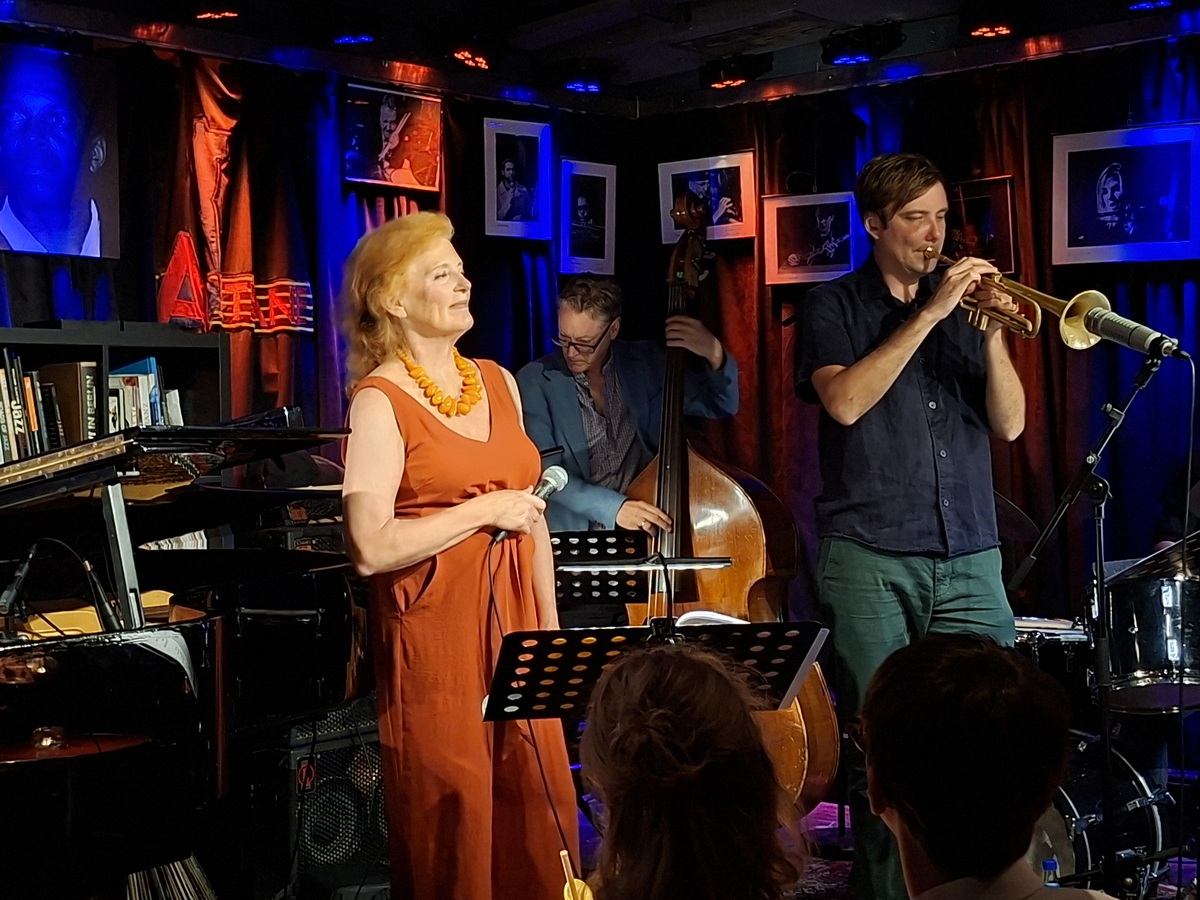
Judy und ihre Mannen präsentieren den Song in einer coolen Funk-Variante. Sparsame Phrasierung durch den poetischen Gesang, dann die klagende Stimme der Trompete erhöhen die Wirkung. Ebenso diskret wie sparsam sind auch die Anschläge der Drums von Marc Michel und das Zupfen der Ostinato-Figuren von Bassist Doug Weiss. Das alles erhöht die Wirkung der einsam tönenden Trompete, von Dima ausgezeichnet intoniert. Eine ähnliche Wirkung erzielt der gesungene Text mit seinem lyrischen Inhalt. Cool, lässig, ein wenig schwermütig ertönt „Time After Time“ in der Tradition von Miles, hier und heute im Club exzellent präsentiert.
Es sei verraten, das folgende Stücke des 2. Konzertberichtes von Freitag 17.07 am Sonnabend 18.07 zu lesen sein werden:
„Meaning of the Blues“”/“All of You”/"My Ship"/“Tutu/Funny Valentine”/“Man I Love”/„Solar“
Wer nicht solange warten will, dem sei eines der Konzerte empfohlen, die noch vom 15 bis zum 18.07 26 im A-Trane zu erleben sein werden. Also: Hingehen!
Judy Niemack can still be seen in “SINGING MILES” 100 YEARS MILES:
July 15 through July 18, 2026. See the following article for more details. Go check it out!
“SINGING MILES”
The title says it all, of course, and so Judy Niemack provides detailed explanations of the individual songs within their musical context. The program features not only Miles’s original compositions but also songs that he made famous and that were part of his repertoire. However, the show kicks off with one of his own compositions:
“Milestones”
The first surprise right away. The striking motif—the sharp, briefly played “Bap, Bap, Bap, Bap” that repeats four times, which then harmonically resolves into a “Baah.” The theme isn’t played on the trumpet; instead, Judy sings these note sequences entirely without Dima Bondarev, who—along with his trumpet—is still on a break. The lyrical lyrics are by Marc Morphy. Rhythmically, it swings in the accented intervals of the original, both laid-back and expansive. A groovy piano solo takes over from Judy, who then shifts into accented scat singing. The drums and bass produce a flurry of fast notes, keeping the rhythm going with stylistic finesse. “Milestones”—just like the title, that’s exactly how the music sounds here.
“There’s a Boat” – History, Context
… “leaving for New York.” Judy explains the history of the song from Gershwin’s “Porgy and Bess.” Miles made the symphonic jazz of the original one of his trademarks, imprinting his style on the piece. As a result, Judy will perform additional pieces from “Porgy and Bess.” “My Man Is Gone” and “Man I Love.” More on that later.
“There’s a Boat”
Dima’s trumpet sets the delicate mood, but Judy takes over the theme. Rhythmically, a soft, restrained swing is audible, into which the vocals break in as scatting. This is done with the seasoned expertise of skillful jazz phrasing. Dima now plays the flugelhorn with round, soft sequences, and the song becomes a ballad. Then the tempo and intensity build, while the ballad-like intonation recedes slightly. After a bass solo by the excellent Doug Weiss—which fits the story perfectly—there’s another brief scat interlude, before the drummer wraps up the song with a “pause solo” between the measures. Bess cheerfully disappears—or so the song suggests—to New York, leaving the tragic Porgy behind.
“Flamenco Sketches”
Judy provides detailed and context-specific information about this track. She calls it the “coolest” song by the cool Miles. It was during this period that the concept of modal playing emerged, which Miles pioneered in an avant-garde manner together with Bill Evans (piano) and Gil Evans (arrangements). According to Judy, Miles was also inspired by his study of flamenco pieces. About the music.
The voice introduces the theme. Judy sings melodic phrases, improvising them without lyrics. Meanwhile, the piano, drums, and bass provide the rhythmic and harmonic foundation for the flamenco’s success, effectively replacing the guitar accompaniment of the originals. Judy’s voice—her singing and scatting—can be understood as a functional, rather than tonal, “imitation” of the guitar, adding another cool layer of timbre. Something similar can be heard in Dima Bondarev’s trumpet playing. It’s superb how the horn expresses the deep emotionality of the theme. His lamenting melodic phrases are close to Miles’s original. It doesn’t get any better than this. At the climax, the two main voices—vocals and trumpet—come together closely. As an intimate duo, they exchange emotional nuances, reinforcing, complementing, or countering the musical message. To allow the voice and the trumpeter to fully unfold their impact, the excellent rhythm section provides a discreet yet subtle backdrop.
“Time After Time”
Miles also made this track famous across genre boundaries. The musical essence of this pop-oriented song, with its captivating melody, was already present in the original by Cindy Loper, but Miles played an avant-garde role in the song’s success with his funk version. Many have included it in their repertoires: in rock, pop, and jazz versions.
Judy and her band present the song in a cool funk arrangement. Sparse phrasing through the poetic vocals, followed by the plaintive voice of the trumpet, heighten the effect. Just as discreet and sparse are Marc Michel’s drum beats and bassist Doug Weiss’s plucking of the ostinato figures. All of this enhances the impact of the lonely-sounding trumpet, beautifully played by Dima. The lyrics, with their poetic content, achieve a similar effect. “Time After Time” sounds cool, laid-back, and a little melancholic, in the tradition of Miles, and is presented excellently here and now at the club.
Here’s a sneak peek at the tracks that will be featured in the second concert review, covering Saturday, July 18, following Friday, July 17:
„Meaning of the Blues“”/“All of You”/"My Ship"/“Tutu/Funny Valentine”/“Man I Love”/„Solar“
For those who don’t want to wait that long, we recommend one of the concerts still to be held at A-Trane from July 15 through July 18, 2026. So: Go check it out!
Album Kosmos