JUDY NIEMACK «SINGING MILES» 17.07.26 A-Trane
JUDY NIEMACK «SINGING MILES» 17.07.26 A-Trane
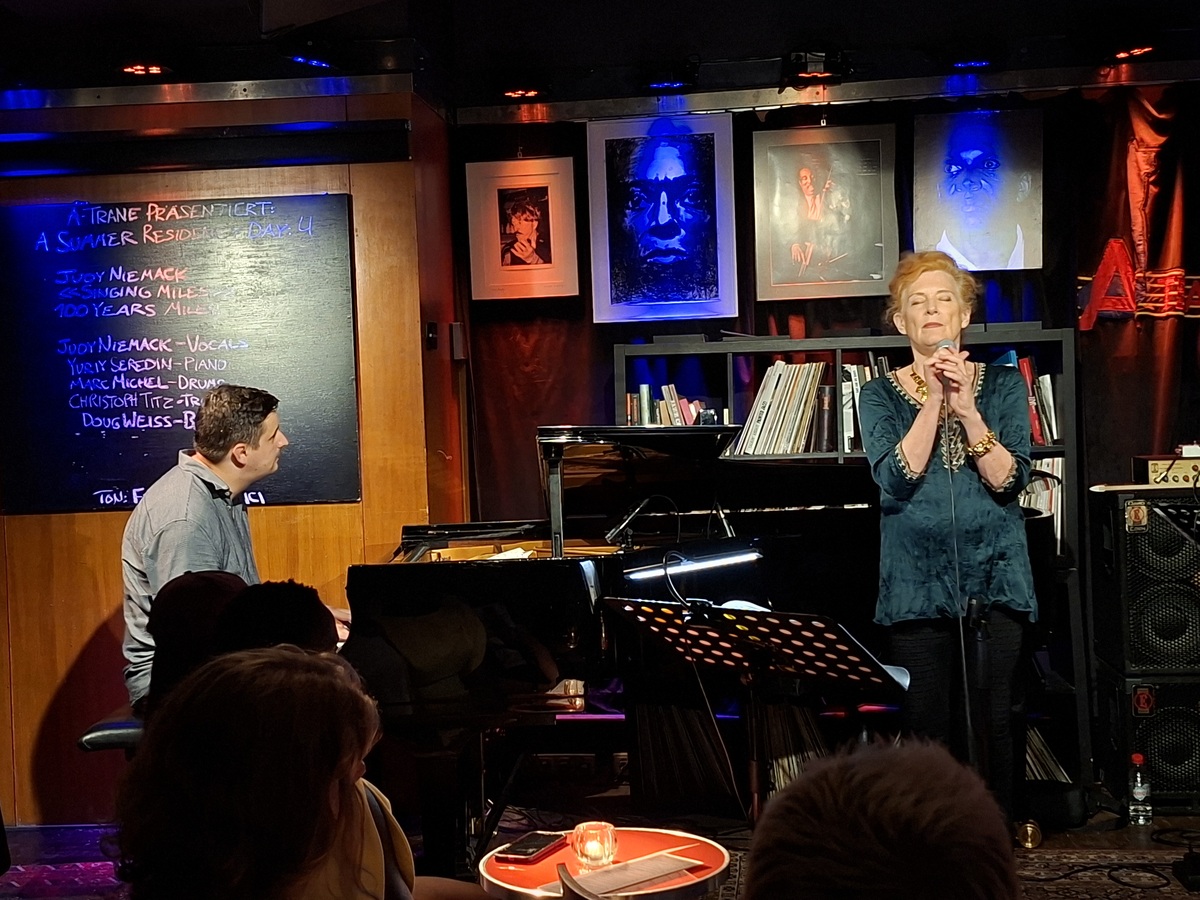
A Summer Residency: JUDY NIEMACK
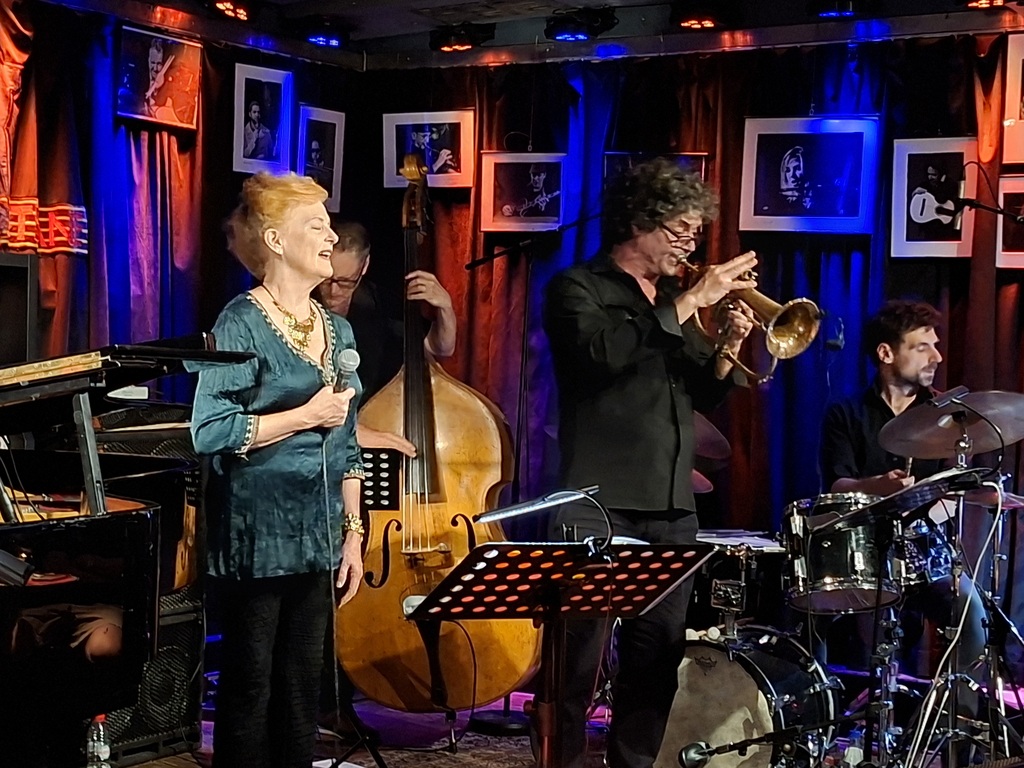
Judy Niemack – Vocal
Yuriy Seredin – Piano
Marc Michel – Drums
Doug Weiss – Bass
Christoph Titz – Trumpet
Judy Niemack ist mit «SINGING MILES» 100 YEARS MILES noch heute 18.07.26. zu erleben. Siehe dazu den folgenden Bericht.
Hingehen!
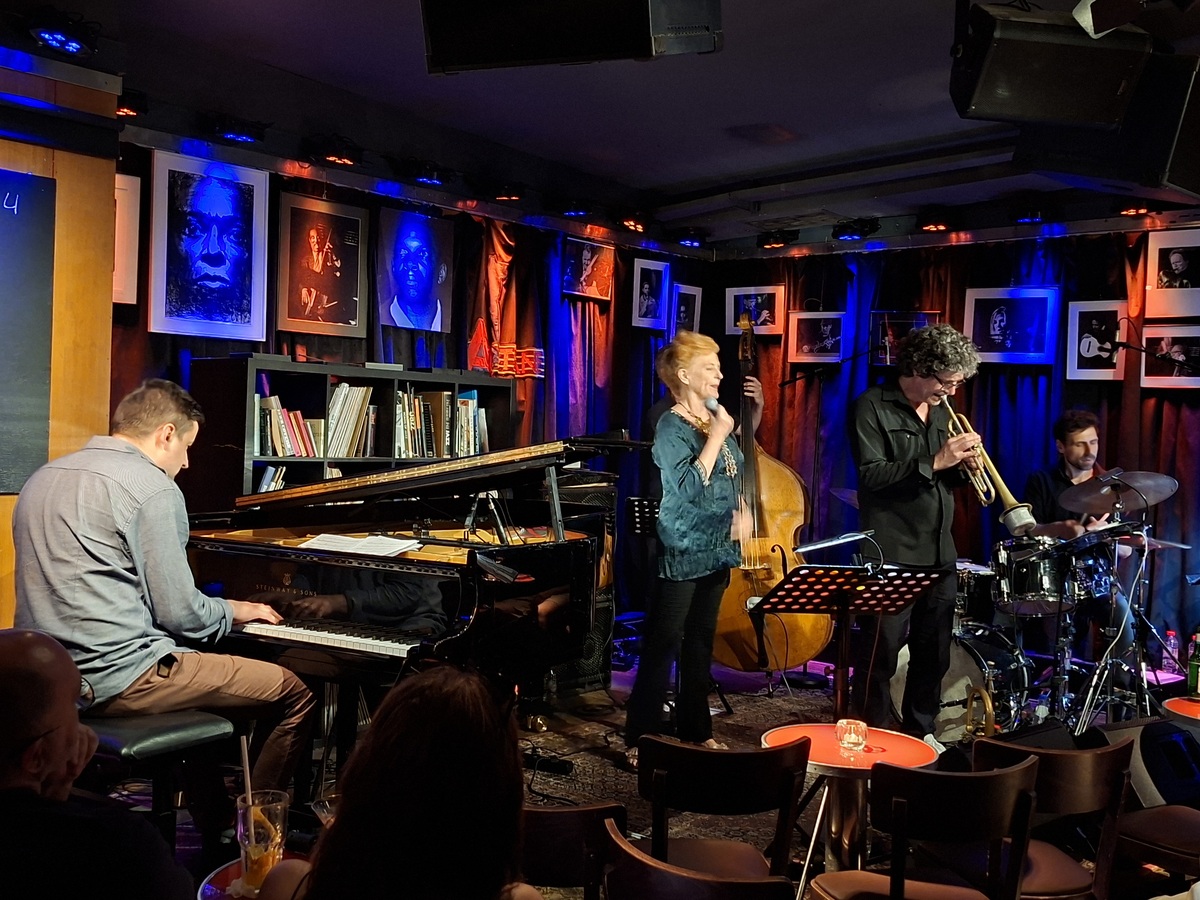
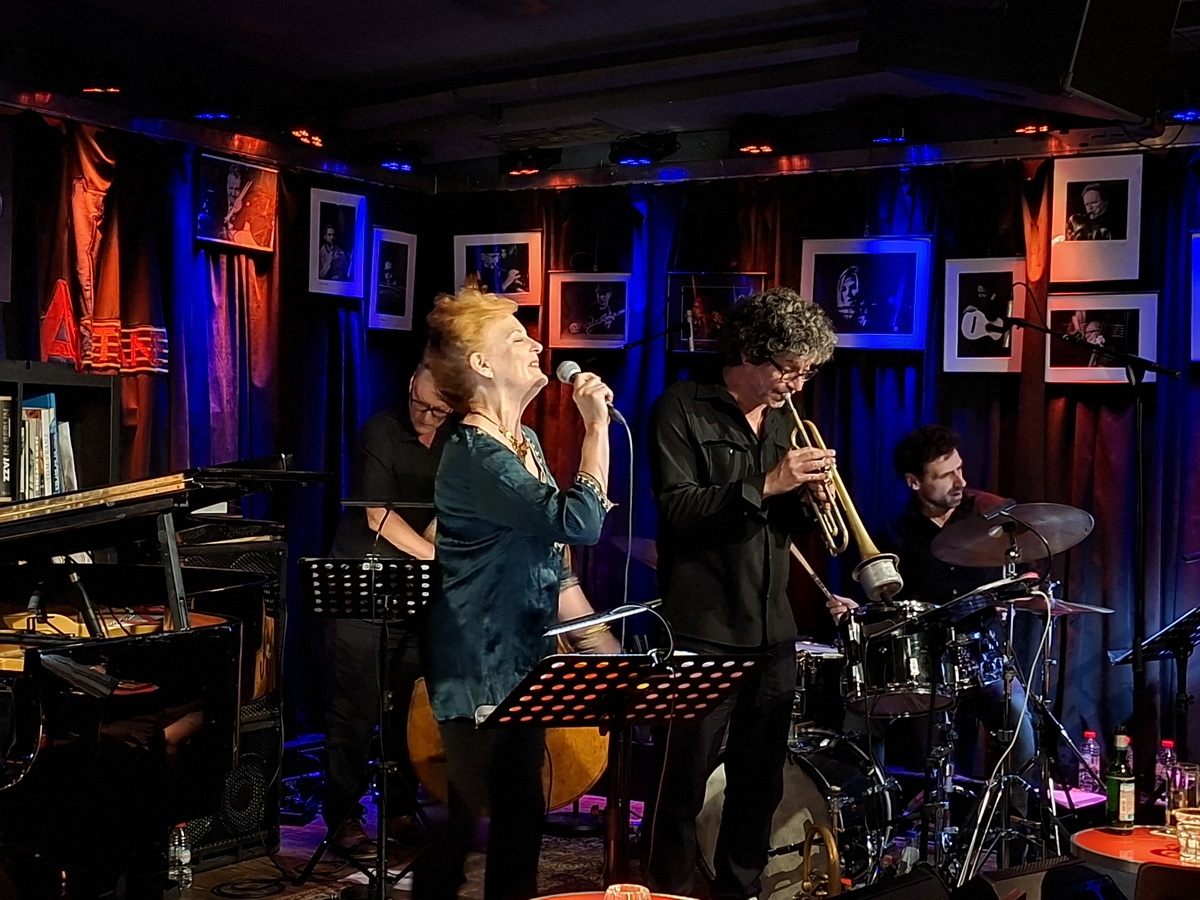
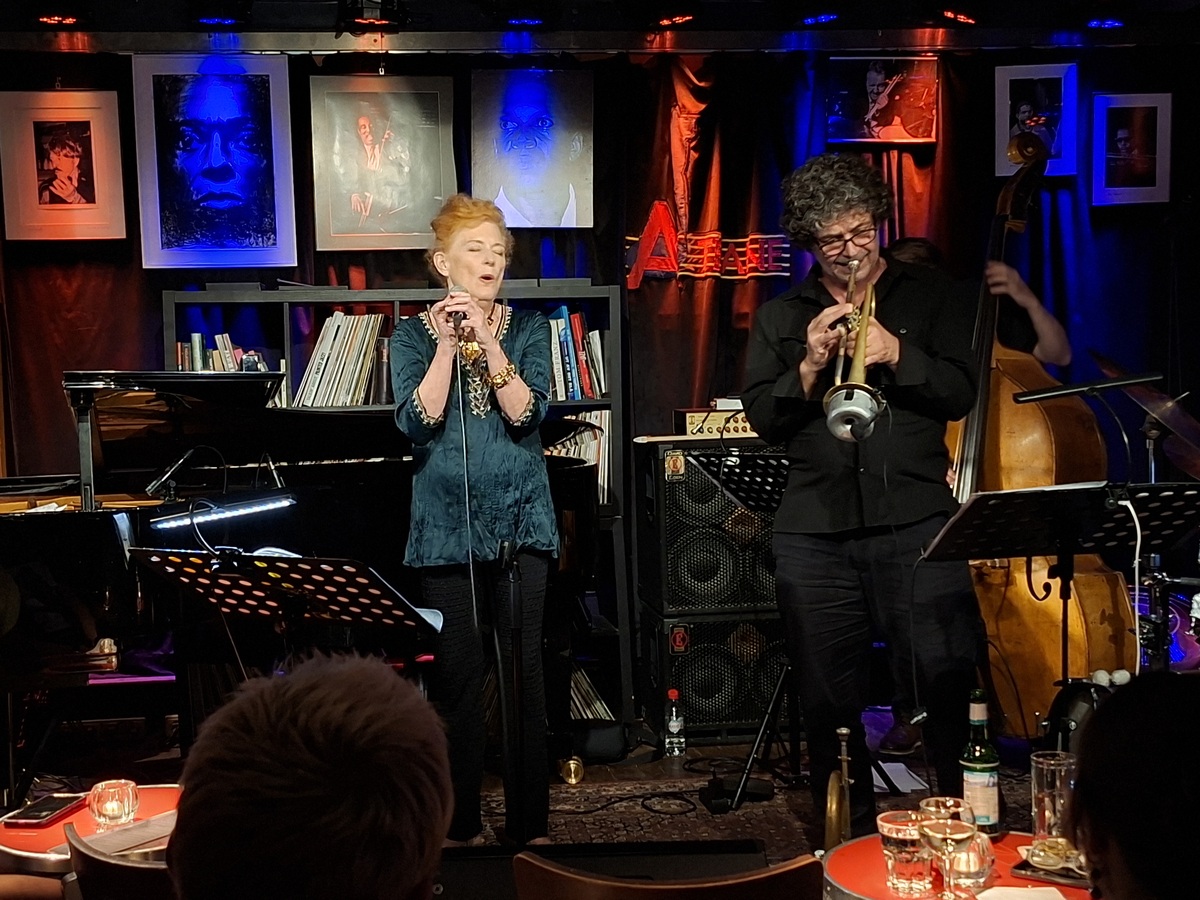
Die Kollegen vom Rhythmus sind unverändert, nur die Stimme der Trompete variiert. Christoph Titz hat die delikate Aufgabe im Stil von Miles zu spielen, es soll auch so klingen und nichtsdestotrotz sollen auch eigne Spiel- und Improvisationsweisen zu hören sein. Das grenzt an die Quadratur des Kreises. Der Club ist gut gefüllt, es herrscht erwartungsvolle Stille, angenehme Atmosphäre. Hinein ins Konzert.
„Milestones“ und „There´s a Boat“
Diese beiden ersten Titel sind schon im Bericht vom 15.07 beschrieben worden, werden hier ausgespart. Beide Songs nehmen das Publikum auf, stimmen es vortrefflich auf die Musik von Miles ein. Es geht weiter.
„Meaning of the Blues“”
Der stammt nicht von Miles, sondern vom Komponisten von „Route 66“, wurde jedoch von Miles bespielt. „Blue was just the Color of the Sea, Till my Lover Left Me”. Damit sind wir beim Inhalt des Blues, bei dessen Narrativ.
Musikalisch ist es ein langsamer Blues mit Tendenz zum diskreten Swingen. Judys Stimme ist mit lyrischer Intonation zu vernehmen. Christoph Titz´Trompete ist mit einzelnen, eingeworfenen Spitzen dabei, hohe Lagen dezent schmetternd. Es ist ein Blues, bei dem der Bass die Grundmuster betont, jedoch nicht in das klassisch formale Schema gleitet. Dafür sind subtile Figuren so hören, originell wie effektiv. Dergleichen betriebt dann das Piano von Yuriy Seredin, dessen Grundmuster in solistische Improvisationen wechseln, den Blues hervorragend zum Swingen bringen, was jetzt alle praktizieren.
„Four“
Dieser Song stammt aus der Phase, in der Miles in der Band mit Charlie Parker kurzzeitig klassischen Bebop spielte. „Four“ bezieht sich auf die 4 wesentlichen Dinge im Leben, so erläutert Judy den Song: „Truth, Honor, Happiness and Love“. Aber „Geld nicht“, so Judy. Ein verhaltener Rhythmus führt ein, bevor er in eine Bebop-Phrasierung gleitet. Die dazugehörigen typischen Schleifen kommen von den Stimmen des Gesangs sowie dem Horn. Christoph Titz´gestopfte Trompete kreiert schnelle Linien, hochlagig schneidend: die klassische Jazz-Trompete. Abgelöst wird das solistische Treiben durch Yuriy Seredin Piano mit agilen Anschlägen. Nun ist Doug Weiss am Bass zu erleben, der mit runden, singenden Figuren den Song weiter bereichert, ausschmückt. Judy ist jetzt voll im Scatting, was sie stets hervorragend beherrscht.
„Flamenco Sketches“
Das Stück und seine Interpretation ist so schön, dass hier eine kurze Fassung erfolgt, auch wenn der Titel ausführlich im 1. Konzertbericht gewürdigt wurde. Judy führt singend mit improvisierten Tonfolgen ein. Darunter liefern Piano, Drums & Bass die rhythmisch-harmonische Basis für das Gelingen des Flamencos, ersetzen quasi die Gitarren-Unterstützung der Originale. Als funktionale, nicht klangliche „Imitation“ der Gitarre kann die Stimme, das Singen, das Scatten von Judy verstanden werden, eine weitere coole Klangfärbung. Den erforderlichen „Rest“ erlegt das Bass in subtiler Brillanz. Dergleichen ist von Christoph Titz gestopfter Trompete zu vernehmen. Vorzüglich, wie das Horn die tiefe Emotionalität des Themas perfekt ausdrückt. Die beiden Hauptstimmen von Gesang und Trompete kommen zum Höhepunkt eng zusammen. Als intimes Duo werfen sie sich die Gefühlslagen zu, verstärken und ergänzen die musikalischen Aussage: Flamenco Jazz pur.
Das Konzert wendet sich nun stärker dem „Modalen Miles“ zu, wie Judy detailliert erklärt. Ein Thema aus seinem frühen Werk „Birth of the Cool“ mit dem Titel:
„Boblicity“
Yuriy Seredin legt mit dem Piano vor: schräge Akkordfolgen akkurat geschlagen, rhythmisch leicht Latin phrasiert. Im Original ist das Stück ohne Text, aber Judy kann den Titel als „richtigen“ Song, also mit Text präsentieren. Das macht sie in gewohnter Weise mit lyrischer Betonung, mit poetischem Zungenschlag. Der Rhythmus ist als moderater Swing zu hören, den die Kollegen von Bass, Piano & Drums souverän inszenieren. Noch geschwind ein Piano-Solo mit satten Akkorden, bevor das Flügelhorn solistisch weitermacht. Christoph Titz verziert den Song, reichert ihn mit cooler Note an. Dergleichen ist nun vom Scatting von Judy zu hören. Dann verstärkt sich Tempo und Ausdruck, gipfelt in einem fulminanten Finale, dessen Refrain unisono erschallt.
„My Man´s Gone Now“.
Auch hier informiert Judy über den Hintergrund dieser traurigen Passage aus Gershwins „Porgy and Bess“ über den im Meer verlorengegangen Fischer. Der Bass stellt den klagenden Titel, der dramatische Akzenten annehmen wird, vor. Seine eleganten Walking-Bass-Figuren schaffen Raum, die im Wortsinn „abgefedert“ werden von den sparsamen Bouncing Beats von Drummer Marc Michel. Über diesen Rhythmus legt Judy ihre Improvisationen als Scat. Dann trifft sich die Band zum gemeinsamen Refrain, aus dem ein Duo zwischen Bass und Flügelhorn sich entwickelt. Beide Klangstimmen erzählen die Geschichte, machen den Song definitiv zur Ballade. Ein paar schön-schräge Akkorde von Pianist Yuriy Seredin lockern auf, dazu kommen markante Beats der Drums. Flügelhorn wie Vokalstimme spielen/singen sich frei, trumpfen modal auf. Der Song hat jetzt dramatische Akzente bekommen, die im anschließendem, superben Schlagzeug-Solo von Marc Michel ihren finalen Höhepunkt finden. Derart zufriedengestellt hat sich Band wie Publikum die Pause wohlverdient.
Der 2. Set
„All of You“
Mit diesen wohlbekannten Standard aus dem American Songbook startet die 2. Halbzeit. Moderates Swingen, kraftvolle Figuren und Motive des Basses sowie die quirligen Anschläge der Drums lassen einen treibenden Groove erklingen, behalten dabei eine ruhige Gelassenheit. Yuriy Seredin spielt auf, schlägt famose Akkorde und perlende Läufe. Mehr als einen Tick Oscar Peterson scheint durch. Ein balladeskes Solo von Doug Weiss rundet ab. Ebenso balladenhaft intoniert Judy ihre Tonfolgen als Song, als lebendige Erzählung – The Art of Story Telling.
„All Blues“
Ein wohlbekannter Titel aus dem legendären Album „Kind of Blue“ von Miles. Als wahrhaft avantgardistisch haben sich Album wie Titel und die modale Spielweise erwiesen – genial! Der Bass muss die markante Ostinato-Figur vorlegen, die stärker die Wirkung des Titels bestimmt, als die nachfolgende thematische Melodie. Bassist Doug Weiss zupft es einen Tick anders als im Original. Macht nix, denn seine individuelle wie originell Artikulation klingen flüssig treibend. Der fesselnde Rhythmus ist die bestechende Grundlage für die folgenden solistischen Eskapaden der Mitgestalter. Den Beginn macht Christoph Titz mit seiner scharf geblasenen Trompete. Drummer Marc Michel haut kräftig wie agil auf seine Trommeln. Der „All Blues“ von Judy Niemacks Band ist keine zarte Version, sondern ein kraftstrotzendes Paket. Das Solo der schmetternden Trompete steigert die musikalische Aussage, die jetzt noch intensiver wird durch die abgestimmte Intervention von Bass, Drums und Piano. Yuriy Seredin schlägt zu guter Letzt noch ein paar wilde Akkorde. Dann kehrt das Bass zurück zum packenden Figur des 6/8-Taktes. „All Blues“, ein Meilenstein von Meister Miles, hier meisterhaft präsentiert.
„My Ship“ von Kurt Weill und “So What” von Miles.
Wer diese noch nicht besprochen Titel hören möchte, der muss heute zum Konzert gehen. Letzte Gelegenheit.
Die fehlende Stücke werden demnächst besprochen. Dranbleiben …
Judy Niemack can still be seen in “SINGING MILES” 100 YEARS MILES:
July 18, 2026. See the following article for more details. Go check it out!
The rhythm section remains unchanged; only the trumpet part varies. Christoph Titz has the delicate task of playing in the style of Miles—it should sound that way, yet his own playing and improvisational style should still come through. It’s almost like trying to square the circle. The club is packed; there’s an expectant silence and a pleasant atmosphere. Let the concert begin.
“Meaning of the Blues”
This song wasn’t written by Miles, but by the composer of “Route 66”; however, Miles did perform it. “Blue was just the color of the sea, till my lover left me.” This brings us to the essence of the blues—its narrative. Musically, it’s a slow blues with a tendency toward a subtle swing. Judy’s voice is heard with lyrical intonation. Christoph Titz’s trumpet adds occasional, interjected highlights, discreetly trumpeting in the higher registers. It’s a blues in which the bass emphasizes the basic patterns but doesn’t slip into the classic formal structure. Instead, subtle figures can be heard—as original as they are effective. Yuriy Seredin’s piano follows suit, with its basic patterns shifting into solo improvisations that make the blues swing superbly, which everyone is now joining in on.
“Four”
This song dates from the period when Miles briefly played classic bebop in the band with Charlie Parker. “Four” refers to the four essential things in life, as Judy explains: “Truth, Honor, Happiness, and Love.” But “not money,” says Judy.
A restrained rhythm sets the stage before gliding into a bebop phrasing. The characteristic loops come from both the vocals and the horn. Christoph Titz’s muted trumpet creates fast, high-pitched, cutting lines: the classic jazz trumpet. The soloing is punctuated by Yuriy Seredin’s piano with its agile touches. Now Doug Weiss takes the stage on bass, further enriching and embellishing the song with round, singing figures. Judy is now fully immersed in scatting, which she always masters superbly.
“Flamenco Sketches”
The piece and its interpretation are so beautiful that a brief version is presented here, even though the track was already given a detailed review in the first concert report.
Judy leads the way with singing and improvised melodic sequences. Beneath her, the piano, drums, and bass provide the rhythmic and harmonic foundation for the success of the flamenco, effectively replacing the guitar accompaniment of the originals. Judy’s voice—her singing and scatting—can be understood as a functional, rather than tonal, “imitation” of the guitar, adding another cool layer of timbre. The bass provides the necessary “remainder” with subtle brilliance. Something similar can be heard in Christoph Titz’s trumpet playing. It’s exquisite how the horn perfectly expresses the deep emotionality of the theme. The two main voices—the vocals and the trumpet—come together closely at the climax. As an intimate duo, they exchange emotional nuances, reinforcing and complementing the musical message: pure flamenco jazz.
The concert now turns more toward “Modal Miles,” as Judy explains in detail. A theme from his early work *Birth of the Cool* titled:
“Boblicity”
Yuriy Seredin sets the tone on the piano: offbeat chord progressions played with precision, phrased with a light Latin rhythm. In the original, the piece has no lyrics, but Judy is able to present the title as a “real” song—that is, with lyrics. She does so in her usual style, with lyrical emphasis and a poetic flair. The rhythm comes across as a moderate swing, masterfully brought to life by her colleagues on bass, piano, and drums. There’s a quick piano solo with rich chords before the flugelhorn takes over as the solo instrument. Christoph Titz embellishes the song, enriching it with a cool touch. This is followed by Judy’s scat singing. Then the tempo and expression intensify, culminating in a spectacular finale whose chorus resounds in unison.
“My Man’s Gone Now.”
Here, too, Judy explains the background of this sad passage from Gershwin’s “Porgy and Bess” about the fisherman lost at sea.
The bass introduces the melancholic title, which will take on dramatic accents. His elegant walking bass lines create space that is literally buffered by the sparse, bouncing beats of drummer Marc Michel. Over this rhythm, Judy layers her scat improvisations. Then the band comes together for the chorus, from which a duet between the bass and the flugelhorn emerges. Both voices tell the story, definitively turning the song into a ballad. A few beautifully offbeat chords from pianist Yuriy Seredin lighten the mood, accompanied by the drums’ distinctive beats. Both the flugelhorn and the vocal line play and sing freely, shining in a modal style. The song has now taken on dramatic accents, reaching its final climax in Marc Michel’s superb drum solo that follows. With everyone so thoroughly satisfied, both the band and the audience have earned their well-deserved break.
The 2nd Set
“All of You”
The second half kicks off with this well-known standard from the American Songbook. A moderate swing, powerful bass figures and motifs, and the lively drum strokes create a driving groove while maintaining a calm, serene atmosphere. Yuriy Seredin shines, playing fabulous chords and sparkling runs. There’s more than a hint of Oscar Peterson in his playing. A ballad-like solo by Doug Weiss rounds out the track. In a similarly ballad-like vein, Judy delivers her melodic lines as a song, as a living narrative—The Art of Storytelling.
“All Blues”
A well-known track from Miles’ legendary album “Kind of Blue.” Both the album and the track, along with the modal style of playing, have proven to be truly avant-garde—brilliant!
The bass must present the distinctive ostinato figure, which has a greater impact on the track’s effect than the subsequent thematic melody. Bassist Doug Weiss plucks it a touch differently than in the original. That’s fine, though, because his individual and original articulation sounds fluid and driving. The captivating rhythm serves as the compelling foundation for the subsequent solo escapades of the other musicians. Christoph Titz kicks things off with his sharply played trumpet. Drummer Mar Michek pounds his drums with both power and agility. Judy Niemack’s band’s rendition of “All Blues” is no delicate version, but a powerhouse of a performance. The blaring trumpet solo heightens the musical impact, which becomes even more intense through the coordinated interplay of bass, drums, and piano. Finally, Yuriy Seredin strikes a few wild chords. Then the bass returns to the gripping 6/8 time signature. “All Blues,” a milestone by the master Miles, is presented here masterfully.
“My Ship” by Kurt Weill and “So What” by Miles.
If you want to hear these tracks that haven’t been reviewed yet, you’ll have to go to the concert today. Last chance.
The remaining pieces will be reviewed soon. Stay tuned…