Karin Hammar Fab 4 - EN Version - May 23, 2025 A-Trane
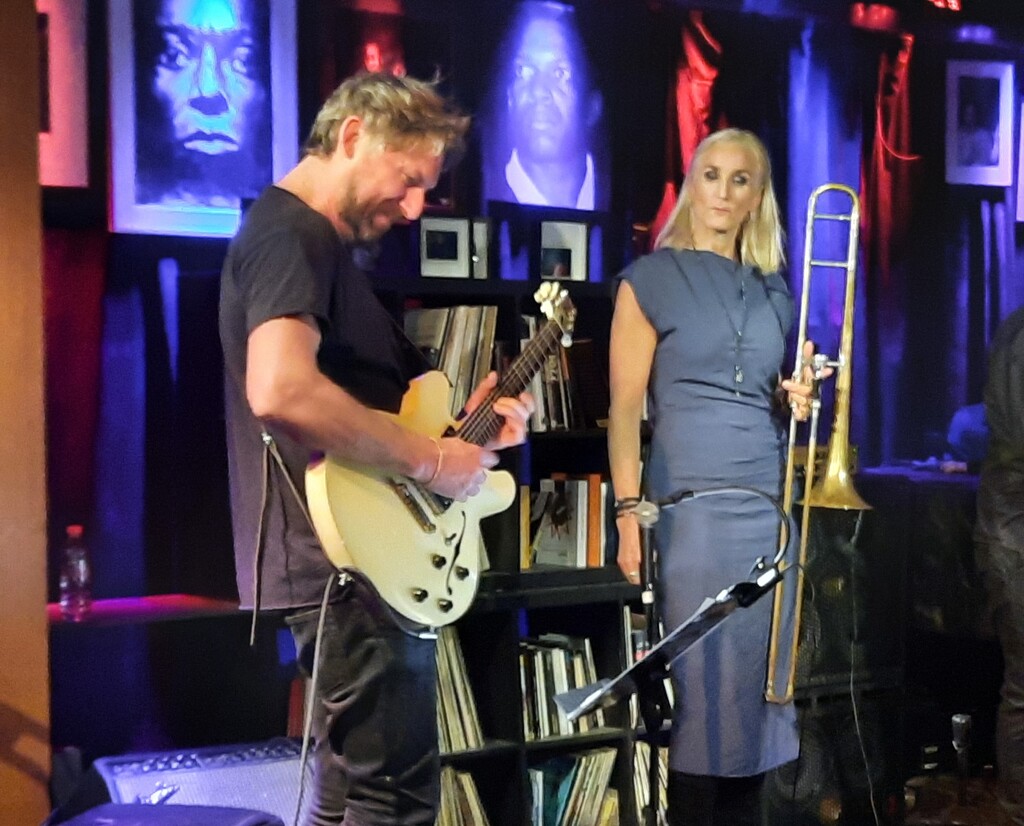
Karin Hammar Fab 4 - May 17, 2025 A-Trane
Karin Hammar – trombone
Andreas Hourdakis – guitar
Pär-Ola Landin – bass
Fredrik Rundqvist – drums
Special guest: Liam Elion – trombone
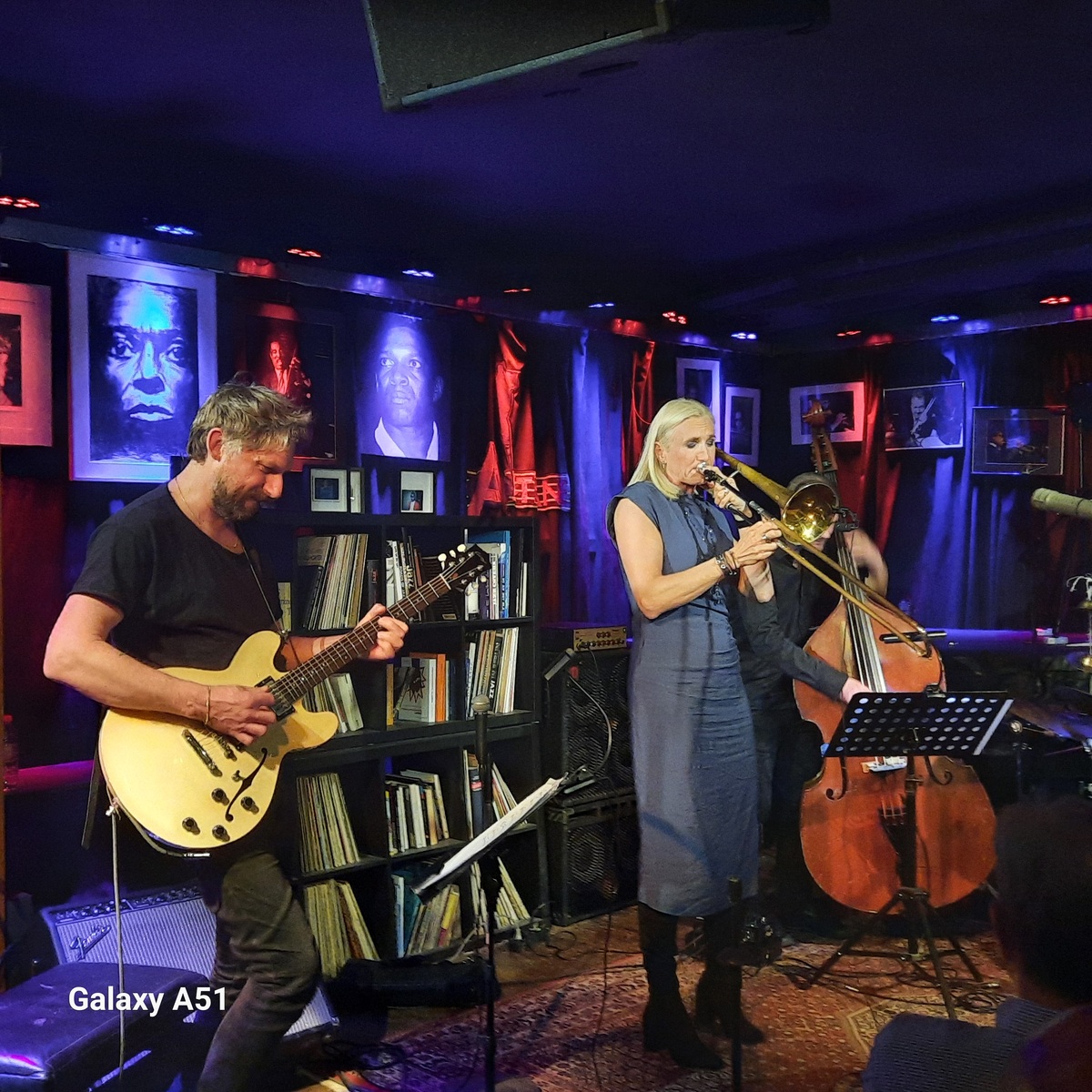
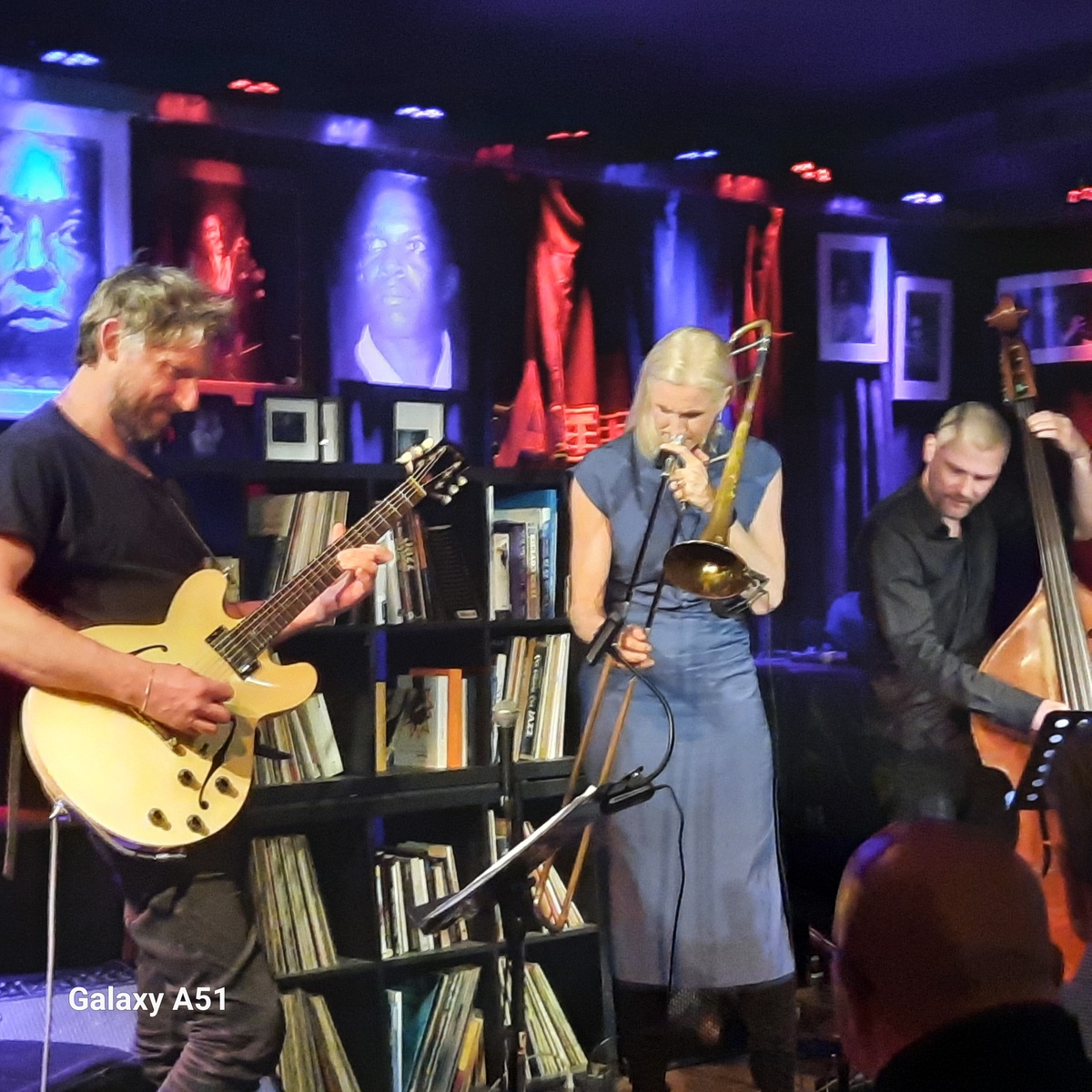
The next track – something with “Light and Keeping?” – unfortunately not understood correctly – is a new song and is intended to spread joy, good humor, and cheerfulness, according to Karin Hammar. And indeed, that's how it sounds. The song presents itself as an intricate theme, almost choral in nature. The literally striking guitar of the excellent Andreas Hourdakis shapes the piece with his improvisations. Subtle solos performed with discreet passion enrich the track. Meanwhile, Pär-Ola Landin's bass and Fredrik Rundqvist's drums pluck and beat hand in hand, brotherly in the spirit of the composition. Rhythmically, they now increase the tempo. The statements of the guitar jazz trio become more lively, more agile, sounding different from the previous tracks. Karin Hammar responds. In other words: Karin goes wild. Blowing the lowest notes at lightning speed is physically only possible with complete strength and energy. She masters her elegant sequences without sacrificing the emotional tension of her melodies. Even “trombone world champion” Albert Mangelsdorff smiles at the lady and the audience with a twinkle in his eye – “The Lady Plays the Trombone.”
“The Fox”
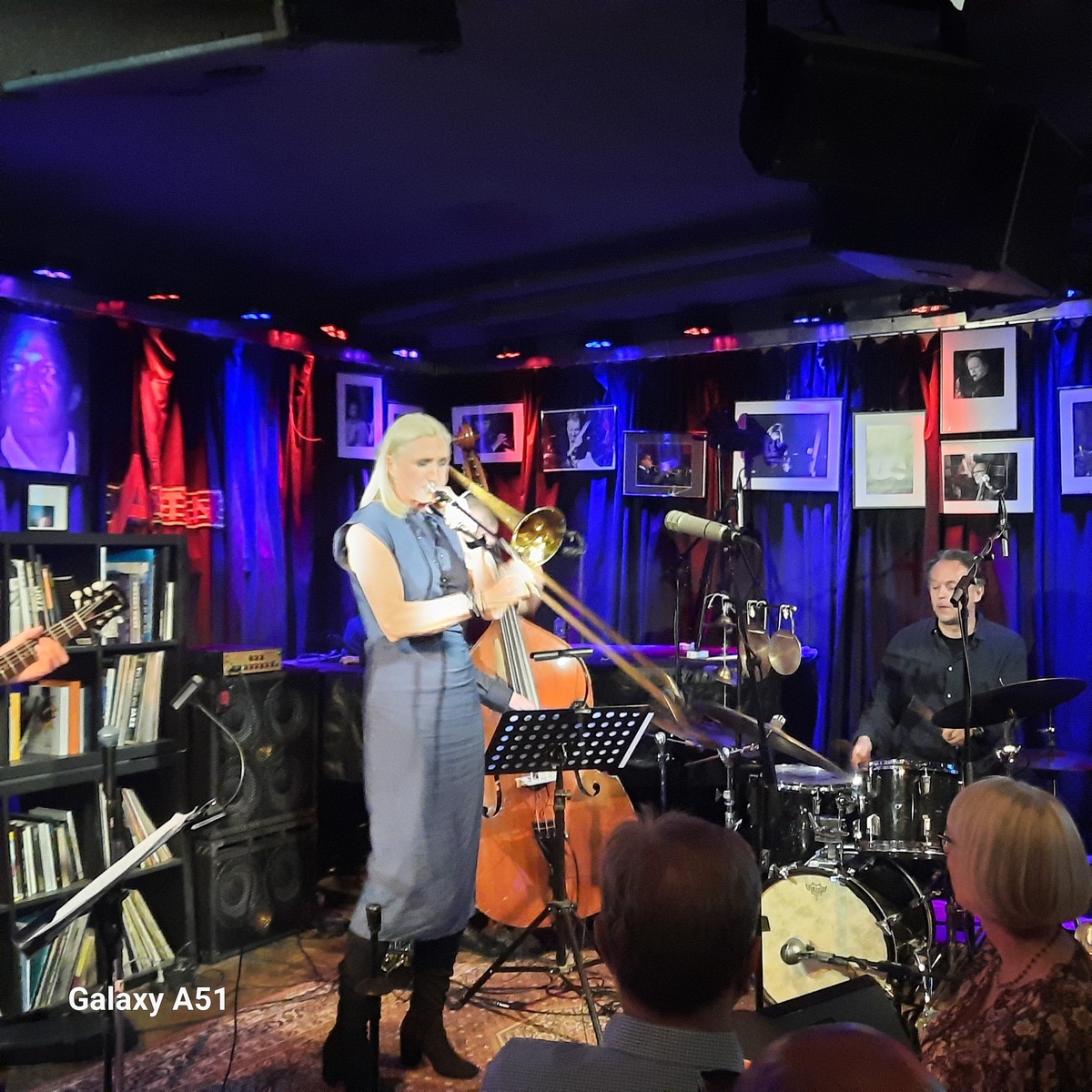
Karin explains how the title came about – her home, the park, her love of nature and animals. A title like this would certainly appeal to the handball-playing “Berliner Füchse” (Berlin Foxes). Acoustically, the fox first comes across as a growling bear, thanks to the low register of the trombone. Then the trombonist – with a little hall effect – transforms the bear into a fox. The Story of the Fox – it couldn't be otherwise – is a ballad to revel in, enriched with slightly melancholic tone sequences that flow from the trombone. The drummer can be heard with subtle and economy strokes of the clappers (Klöppel in German) and some cymbal work. Pär-Ola Landin's bass contributes warm, woody ostinato figures, developing them as a solo part and plucking his singing runs in the high registers. It is the same fox, but a different story. Now Karin blows her trombone again – not just symbolically – completing the narrative as a tribute to the natural and earthy qualities of her Nordic landscape. Fredrik Lundqvist's drums provide an exceptionally subtle commentary on this ballad, stirring with his brushes.
The surprise: Liam Elion – trombone
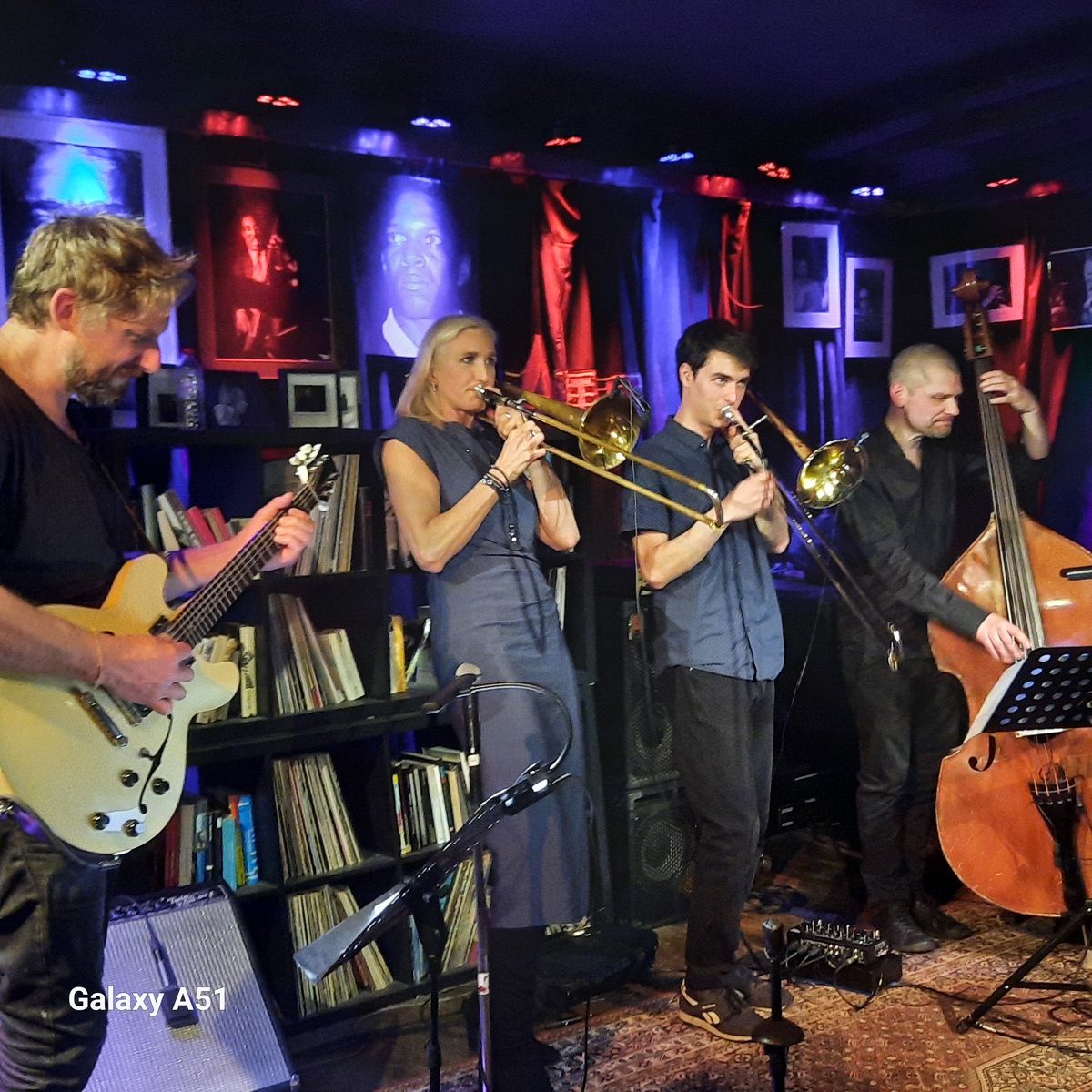
It would have been a real surprise if there hadn't been one. But that's jazz. Karin Hammar introduces another trombone, or rather its player. This is Liam Elion, who studies at the “Konservatorium,” i.e., the Berlin University of the Arts. And already the two trombones are mixing up the track, playing an elaborate theme in duo, sometimes in unison, sometimes complementing each other, understanding each other well.
This also works because of the rhythmic foundation that the guys from Rhythm provide. The title turns out to be a 2-beat, home of New Orleans. And the titles, composed for marching bands, really take off – one, two – one, two ... These are child's play for the bass and especially for the drummer (lots of snare drum, even more rolls), who keeps this beat going unwaveringly. But then the drumming turns into a light swing, into which guest trombonist Liam Elion blows his tone sequences, showing what his trombone is capable of.
A brief excursion: Liam Elion
And that's a lot, more than his youth would suggest. He is certainly very talented, but there is also a lot of experience and mature playing to be discovered. Well, his teacher Geoffroy de Masure will certainly have played a part in that. His reputation as a masterful trombonist is outstanding. Unfortunately, Geoffroy de Masure is rarely heard, but when he is, it is in Maria Baptist's big band. It is therefore advisable to keep an eye out for where and when his student Liam Elion will be performing in concert. COSMO-JAZZ-BERLIN will report on it.
Continuing with the concert
After Liam Elion's solo ends, the song becomes more dynamic and expressive. A guitar trio takes over, followed by a guitar solo. Although the sound is no longer traditional New Orleans, the song continues to drive forward rhythmically – a powerful sound with certain rock and funk accents. It takes off, the trombonist puts a damper on her horn and continues to present exciting solos. Meanwhile, Fredrik Rundqvist, the man on the drums, who had mostly held back and put himself at the service of the themes, now really lets loose. The drummer and the audience love it. Everyone has earned a well-deserved break.
The 2nd set
If the announcement of the title is understood correctly, it is “Teldefing”, which means telephoning in Swedish. Why not make a phone call? It rarely happens enough on a smartphone. The predominant style of playing with melodic arcs remains the same in this track and the one after next, “Tunnel”. Often introduced by the bass, the trombone and guitar play the themes and then develop them further as soloists. An expansive solo can be heard from the guitar in “Teldefing”, as well as the intimate duo between bass and trombone.
According to Karin, “Tunnel” is about the “light at the end of the corona tunnel”. The principle of hope. This ballad expresses this musically. Melodically and emotionally touching the audience, be it thematically, be it in the powerful and sensitive solos - The Art of Story Telling. Rhythmically, bass and drums are often restrained, allowing the soloists to shine. Drummer Fredrik Rundqvist in particular always hits sensitively (apart from the explicit solos), often touching the brushes.
The 2nd track after the break is different. Initially performed in the style of a ballad, the song switches to a more expressive mode. An increase in tempo and rhythmic accentuation by the rhythm players on bass and drums allow the track to really take off. Even Andreas Hourdis' virtuoso guitar finds it difficult to give his solo the attention it deserves. The trombone now blows its tone sequences, figures and motifs into this groovy spectacle: accentuated, energetic, using the powerful expressive force of the full-bodied trombone. Karin Hammar constantly increases her arcs of tension, only to ground them again, to reduce the drama in order to build it up again later - anyone who has not loved the trombone before will do so now and in the future. Last but not least, the drummer goes one better. This is now his - always expected by the audience - High Energy Power Drumming Solo. In old German: the “man at the shooting gallery” smashes everything together. So much for “Serenity Now”, if the title was understood correctly.
After “Tunnel”, which chronologically followed “Serenity”, another surprise now follows. Karin Hammar has a preference for unexpected musical events and that's a good thing!
The later the guest ... This is another guitarist, just as young and talented as trombonist Liam Elion in the first set. For acoustic reasons, only the name “Luca” could be understood. Luka (as always spelled) introduces himself and his guitar with a composition by saxophonist Wayne Shorter.
Spherical sounds lead the way, wide worlds of sound open up. The two guitars accompany each other, complementing each other in terms of themes, vocal lines and solos. The drums are beaten cautiously with the clappers, the bass can be heard with few but effective motifs. The trombone places its lines in these sound spaces, sparingly but effectively. These are the soundscapes that the trio of trombone, bass and drums offer the two guitarists to focus on their playing. Andreas and Luca accept this and demonstrate the aesthetics of two guitars - oscillating between composed and improvised passages - as a duo.
A successful interplay both with the band and as a duo of guitars. A beautiful piece, unfortunately only too short. That was the unexpected encore. A great concert, a satisfied band and a happy audience – all's well.