rejazz-Festival Sanne Huijbregt 21.11.25 Schlot
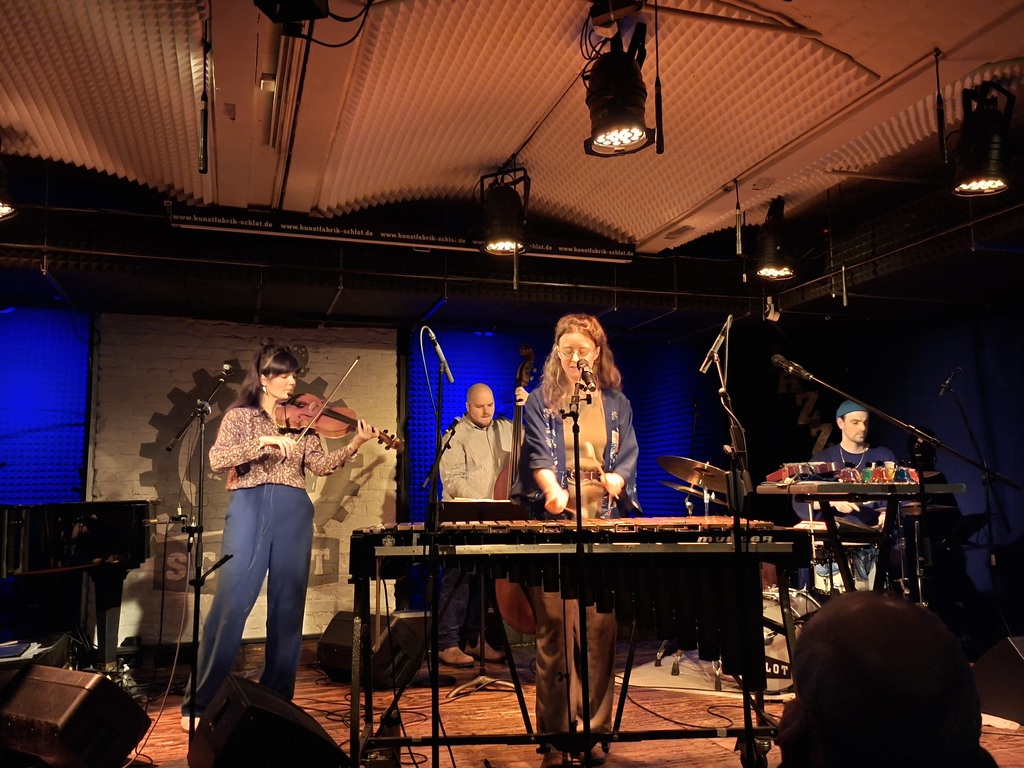
rejazz-Festival Sanne Huijbregt 21.11.25 Schlot
rejazz-Festival
Sanne Huijbregts Band: Sanne Sanne
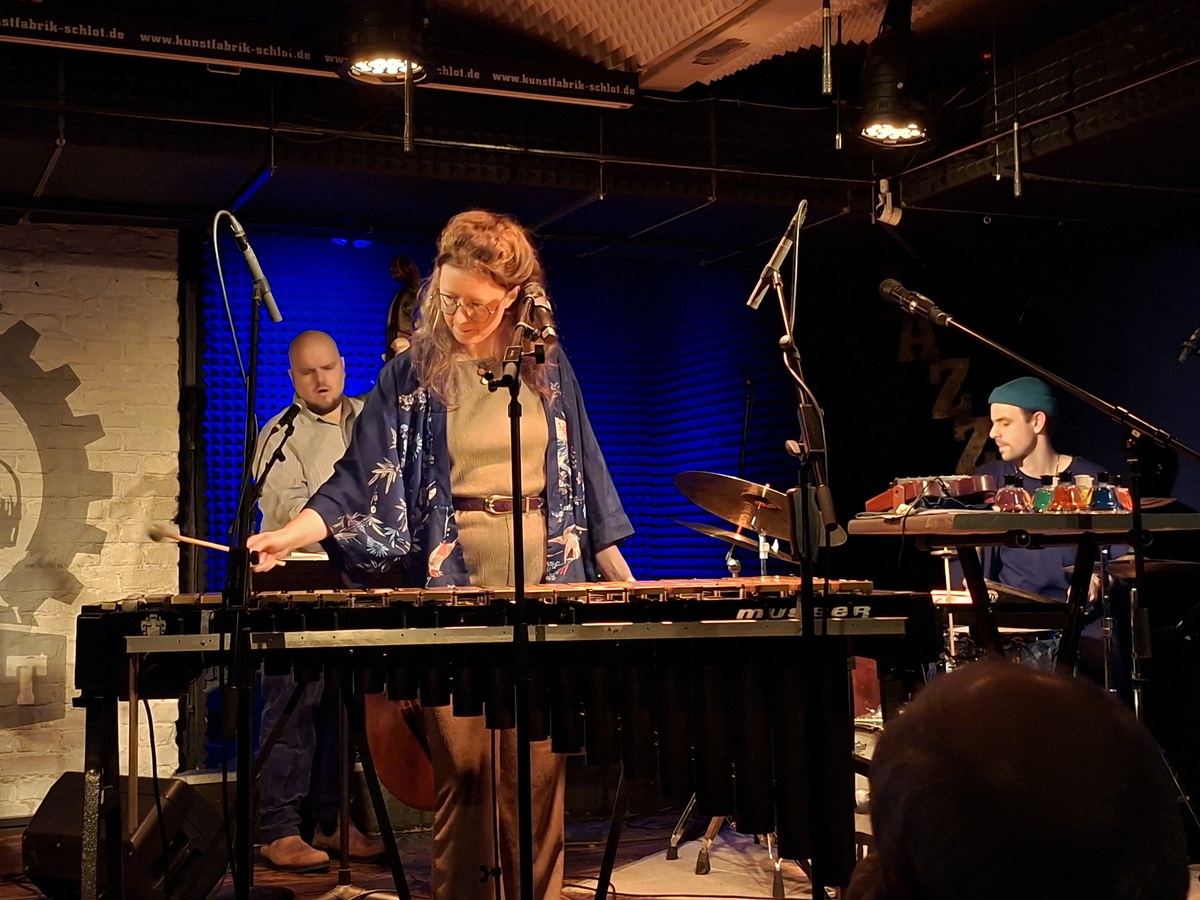
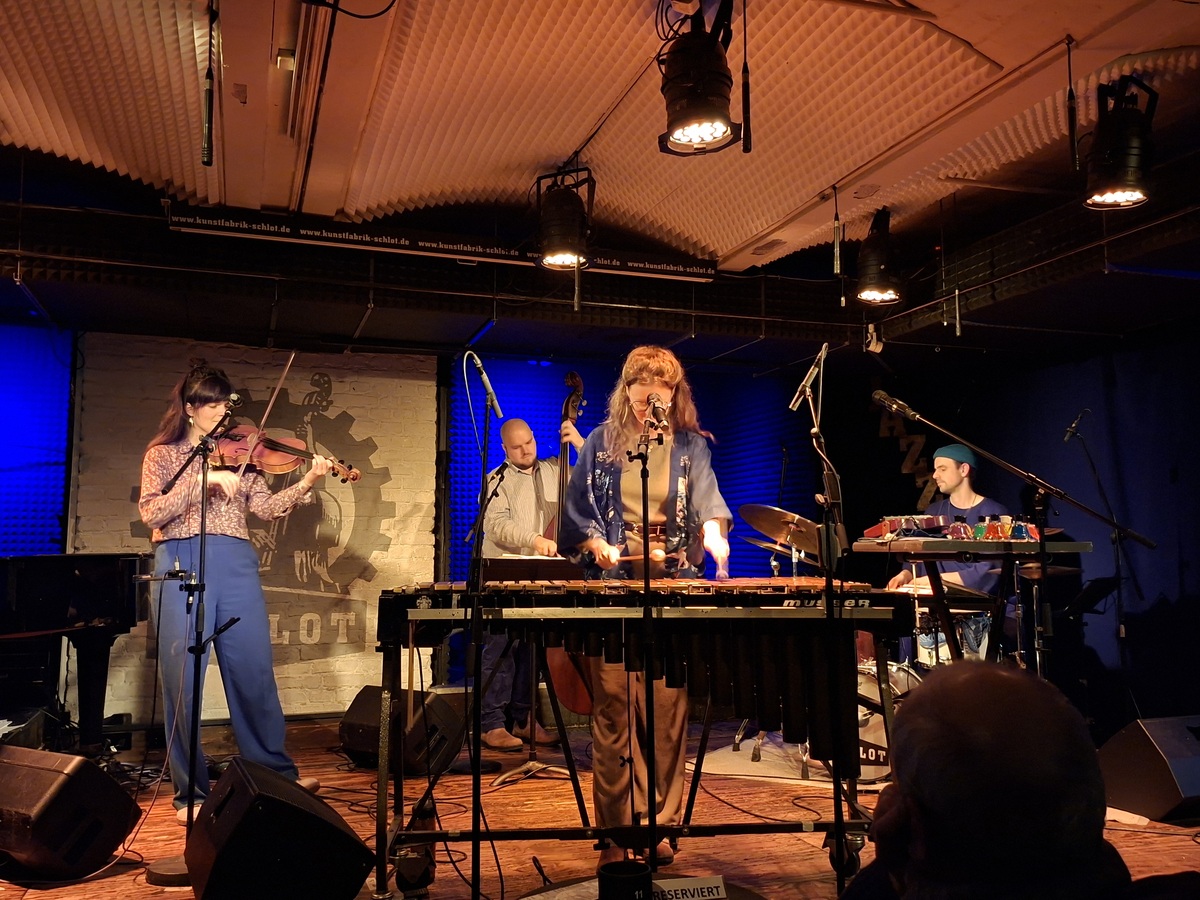
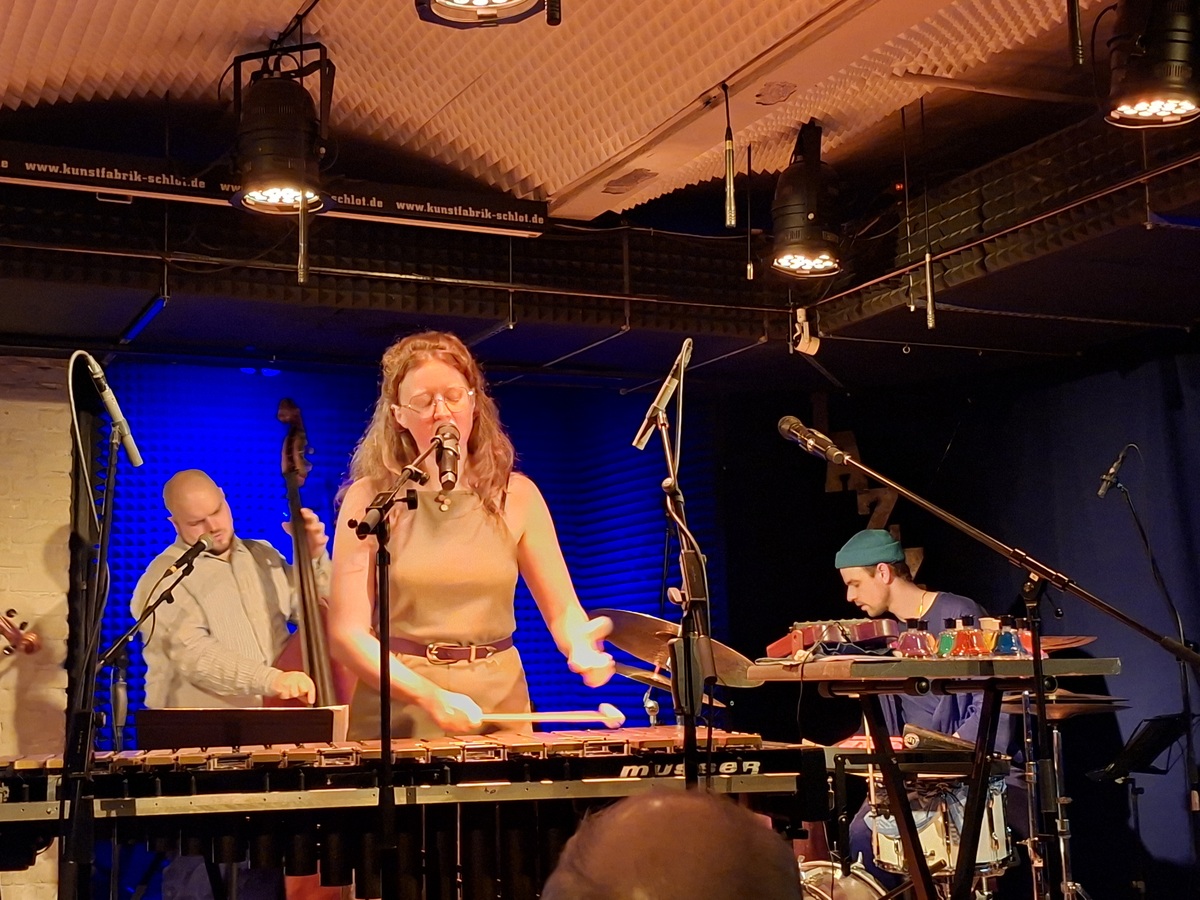
Sanne Huijbregts – vocals, vibraphone, percussion //
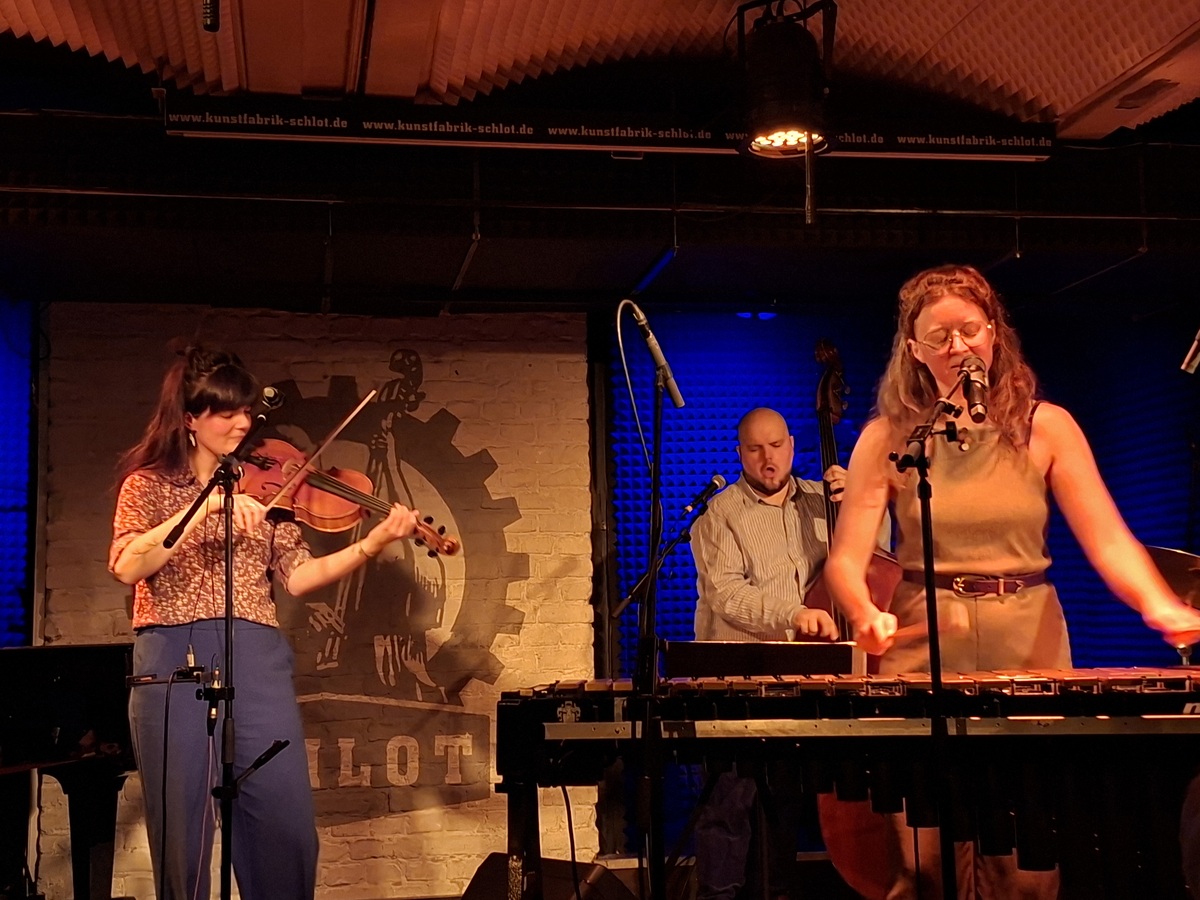
Roosmarijn Tuenter – viola, vocals //
Pat Cleaver – bass, vocals //
Jeroen Batterink – drums, vocals //
Auftakt
Ansage im schnellen, galoppierenden Englisch. Bei Konzentration gerade noch zu verstehen. Dann kommen die Damen und Herren aus den „Niederen Landen“ schnell zur Sache bzw. zum Daumenklavier, dass die Chefin anzupft. Der Gesang lässt nicht lange auf sich warten, hohe Lagen, glockenhell intoniert. Alle Personen stimmen unisono ein. Die Stimme von Sanne Huijbregt ist führend, jetzt und später auch. Die anderen begleiten, runden ab, verstärken. Das Vibraphon übernimmt die rhythmische Vorherrschaft, die Drums warten noch ab, kommen später diskret schlagend hinzu, erhöhen Beats wie Tempo. Drums und Vibraphon liefern gemeinsam einen akzentuierten Rhythmus, der dann mehrstimmig den Auftakt-Song beendet.
Daumenklavier
Erneut macht das Daumenklavier den Anfang. Dann stoßen Bass und Viola (Bratsche) hinzu, nun sind es 3 Instrumente die gezupft werden, ungewöhnlich.
(Zwischenruf, nicht in die Bewertung einfließen lassen: Assoziationen an die folkloristisch geprägte Gruppe „Zupf-Geigen-Hansel“ aus den 70-zigern kommen in den Sinn. Die Orientierung an der Folklore der Welt könnten sie gemeinsam haben.)
Der Sound von Sanne Huijbregts Band ist mit verhaltenen Tonfolgen und einem leisen wie sparsamen Schlagzeug zu vernehmen. Das Gleiche gilt für den sich zurückhaltenden Bass. Dafür tritt nun - der von allen gebildete - Chor stärker in den Vordergrund. Dann ist schon Schluss mit Singen und Saitengezupfe.
Tranquille
Sanne als Kopf der Gruppe übernimmt Ansagen, Vorstellung und Begrüßung. Die Anwesenden erfahren, dass das folgende Stück den Titel „Lonely Child“ trägt. Darüber hinaus gelte es, unaufgeregt und ruhig zu sein. Den Begriff „Tranquille“ habe sie aus Frankreich mitgebracht, der solle auch für die Musik der Band und besonders für sie selbst gelten, da sich sie sich beherrschen müsse, nicht zu schnell zu spielen. Nun, das kann bestätigt werden: zu schnell gespielt wird nicht, aber zu schnell gesprochen. Gemach, gemach oder Tranquille.
Singen & Chor
Tranquille. Ja, das kommt hin. Schon ist der Chor mit Perkussions-Unterstützung zu hören. Lange Linien des Basses legen vor, die Drums ziehen diskret nach. Insgesamt ist der Rhythmus, den die Perkussionisten liefern, zurückhaltend, aber unterschwellig effektiv. Darüber thront der Gesang unangefochten. Beim Singen gibt es eine deutlich ausgeprägte Hierarchie: die 1. Stimme hat die Chefin, logisch. Die 2. Stimme übernimmt die Viola-Spielerin Roosmarijn Tuenter, der 3. Gesangspart hat sich der Bassist Pat Cleaver erkämpft und die Drums von Jeroen Batterink kommen als Vierter nicht mehr aufs Siegertreppchen. Macht nix, denn der Gesang ist stets unüberhörbar präsent. Zur Abwechslung übernimmt nun das ebenfalls stärker perkussiv – weniger melodisch - geschlagene Vibraphon die stimmliche Vorherrschaft. Aber nicht ganz allein, sondern nur in Kooperaration mit dem Singen. Das alles hat einen gewissen Charme, ist auch ganz lustig und zeigt wohl eine gute Portion holländischen Humors. Fazit: Sanne Sanne ist ein mehrstimmiger Chor mit viel Perkussion.
Ohne Titel
Der nächste Song ist wohl von Sane verständlich artikuliert, aber vom Autor unverständlich notiert. Kein Künstlerpech, sondern Handwerker-Missgeschick.
Rhythmisch bewegter zeigt sich das Stück. Vibraphon, Drums & Bass agieren gemeinsam, um die Basis für den sich erhebenden Gesang zu liefern. Dieses Singen zeigt einen Musical-Charakter, gar klassische Anleihen aus Oper/Operette, hat aber auch Elemente von Comedy/Slapstick. Von den Anlehnungen aus dem klassischen Fach speist sich die theatralische Intonationen, die Sane gelegentlich zum Ausdruck bringt.
Auch der folgende Titel kann leider nicht präzise wiedergegeben werden. „Women …“ kommt im Titel vor. Der bisher gehörte Sound macht ohne Abwechslung weiter. Mal drängt sich der Rhythmus (primär generiert durch das Vibraphon) ein wenig in den Vordergrund, meistens versteckt er sich im Hintergrund. Dann aber doch. Ein anderes Thema, ein anderer Sound, ein anderer Rhythmus soll jetzt kommen.
Manchmal muss es eben Jazz sein
Sanne erklärt, das sie auch was Jazziges im Gepäck hätten, das sie manchmal auch Jazz präsentieren würden: „Sometimes I Feel Like a Motherless Child“. Die gedankliche Bitte um Realisierung wird erfüllt.
Ein dezenter Swing tut sich auf, recht bluesig intoniert. Das ist auch das, was die Walking-Linien des Basses und die sanft rührenden Besen der Drums beitragen. Das dezente Swingen währt jedoch nicht lange, denn schon intervenieren die Stimmen, es bleibt beim Gesang. Scatting ist nicht zu hören, was angesichts des einzigen Jazz-Titels angebracht sein könnte. „Motherless Child“, der auch im Rock bekannte Standard muss ohne vokalistischen Jazz auskommen.
Zum Schluss rauft sich die Band zu einem wilden Spektakel zusammen. Bass und Drums zupfen wie schlagen sich um die Wette, aber die „Opern-Diva“ mit ihren hochlagigen Arien gewinnt, schmettert ihre akustischen Kuss-Hände ins Publikum.
rejazz Festival Sanne Huijbregt 11/21/25 Schlot
Sanne Huijbregts Band: Sanne Sanne
Sanne Huijbregts – vocals, vibraphone, percussion //
Roosmarijn Tuenter – viola, vocals //
Pat Cleaver – bass, vocals //
Jeroen Batterink – drums, vocals //
Opening
Announcement in fast, galloping English. Barely understandable when concentrating. Then the ladies and gentlemen from the “Low Countries” quickly get down to business, or rather to the thumb piano that the boss plucks. The singing is not long in coming, high notes, intoned with a bell-like clarity. Everyone joins in unison. Sanne Huijbregt's voice leads the way, now and later on. The others accompany, round off, reinforce. The vibraphone takes over the rhythmic dominance, the drums wait, then discreetly join in later, increasing the beats and tempo. The drums and vibraphone together provide an accentuated rhythm, which then ends the opening song in polyphony.
Thumb piano
Once again, the thumb piano starts things off. Then the bass and viola join in, and now there are three instruments being plucked, which is unusual. (Interjection, not to be included in the evaluation: associations with the folkloric group “Zupf-Geigen-Hansel” from the 1970s come to mind. They may share an orientation towards world folklore.)
The sound of Sanne Huijbregts' band can be heard with restrained tone sequences and quiet, sparse percussion. The same applies to the restrained bass. In contrast, the choir formed by all the musicians now comes more to the fore. Then the singing and string plucking come to an end.
Tranquille
Sanne, as the leader of the group, takes charge of announcements, introductions, and greetings. The audience learns that the following piece is titled “Lonely Child.” She also tells them to be calm and relaxed. She brought the term “tranquille” back with her from France, and it should also apply to the band's music and especially to herself, as she has to control herself not to play too fast. Well, that can be confirmed: they don't play too fast, but they do speak too fast. Slowly, slowly, or tranquille.
Singing & choir
Tranquille. Yes, that fits. The choir can already be heard with percussion accompaniment. Long bass lines lead the way, with the drums following discreetly. Overall, the rhythm provided by the percussionists is restrained but subtly effective. The vocals reign supreme above it all. There is a clearly defined hierarchy in the singing: the first voice is the boss, logically. The second voice is taken by viola player Roosmarijn Tuenter, the third vocal part has been fought for by bassist Pat Cleaver, and Jeroen Batterink's drums come in fourth, no longer on the podium. That's okay, because the vocals are always unmistakably present. For a change, the vibraphone, which is also more percussive and less melodic, now takes over the vocal dominance. But not entirely on its own, only in cooperation with the singing. All of this has a certain charm, is also quite funny, and probably shows a good dose of Dutch humor. Conclusion: Sanne Sanne is a polyphonic choir with lots of percussion.
Untitled
The next song is clearly articulated by Sane, but incomprehensibly notated by the author. Not bad luck for the artist, but a mishap on the part of the craftsman.
The piece is more rhythmically lively. Vibraphone, drums, and bass work together to provide the basis for the soaring vocals. This singing has a musical character, even classical borrowings from opera/operetta, but also has elements of comedy/slapstick. The theatrical intonations that Sane occasionally expresses are fed by the borrowings from the classical field.
Unfortunately, the following title cannot be reproduced precisely either. “Women...” appears in the title. The sound heard so far continues without variation. Sometimes the rhythm (primarily generated by the vibraphone) pushes itself a little into the foreground, but mostly it hides in the background. But then it does come to the fore. A different theme, a different sound, a different rhythm is about to come.
"Sometimes .... it just has to be jazz"
Sanne explains that they also have something jazzy in their repertoire, which they sometimes present as jazz: “Sometimes I Feel Like a Motherless Child.” The mental request for realization is fulfilled. A subtle swing emerges, intoned in a rather bluesy manner. This is also what the walking lines of the bass and the gently stirring brushes of the drums contribute. However, the subtle swing does not last long, as the voices intervene and the singing continues. There is no scatting, which might be appropriate given that this is the only jazz track. “Motherless Child,” a standard also known in rock, has to do without vocal jazz.
At the end, the band comes together for a wild spectacle. The bass and drums compete with each other, but the “opera diva” with her high-pitched arias wins, throwing her acoustic kisses into the audience.