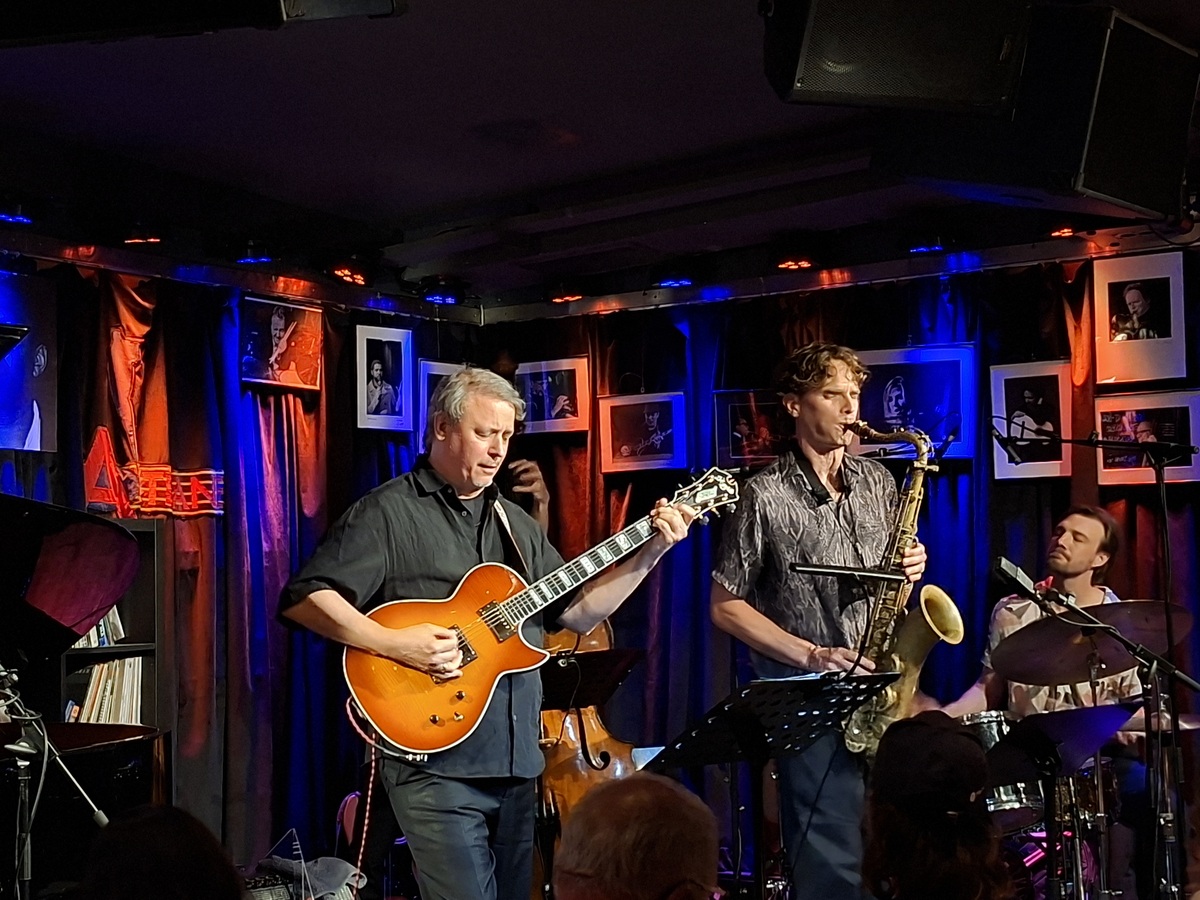
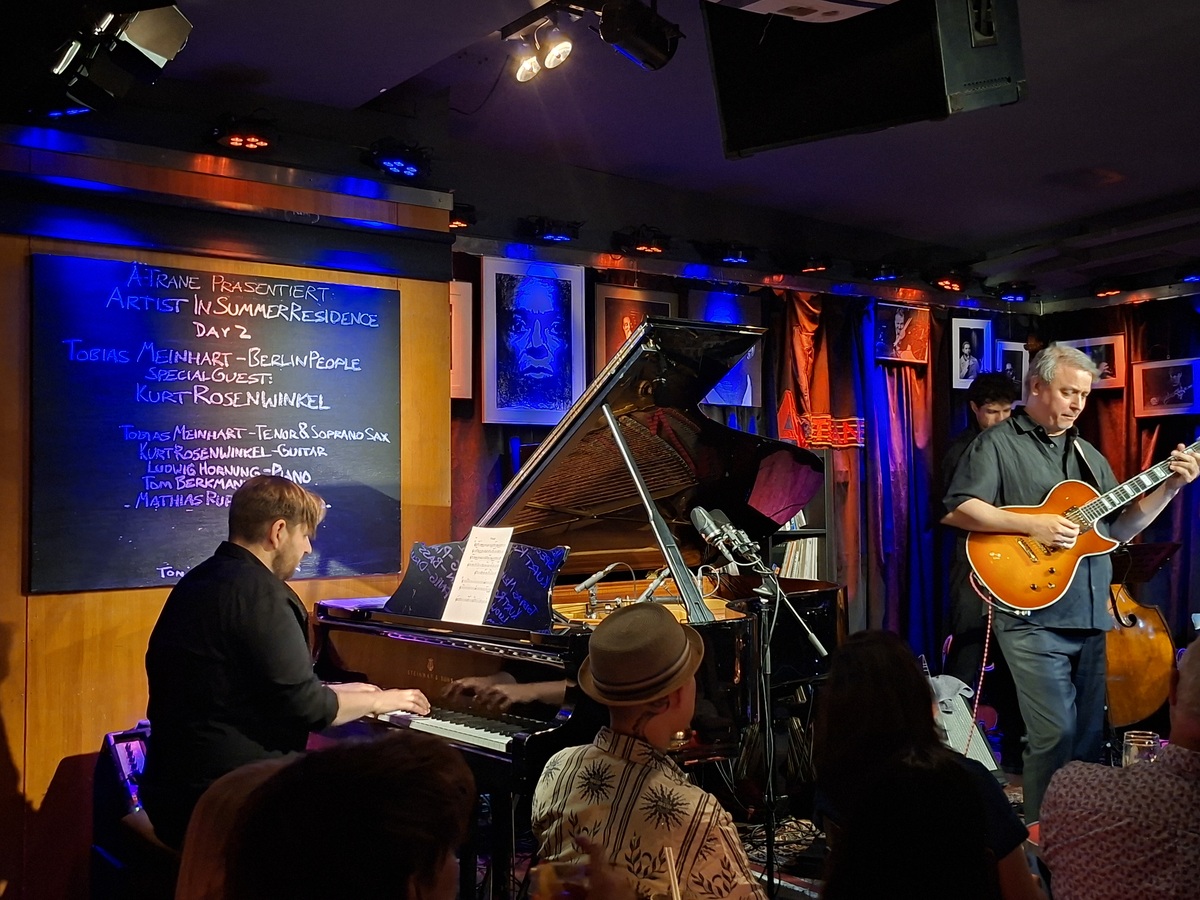
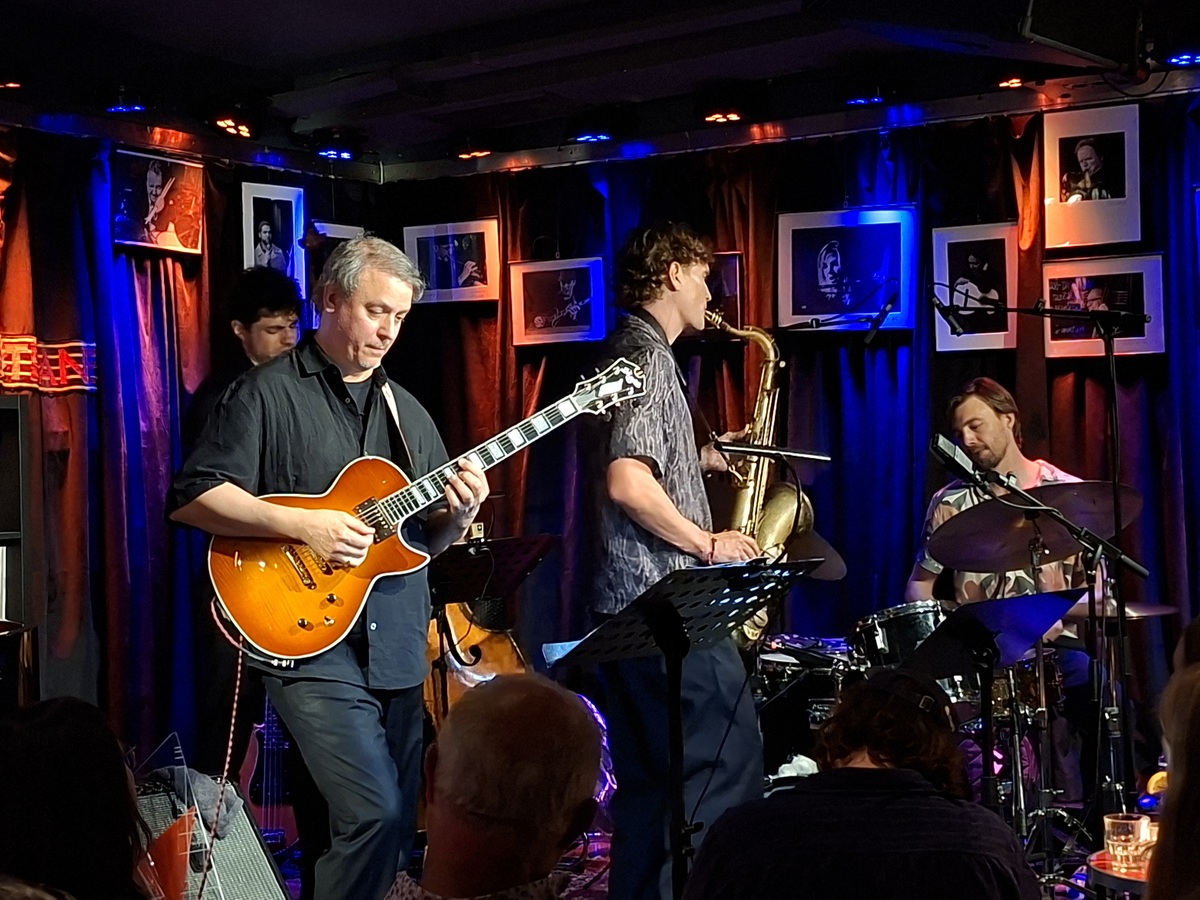
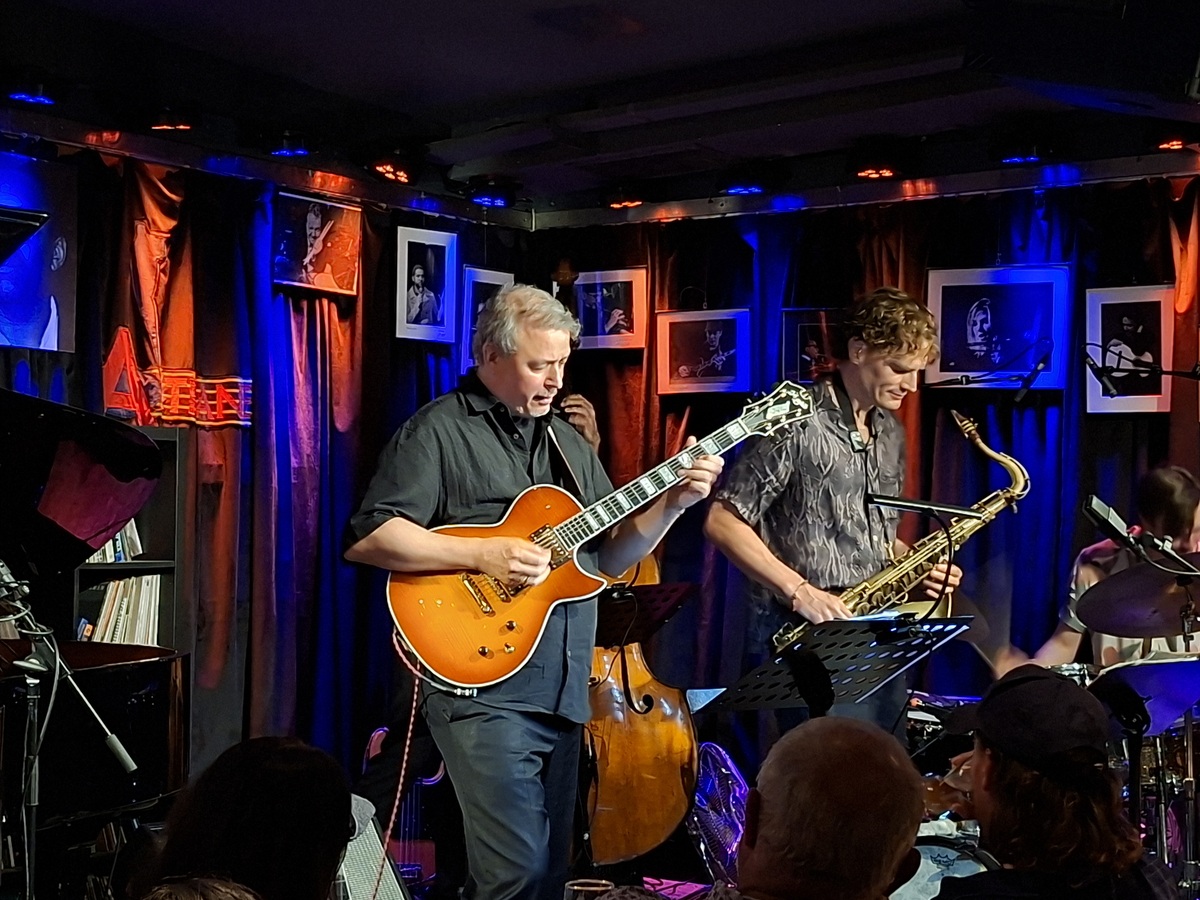
Tobias Meinhart Berlin People & Special Guest Kurt Rosenwinkel 12.08.26 A-Trane
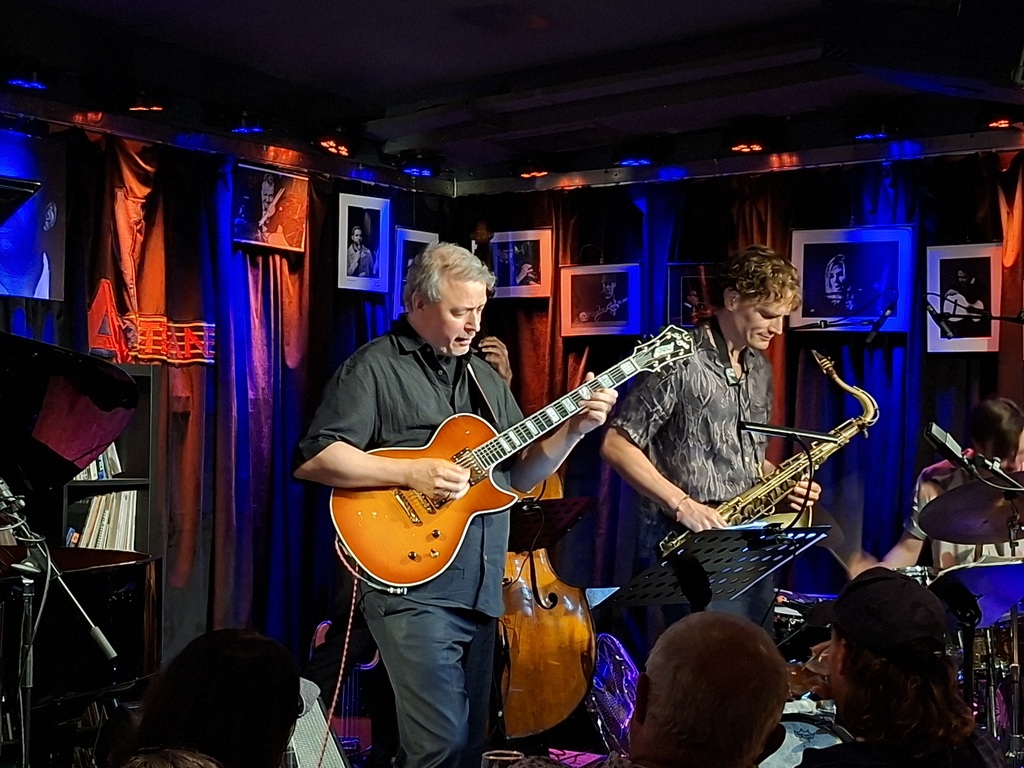
Tobias Meinhart Berlin People & Kurt Rosenwinkel 12.08.26 A-Trane
A-TRANE PRSENTS ARTIST IN SUMMER RESIDENCE:
Tobias Meinhart – Tenor- & Sopransaxofon
Kurt Rosenwinkel – Gitarre
Ludwig Hornung - Piano
Tom Berkmann – Bass
Mathias Ruppnig - Drums
Tobias Meinhart: Berlin People can still be heard at A-Trane from August 14–15, 2026.
Go check it out!
“Pinball”
Lightly swinging beats from the drums and bass set the tone. The track is well-suited for warming up and introductions: moderate tempo and expression, a theme played in unison by guitar and saxophone that moves the other instruments in turn to brief solos. The saxophone and guitar start with harmonious phrases, arranged with a touch of expressiveness. The rhythm intensifies, the tempo and dynamics increase, and the song gets progressively “hotter.” The repetition of the theme then brings “Pinball” back to a moderate intonation.
Announcement and Introduction
After the first two songs, Tobias briefly explains how the song came about: inspired by the “Artemis” space research project. After introducing the band, Tobias Meinhart emphasizes that it’s always a great experience to be able to play at A-Trane five days in a row. Indeed. Then the “cosmic constellation” introduces itself.
“Cosmic Constellation”
After the hot opening track, this might turn out to be a ballad. That’s how it seems. Mathias Ruppnig gently caresses the drums with his brushsticks, while the piano and bass elegantly round out the sound; the guitar holds back—for now. The tenor saxophone blows melodic loops, which are then accompanied by gentle guitar chords. Kurt Rosenwinkel continues on guitar what began earlier on the tenor saxophone: ballad-like intonations for melodic connoisseurs. The guitar slowly increases its tempo and expressiveness, yet remains within the composition’s harmonies throughout its improvisations. Though not on the same “horn,” Ludwig Hornung plays his analog figures “in the same way” on the keys of the grand piano. As if that weren’t enough, Tobias Meinhart completes the melodic sequences and definitively characterizes the track as a melodious ballad—The Art of Story Telling.
“Fox in the Box”
The song features a cleverly interwoven theme, both in its harmonies and its rhythm, which is created by a strong, driving beat with powerful funky accents from the drums and bass. The guitar and saxophone present the theme, their intonations coming across almost like interwoven “horn sections.” The entire quintet is now in the grip of funk fever; the music crackles with tension. This gives rise to a duet between the guitar and saxophone, which grows tighter and more intense as it progresses. And the band turns up the heat, amplifying the intensity and energetic expression: power sound at its best. This is how the fox is hunted acoustically: “Fox Out the Box.” Once again, the captivating theme melody is performed in unison by the guitar and saxophone. The jazz musicians decide to skip the final “halali” of the hunt, “The Fox is Dead.” Instead, Mathias Ruppnig literally blasts the audience with his energetic, powerful drumming.
Still Unknown Tune
The name of the following track is somewhat lost amid the long round of applause (to be added later). Kurt Rosenwinkel, accompanied only by his guitar, begins the song. Subtly and unobtrusively, the guitar searches for its theme, finds it, and develops it through variations. What Kurt Rosenwinkel masterfully demonstrates here are techniques of contemporary jazz guitar, skillfully handling the constant shift between chords and single notes and the interweaving of these techniques. Now the band joins in: piano, bass, and drums play unobtrusively but with a subtle yet powerful impact. The tenor saxophone plays the theme—sometimes alone, sometimes joined by the guitar. Tobias Meinhart heightens the music’s expressiveness through his intense, extended improvisations. Meanwhile, the rhythm continues uninterrupted, kept simple to allow the excursions of the guitar and saxophone to shine all the more clearly.
“Pursuit of Happiness”
The song begins with a jazz piano trio. Ludwig Hornung, who until now had selflessly accompanied the performance on piano, now has the opportunity to bring his skills as a pianist more to the forefront. Consequently, he takes the lead in shaping the melody and theme. The theme then gives rise to a longer solo featuring both powerful chords and subtle runs on the Steinway. But the grand piano also produces hammering notes, which Ludwig Hornung uses to break free. His colleagues on bass and drums, who had been holding back until now, become more agile, playing their “accompaniment” in a more solo-like manner by “throwing” many small nuances into the track. They do all this effortlessly while maintaining rhythmic and harmonic continuity. The moment has come to put the guitar in the spotlight.
Kurt Rosenwinkel now shows his energetic side. There’s a touch of McLaughlin’s fusion jazz in there, but unlike the incredibly fast and energy-sapping runs of fusion guitarists, Kurt Rosenwinkel doesn’t unleash hammering, relentless “attacks”; instead, he resolves the tension primarily through harmony. The tenor saxophone picks up the “thread” of the expressive, dramatic intonation and fires off rousing bursts from its horn. The sax is supported by the guitar through chords. Meanwhile, the piano takes a break, but the bass and drums really go all out. The song could easily serve as the definitive finale, but for now it “merely” sends the audience into intermission.
The 2nd Set
This time, in his opening remarks to the audience, Tobias reveals the title before playing. It hints at a soulful theme. In analogy to the dreamy “Cinema Paradiso,” the piece is called “Café Paradiso,” which actually exists in Berlin-Friedrichshain.
“Café Paradiso”
Subtle funky beats define the rhythm, though they’re played with less force than is typical for this genre. This rhythm weaves the tapestry for the dreamlike and pleasing loops that flow from the tenor saxophone. Tobias Meinhart tells his story with intertwined melodic arcs. In a similar way, though with a different timbre, it’s the guitar’s turn to continue the story. To make these solos flights of fancy possible, the piano, bass, and drums ensure that the acoustic tapestry takes off as light as a feather, soaring away along with the airy improvisations of the guitar and sax—“Magic Carpet Ride.”
A composition by Kurt Rosenwinkel follows on beautifully from the previous track.
“A Sifting Design”
This is a treat for connoisseurs of melodic harmonies. It’s no contradiction that the track really lets loose in terms of dynamics. This is delivered by the fabulous rhythm section, who constantly create little solo interludes while always confidently maintaining the necessary timing. The sax then weaves some driving sequences into the intense sound before a bass solo takes over. Tom Berkmann picks up on the composition’s moving drive, enriching it with his powerful yet delicate figures and runs, in both low and high registers. A solo by the drummer serves as an interlude here as well. Mathias Ruppnig plays his solo in his usual, skillful manner between the intervals of the bars, which the others support with minimal riffs. Then he ends his solo and shifts to a swinging rhythm. Over this, the sax and guitar jointly play the theme.
“The next track is new,” explains Tobais. “It was conceived as a tribute to the New York tenor saxophonist nicknamed ‘Mousse,’ and that’s also the title of the song.”
“Mousse”
Fast, lively beats kick off immediately. The theme proves to be pleasing, decorated with melodious loops that the saxophone uses to embellish the song. Then both expression and intensity increase. Tobias Meinhart plays passionate bursts, which are then taken over by the guitar’s sequences. Acoustic eruptions can be heard, first from the guitar, then from Ludwig Hornung’s piano. All the soloists reveal the unleashed, wild side of their personalities. After they’ve let loose, the theme repeats and the song concludes.
Today, August 14, 2026, and tomorrow, the Berlin People can be seen live once again. Go check it out!